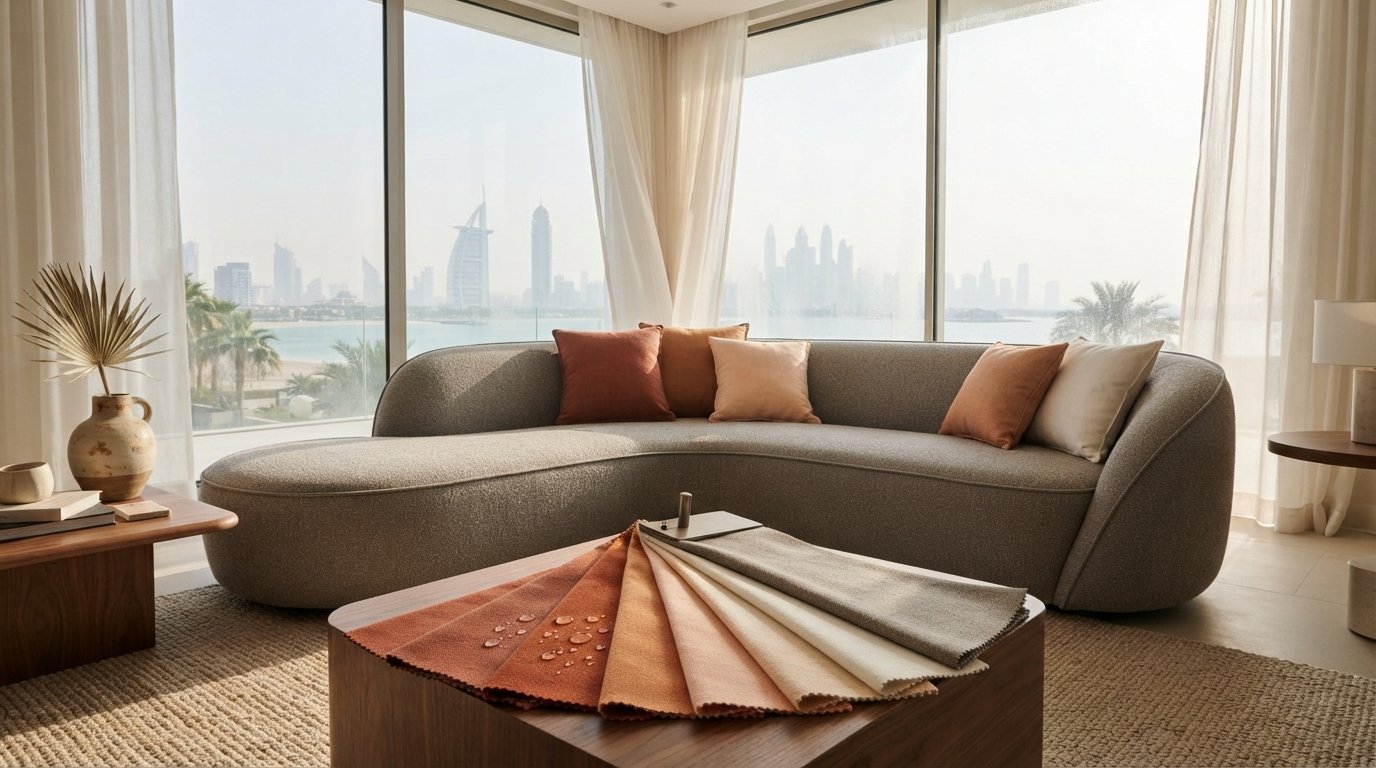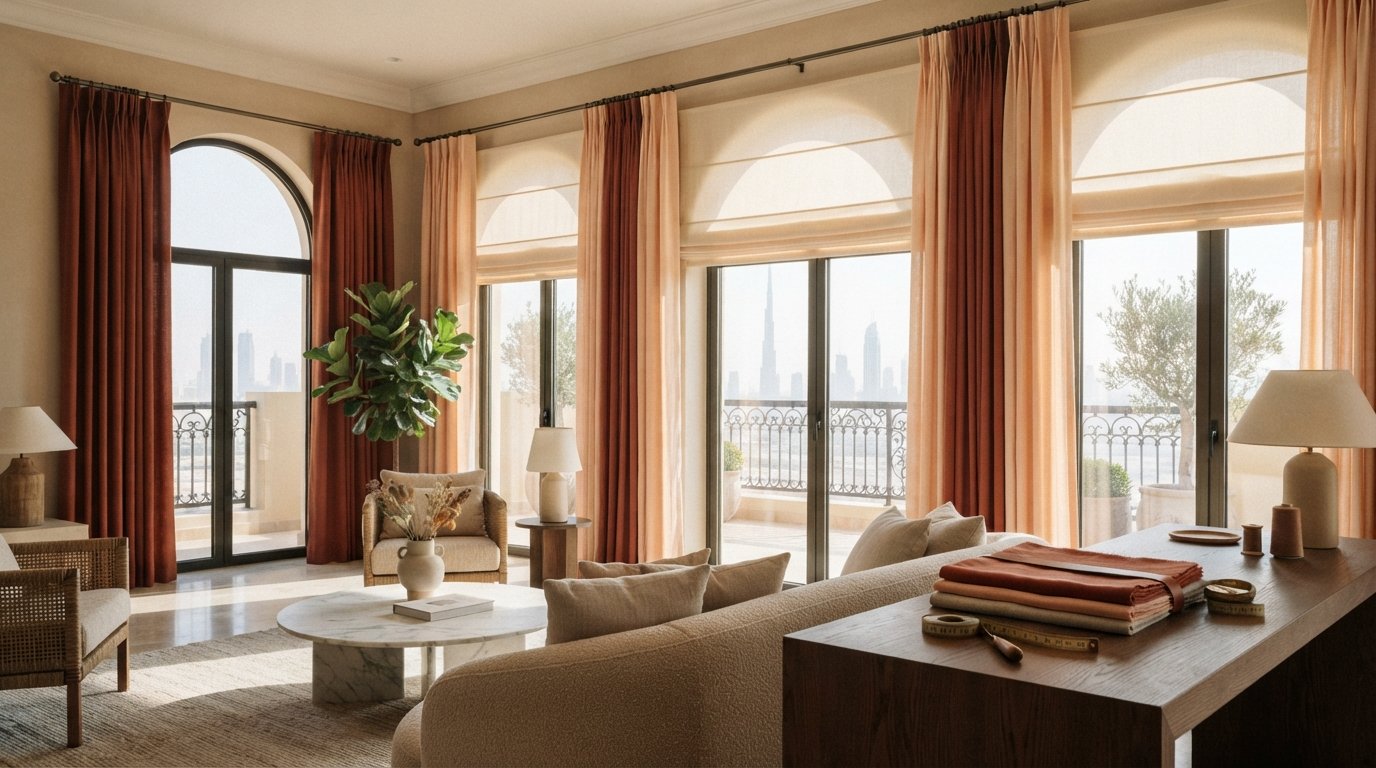

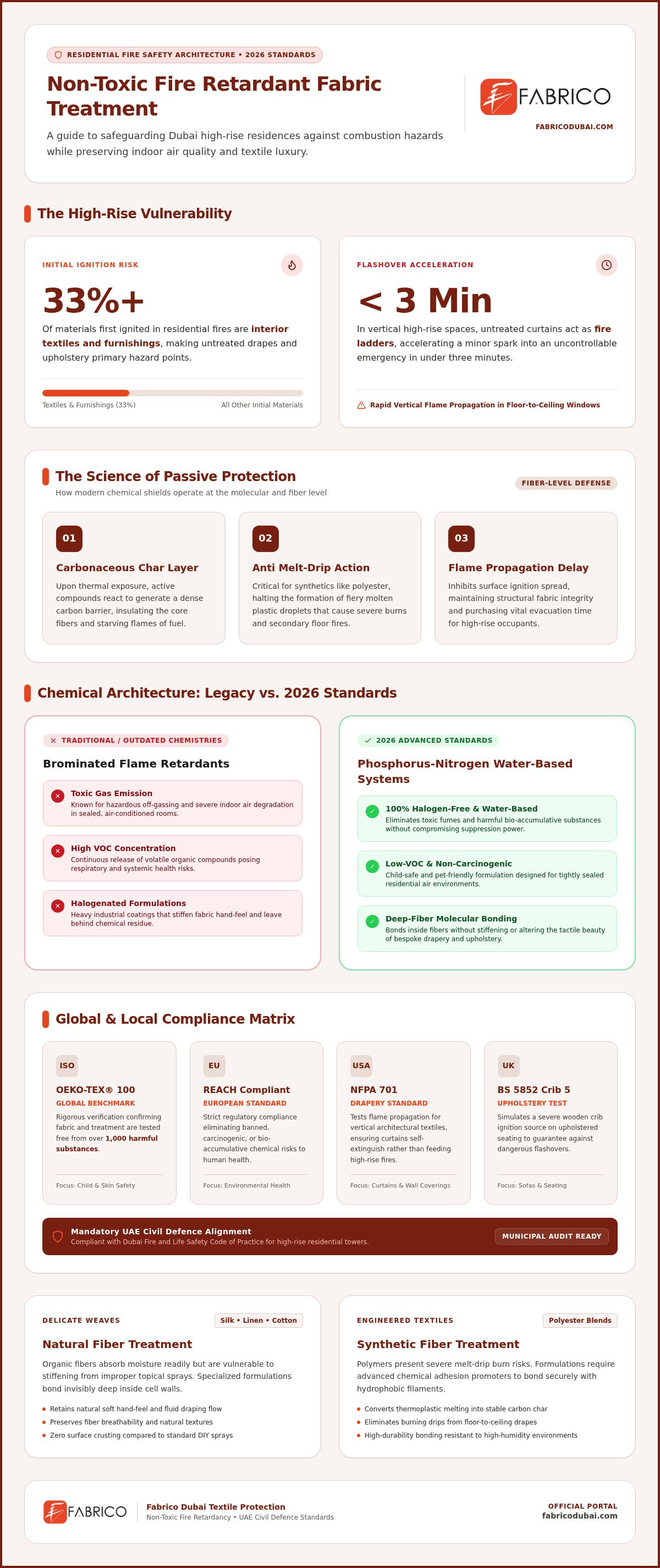
Did you know that interior textiles and furnishings account for over 33% of materials first ignited in residential fires? In the vertical landscape of Dubai’s high-rises, untreated curtains can act like fire ladders, turning a small spark into a major emergency in under three minutes. Ensuring your home is protected with a non-toxic fire retardant fabric treatment Dubai residents can trust is no longer just a luxury; it’s a vital safety measure for 2026.
We understand the anxiety that comes with high-rise living and the equal fear of exposing your family to harsh, off-gassing chemicals. You shouldn’t have to compromise your indoor air quality to meet UAE Civil Defence standards. This guide will teach you how to safeguard your home with child-safe, water-based treatments that provide superior protection without the toxic footprint. It’s about finding that perfect balance between a beautiful interior and a secure one.
We’ll walk you through the latest 2026 safety regulations, the importance of OEKO-TEX certifications, and how professional application preserves the tactile beauty of your bespoke curtains and upholstery. By the end, you’ll have a clear path to a fire-safe, healthy living environment maintained by seasoned artisans who value both aesthetics and rigorous safety.
Key Takeaways
- Discover how modern water-based and halogen-free solutions delay ignition without compromising the air quality of your high-rise home.
- Learn to identify global benchmarks like OEKO-TEX Standard 100 and REACH compliance to ensure your textiles meet the highest safety standards.
- Understand why professional non-toxic fire retardant fabric treatment Dubai specialists use deep-fiber bonding to prevent the fabric stiffening often caused by DIY sprays.
- Explore how tailored chemical formulas protect delicate natural fibers like silk and linen while ensuring effective adhesion to synthetic polyesters.
- Gain insights into the 2026 UAE Civil Defence requirements for residential textiles to ensure your property remains fully compliant and secure.
What is Non-Toxic Fire Retardant Fabric Treatment?
In the context of modern interior safety, a non-toxic fire retardant fabric treatment Dubai homeowners select is a specialized, water-based chemical solution applied to textiles to inhibit combustion. Unlike heavy industrial coatings, these modern formulas are halogen-free and designed to bond with individual fibers without altering the fabric’s appearance or texture. When applied to curtains, upholstery, or wall coverings, the treatment acts as a chemical shield that significantly delays ignition and slows the spread of flames across the surface.
It’s vital to distinguish between fire-retardant fabrics and treatments and those that are inherently fire-resistant. Fire-resistant fibers, such as certain modacrylics, are engineered at the molecular level to resist burning. Conversely, a fire-retardant treatment is a topical application used on natural or synthetic materials like cotton, linen, and polyester that aren’t naturally flame-resistant. In Dubai’s high-rise apartments, where large floor-to-ceiling drapes are common, these treatments provide an essential layer of protection while maintaining the high aesthetic standards of a luxury home.
The Science of Passive Fire Protection
The primary mechanism of these treatments involves the creation of a carbonaceous char layer. When the treated fabric is exposed to heat, the chemicals react to form a protective barrier that insulates the underlying fibers from the flame. This process is particularly crucial for synthetic fabrics like polyester, as it prevents the dangerous “melt-drip” effect where molten plastic can cause secondary fires or severe burns. Fire retardancy acts as a critical life-saving barrier that grants residents vital evacuation time during an emergency.
Halogen-Free vs. Traditional Brominated Retardants
Historically, fire retardants relied heavily on brominated compounds, which are now known for their potential health risks and toxic off-gassing. These older chemicals can release volatile organic compounds (VOCs) that degrade indoor air quality, a significant concern in the sealed environments of air-conditioned Dubai residences. Modern non-toxic fire retardant fabric treatment Dubai specialists now prioritize phosphate-based and nitrogen-based formulas. These phosphorus-nitrogen systems are halogen-free, non-carcinogenic, and child-safe. When selecting a service, look for “low-VOC” or “zero-halogen” labels to ensure the safety of your family and pets while meeting the stringent requirements of the UAE Fire and Life Safety Code.
Key Safety Standards and Certifications for 2026
Choosing a non-toxic fire retardant fabric treatment Dubai residents can rely on involves navigating a complex web of certifications. In 2026, these standards have evolved to prioritize both rapid fire suppression and long-term air quality. Safety is now defined by rigorous international benchmarks that ensure your home remains a healthy sanctuary.
The OEKO-TEX Standard 100 remains the global gold standard for textile safety. It ensures that every thread and treatment is tested for over 1,000 harmful substances. This certification is particularly important for families with young children who may come into direct contact with sofa upholstery or curtains. REACH compliance is equally vital. This European regulation manages the risks chemicals pose to human health and the environment. By adhering to these standards, specialists ensure that the treatments used in your home don’t contain banned substances or harmful bio-accumulative chemicals.
For vertical textiles like curtains, the NFPA 701 standard for flame propagation is the benchmark used by Dubai Civil Defence. It tests how a fabric responds to a flame source and ensures it self-extinguishes rather than fueling a fire. When it comes to seating, BS 5852, specifically Crib 5, is the essential test for upholstered furniture. It simulates a significant ignition source to ensure your furniture won’t contribute to a rapid flashover.
Meeting UAE Civil Defence Requirements
Dubai’s Fire and Life Safety Code of Practice is one of the most stringent in the world. For residents in high-rise towers, compliance isn’t just about avoiding fines; it’s about life safety. Implementing a professional non-toxic fire retardant fabric treatment Dubai service ensures that your home meets these rigorous municipal audits. These 2026 standards reflect a growing shift toward sustainable safety, where protection doesn’t come at the cost of the environment. Using certified applicators who provide documented proof of compliance is mandatory for many residential fit-outs in the emirate.
Reading Product Labels: What to Avoid
Don’t be misled by vague eco-friendly labels. Truly safe treatments are transparent about their ingredients. Avoid formulas containing antimony, formaldehyde, or heavy metals. These substances can cause respiratory irritation or long-term health issues. Always look for third-party laboratory testing results rather than taking a brand’s word for it. If you’re unsure about the certifications of your current furnishings, consulting an experienced fabric specialist can help you verify the safety of your home textiles.
DIY Sprays vs. Professional Fabric Treatment in Dubai
Choosing between a retail spray and a professional non-toxic fire retardant fabric treatment Dubai service often comes down to the scale of the project and the value of the textiles. While a store-bought can offers immediate gratification, it rarely provides the comprehensive protection found in professional applications. The primary difference lies in the application method. DIY sprays typically sit on the surface of the fabric, making them susceptible to wearing off through friction or light cleaning. In contrast, professional treatments utilize deep-fiber bonding techniques that penetrate the material’s core. This ensures the retardant remains effective for up to a year or through several dry-cleaning cycles, whereas retail options may require reapplication every few months.
Aesthetic preservation is another critical factor. One common frustration with DIY methods is the risk of fabric discoloration or a “stiff” hand. Without specialized atomizing equipment, it’s easy to over-saturate certain areas, leading to unsightly white spotting or a sticky residue that attracts dust. From a cost-benefit perspective, the recurring expense of purchasing multiple retail cans often outweighs the one-time investment in a professional service that offers long-term peace of mind. Perhaps most importantly, a professional certificate of treatment is often a prerequisite for high-rise residential insurance or building management approvals in Dubai. A retail receipt for a spray can won’t satisfy a Civil Defence audit or an insurance claim if a fire occurs.
When to Consider a Retail Spray
Small decorative items like custom cushions Dubai residents use for seasonal decor are suitable candidates for retail sprays. If you’re hosting a one-off garden party or setting up temporary holiday drapes, a quick application provides a basic layer of safety. However, these sprays struggle with heavy-pile upholstery or thick velvet curtains, as the liquid often fails to reach the inner fibers where fire can smolder. They are best reserved for low-traffic, non-essential textiles.
The Professional Advantage for Luxury Textiles
For high-value items, professional upholstery services Dubai specialists offer a level of precision that manual spraying cannot match. Artisans use micro-atomizing tools to ensure uniform coverage across every fold and seam. Before the full application, technicians perform compatibility tests on delicate fibers like silk or fine linen to prevent shrinkage or texture changes. This meticulous approach guarantees a result that is child-safe, completely odorless, and entirely invisible to the naked eye, maintaining the integrity of your bespoke interiors.
Selecting the Right Treatment for Different Fabrics
Every textile possesses unique physical characteristics that dictate how it interacts with protective chemicals. Natural fibers like cotton, linen, and silk are highly porous, allowing them to absorb a non-toxic fire retardant fabric treatment Dubai specialists apply with ease. However, this high absorbency comes with a caveat; natural materials are prone to shrinkage or texture changes if the moisture balance isn’t perfectly managed. Silk, in particular, requires a delicate touch to prevent water spotting that can ruin its lustrous finish. Our artisans prioritize a controlled misting process that protects the fiber without saturating the core.
Synthetic fibers such as polyester and nylon present a different challenge altogether. These materials are essentially non-porous, meaning standard treatments might simply sit on the surface and flake off over time. Specialized bonding agents are required to ensure the retardant adheres to the slick surface of the yarn. When treating American pleated curtains Dubai homes often feature, the goal is to provide safety without compromising the crisp, elegant drape of the pleats. Similarly, high-end Roman blinds and velvets require atomized application to ensure the pile isn’t crushed and the mechanical folds remain fluid and functional.
Compatibility Matrix for Home Textiles
Achieving a safe home environment requires a tailored approach rather than a one-size-fits-all solution. Most non-toxic solutions are water-based, which works beautifully for the majority of residential textiles. Before any full-scale application, a professional should perform a colorfastness test on a hidden area, especially for the vibrant, jewel-toned upholstery popular in UAE interiors. Blended fabrics, which combine natural and synthetic yarns, are increasingly common in 2026 and require a hybrid chemical approach to ensure both types of fibers are equally protected against ignition.
Maintenance and Durability of Treatments
A common question among Dubai villa owners is how long these protections remain effective. While the treatment is durable, it isn’t permanent. Most topical fire retardants are water-soluble, meaning that standard steam cleaning or liquid-based laundering will eventually leach the chemicals out of the fiber. In high-traffic environments, we recommend a professional refresh every 12 months or after every three to four dry-cleaning cycles. If your curtains feel unusually stiff or you notice a dusty residue when they are moved, it’s likely time for a professional refresh of your fabric protection. To ensure your luxury furnishings are both beautiful and compliant, contact our master technicians for a bespoke safety assessment today.
The Fabrico Approach: Safety Meets Craftsmanship
Fabrico brings 35 years of dedicated experience to the UAE market, positioning ourselves as the experienced artisan for your home’s most delicate textiles. We’ve spent decades refining the balance between aesthetic elegance and technical safety. Our team functions as a knowledgeable guide for homeowners who value both beauty and security. We exclusively utilize a non-toxic fire retardant fabric treatment Dubai families can trust. This commitment ensures that your bespoke curtains and upholstery remain beautiful without introducing harmful chemicals into your living space.
A common concern for our clients is whether different protective treatments can coexist on the same piece of furniture. We specialize in creating a multi-layered shield for your textiles. By integrating fire retardancy with a water repellent upholstery treatment Dubai residents often require, we provide total fabric care. Implementing a non-toxic fire retardant fabric treatment Dubai service alongside stain protection requires technical proficiency to ensure the chemicals don’t react poorly. This synergistic approach prevents liquid spills from soaking into the fibers while maintaining the fire-rated integrity of the material.
Our Professional Application Process
Our methodology is methodical and instructional. We begin with an in-depth fabric analysis to identify the specific fiber composition of your furnishings. This allows us to select the safest and most effective formula for your unique pieces. Application occurs within our specialized Dubai facility, where we use atomizing technology to ensure 100% fiber penetration. Every project concludes with a rigorous quality inspection. We guarantee that the hand-feel of your luxury fabrics remains as refined as the day they were installed. It’s a steady and thorough process designed to provide quiet confidence to every client we serve.
Protecting Your Investment and Your Family
Securing a professional certification is vital for meeting 2026 Dubai Civil Defence standards. We provide the official documentation necessary to satisfy municipal audits and insurance requirements. This creates a holistic safety shield for your bespoke soft furnishings, from American pleated curtains to Roman blinds. Our goal is to be your dependable partner in home safety. We present ourselves as a one-stop destination where your diverse textile needs are met with a high degree of care. If you’re ready to enhance the security of your villa or apartment, we invite you to book a personalized safety consultation with our technical experts.
Elevating Your Home Safety for a Secure Future
Protecting your home shouldn’t involve a compromise between safety and health. We’ve explored how modern certifications like OEKO-TEX and rigorous UAE Civil Defence standards now prioritize both fire prevention and indoor air quality. By choosing a professional non-toxic fire retardant fabric treatment Dubai residents can ensure their luxury textiles remain a safe, beautiful part of their living space for years to come. Whether you’re managing delicate natural silks or high-performance synthetics, the right application makes all the difference in long-term durability.
At Fabrico, we combine over 35 years of Dubai expertise with a steadfast commitment to certified non-toxic formulas. Our team of artisans ensures your bespoke furnishings are fully UAE Civil Defence compliant while maintaining their refined texture and hand-feel. You can secure your home with Fabrico’s child-safe fire retardant treatments to gain the protection your family deserves. It’s an investment in quiet confidence that safeguards both your interior design and your loved ones. We look forward to guiding you through a seamless safety upgrade for your villa or apartment.
Frequently Asked Questions
Is fire retardant spray safe for babies and pets?
Yes, provided it is a certified non-toxic formula. Fabrico uses child-safe, halogen-free chemicals that avoid the toxic off-gassing common in older brominated retardants. These water-based solutions meet OEKO-TEX Standard 100 requirements, ensuring no harmful substances remain in the fiber. This makes treated sofas and curtains safe for direct skin contact and shared living spaces. You don’t have to worry about your family’s health while prioritizing their safety.
Will fire retardant treatment change the color of my luxury curtains?
Professional application ensures that the visual integrity of your luxury curtains remains unchanged. We use micro-atomizing technology to apply a fine, even mist that bonds to the fibers without causing saturation or discoloration. Before any full treatment, our artisans perform a colorfastness test on a discreet area. This meticulous approach prevents the white spotting or fading often seen with generic, over-the-counter retail sprays that can ruin high-end fabrics.
How long does a professional fire retardant treatment last?
A professional non-toxic fire retardant fabric treatment Dubai application typically remains effective for 12 months. Longevity depends on environmental factors and cleaning frequency. While the treatment is durable, it’s water-soluble. This means the protective layer eventually leaches out after three to four dry-cleaning cycles. In high-traffic Dubai villas, we recommend an annual safety audit to ensure your home textiles maintain their fire-rated compliance and continue to protect your investment.
Do I need fire retardant treatment for my home by law in Dubai?
Residential fire safety requirements are governed by the UAE Fire and Life Safety Code of Practice. While mandatory for commercial fit-outs and public high-rise areas, many Dubai building managements now require certified fire-rated textiles for residential tenants. Using a certified applicator ensures your home meets these municipal standards. This documentation is also vital for insurance purposes. It provides proof that you’ve taken proactive steps to mitigate fire risks within your property.
Can you apply fire retardant to silk or delicate Roman blinds?
Yes, we specialize in treating delicate materials like silk and bespoke Roman blinds. These fibers require a sophisticated, low-moisture application technique to prevent shrinkage or watermarks. Our experienced artisans adjust the chemical formula to suit the specific porosity of the fabric. This ensures the material achieves the necessary flame-propagation standards while preserving the elegant drape and tactile softness that defines high-end window treatments in prestigious Dubai homes.
Does fire retardant spray have a strong chemical smell?
Modern non-toxic fire retardant fabric treatment Dubai solutions are designed to be completely odorless once dry. Unlike industrial-grade coatings used in warehouses, our residential formulas are water-based and halogen-free. They don’t contain the volatile organic compounds that cause lingering chemical scents. Your home environment remains fresh and healthy immediately after the application process is complete. This allows your family to enjoy the space without any respiratory discomfort or unpleasant odors.
Can I clean my sofa after it has been treated for fire safety?
You can perform routine maintenance like vacuuming and light spot cleaning without compromising the treatment. However, professional steam cleaning or deep laundering will eventually remove the fire-retardant layer. If your sofa upholstery undergoes a deep liquid extraction, a re-application is necessary to restore the fire-safe barrier. We suggest coordinating your specialized safety treatments with your regular cleaning schedule to maintain a holistic protective shield for your furniture and upholstery.
What is the difference between fire retardant and fire resistant fabric?
Fire-resistant fabrics are made from fibers that are inherently non-flammable due to their molecular structure. In contrast, fire-retardant fabrics are standard materials, like cotton or polyester, that have been topically treated with chemicals to slow the spread of flames. While resistant fabrics offer permanent protection, retardant treatments allow you to choose any decorative textile and add a vital safety layer. This flexibility is essential for creating bespoke, fire-safe interiors in Dubai residences.