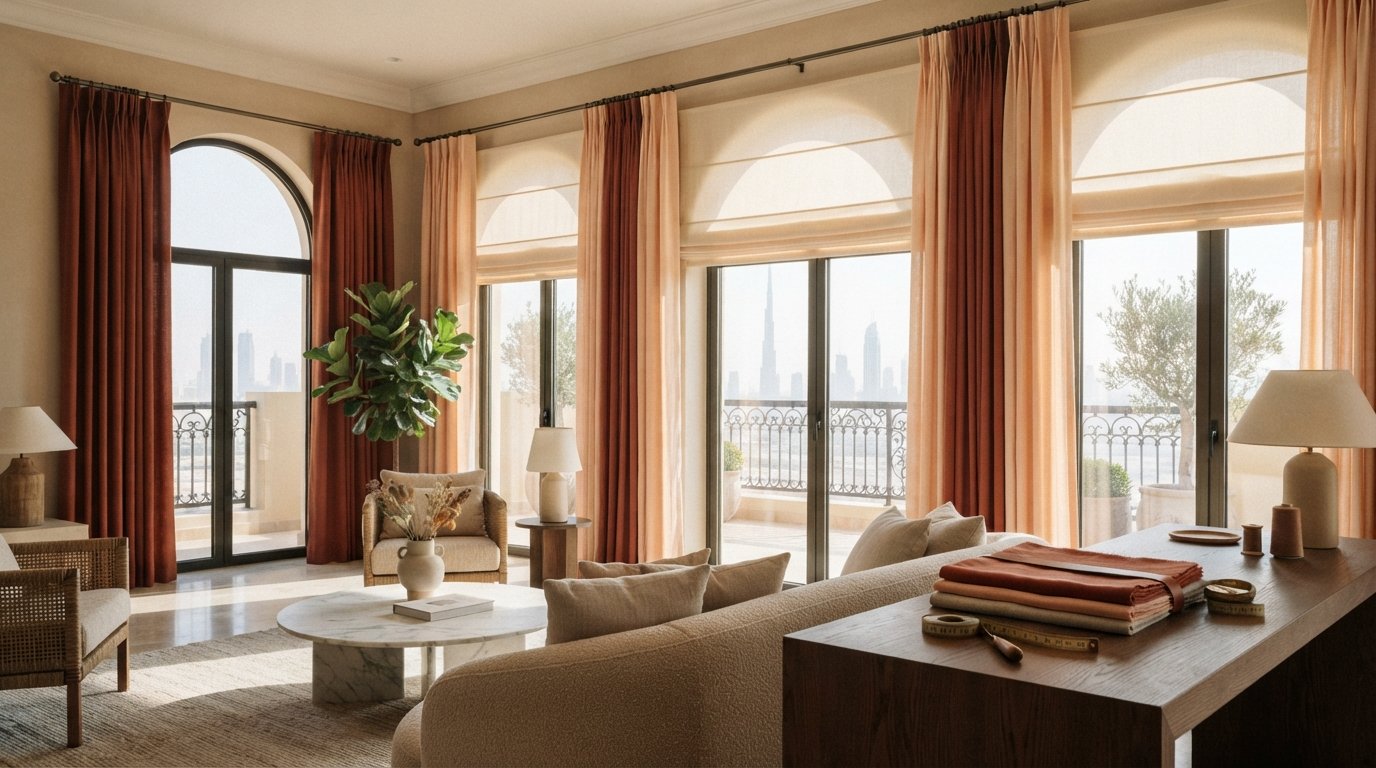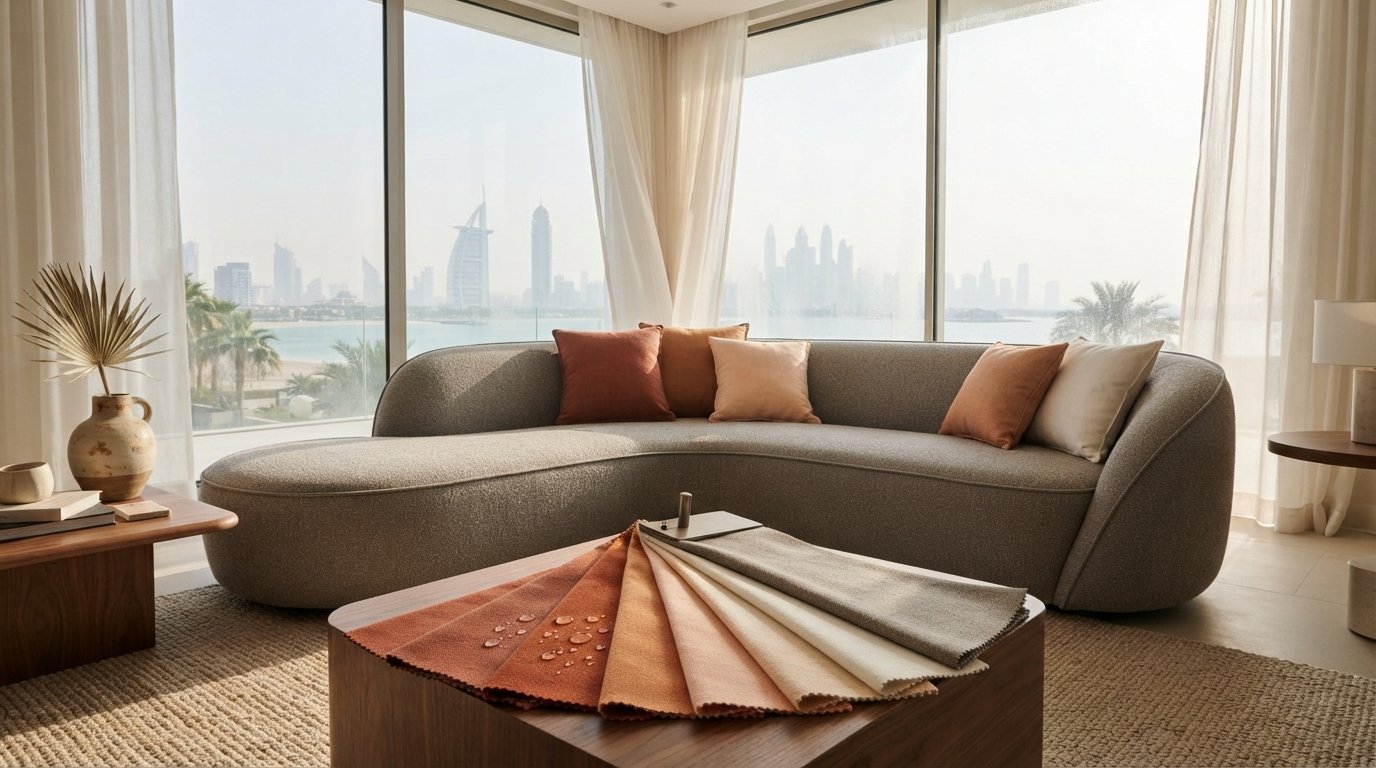

With summer relative humidity in coastal Dubai areas like the Palm Jumeirah peaking at 95 percent, selecting the right upholstery fabric for humid climate conditions is a matter of both comfort and health. Your living room sofa essentially lives in a steam room for several months of the year. It’s a common frustration for residents who notice their once-pristine furniture developing musty odors or unsightly mold spots as the heat intensifies. You likely value a home that feels like a sanctuary, yet the constant battle between your interior air conditioning and the heavy coastal air often leaves textiles feeling damp and stretched out of shape.
Finding a solution requires a sophisticated balance of aesthetic refinement and technical precision. In this 2026 guide, you’ll discover the science of humidity-resistant textiles and learn how to select materials that remain fresh, mold-free, and elegant even in the most demanding environments. We will walk through the specific moisture-regain rates of high-performance fibers and explore how specialized anti-bacterial treatments can extend the life of your furniture while ensuring a healthy, bacteria-free home for your family.
Key Takeaways
- Identify the scientific reasons why traditional natural fibers fail in coastal environments and how to avoid the common “summer vacation” mold phenomenon.
- Compare the performance of advanced synthetic textiles to find the ideal upholstery fabric for humid climate conditions that maintains its shape and elegance.
- Learn how specialized technical treatments, such as anti-bacterial and water-repellent coatings, offer a professional-grade defense against deep-seated moisture.
- Follow a practical maintenance checklist designed for the UAE climate to ensure your sofas and cushions remain fresh and odor-free year-round.
- Explore the value of bespoke reupholstery solutions that combine traditional craftsmanship with modern, high-performance fabric technology.
Why Humidity is the Silent Enemy of Traditional Upholstery
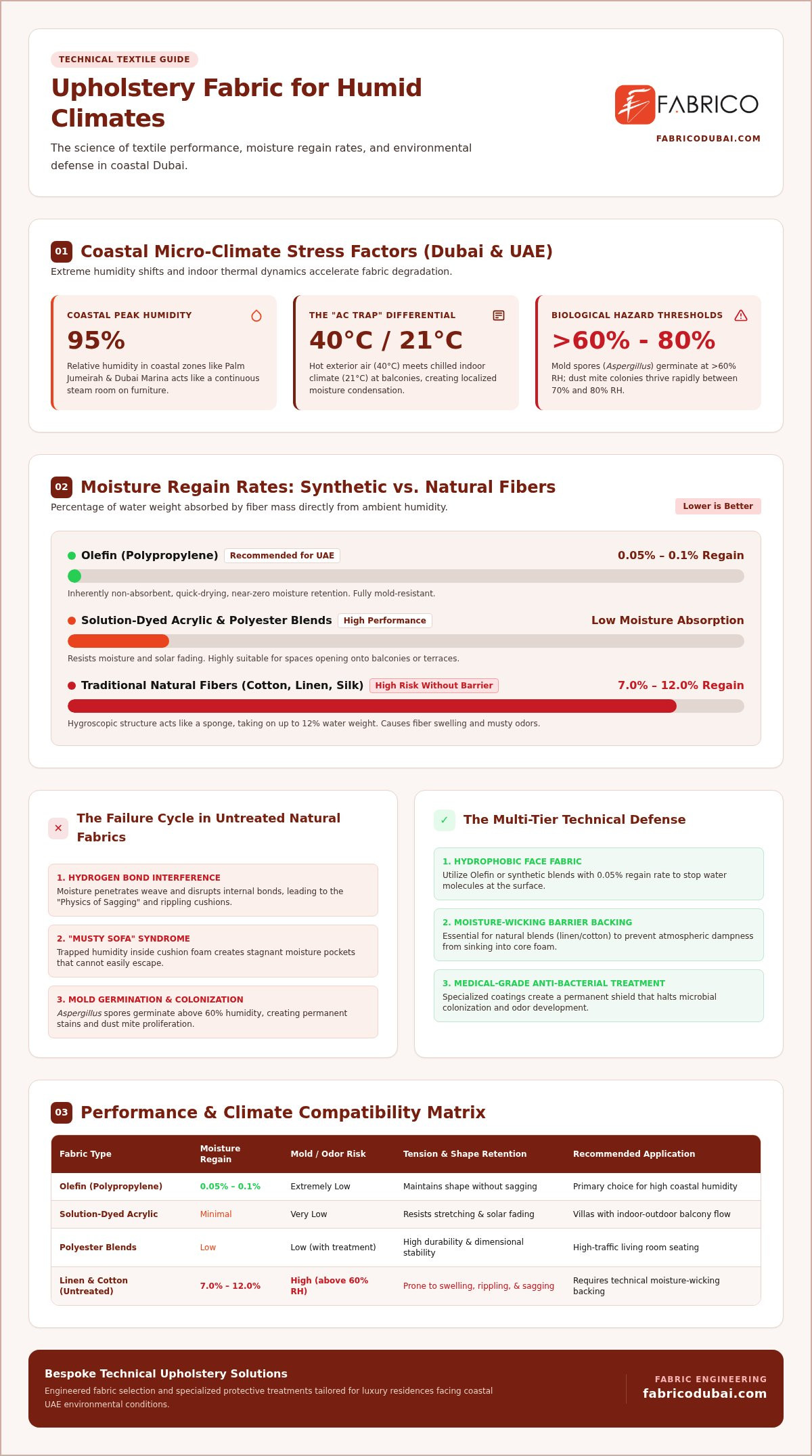
Traditional natural fibers are deceptive in a coastal environment. While cotton, linen, and silk offer a refined aesthetic, their molecular structure is highly hydroscopic. This means they actively pull water from the surrounding atmosphere. In coastal Dubai districts like the Palm Jumeirah or Dubai Marina, where summer relative humidity spikes to 95 percent, these fabrics act like sponges. Choosing a specialized upholstery fabric for humid climate conditions is not just a design preference; it is a technical necessity for preserving your furniture’s structural integrity.
When natural fibers absorb ambient moisture, the water molecules interfere with the hydrogen bonds that provide textile tension. This leads to the “physics of sagging,” where your sofa cushions lose their crisp shape and begin to ripple. Beyond the visual decline, trapped moisture within the weave creates an ideal breeding ground for the “musty sofa” syndrome. Once humidity levels sustain above 60 percent, mold spores like Aspergillus begin to germinate within the fibers, leading to permanent staining and deep-seated odors that professional cleaning often cannot fully resolve.
The Role of Micro-Climates in Dubai Homes
Villas and apartments near the Arabian Gulf face unique environmental pressures. We often see the “AC Trap” in high-end residences where the temperature differential creates localized condensation. When you set your interior climate to a cool 21°C while the outdoor air is a humid 40°C, moisture often condenses at the entry points of your home, such as balcony seals or terrace doors. This invisible dampness sinks into your sofa foam and remains trapped there. Early signs of damage include a “heavy” or damp feel to the fabric even when the AC is running, followed by a darkening of the textile pile.
Health Implications of Moisture-Trapping Fabrics
Damp upholstery is more than an aesthetic concern; it is a health risk for your family. Dust mite colonies thrive and proliferate rapidly when relative humidity stays between 70 and 80 percent. These microscopic organisms find a perfect habitat in untreated natural textiles that hold onto moisture. To maintain a healthy, bacteria-free home, it is essential to utilize textiles like olefin fiber upholstery which has a near-zero moisture regain rate. At Fabrico, we emphasize the application of medical-grade anti-bacterial treatments to create a permanent shield. These barriers prevent microbial growth from taking hold in the first place, ensuring that your upholstery fabric for humid climate remains as hygienic as it is beautiful.
Comparing the Best Upholstery Fabrics for High-Humidity Areas
Selecting the right upholstery fabric for humid climate environments involves balancing tactile comfort with technical resistance. While natural fibers are often praised for their hand-feel, they frequently fail the test of Dubai’s coastal moisture. High-performance synthetics have evolved to bridge this gap, offering textures that mimic luxury materials while providing a robust defense against atmospheric dampness. Understanding the moisture regain rates of different fibers is the first step in making an informed investment for your home.
Polypropylene and polyester blends are the primary choices for durability in the UAE. Olefin (polypropylene) is particularly effective because its moisture regain rate is nearly zero, typically between 0.05 percent and 0.1 percent. This renders the material inherently non-absorbent and quick-drying, which is vital for preventing the mold growth described in the EPA guidelines on moisture and humidity control. Solution-dyed acrylic is another standout option. It resists fading and moisture, making it ideal for villas where indoor living spaces open directly onto humid balconies or terrace gardens.
If you prefer the aesthetic of linen or cotton, it’s vital to use them with specialized moisture-wicking backings. These barriers prevent atmospheric dampness from reaching the internal cushion foam. Without this protection, natural fibers can absorb between 7 percent and 12 percent of their weight in water. This leads to the fiber swelling and sagging issues mentioned in our previous section. At Fabrico, we provide bespoke advice on how to layer these materials to ensure your upholstery fabric for humid climate remains stable and elegant throughout the year.
Synthetic Blends: The Practical Choice for Dubai
Modern textile engineering allows us to create synthetic blends that mimic the softness of silk or the texture of heavy chenille. High-performance polyester resists stretching and mildew, ensuring your furniture maintains its crisp silhouette even during the peak humidity of August. These materials are engineered for high-traffic zones where both durability and breathability are required. They offer a middle ground that provides the comfort of a traditional sofa with the resilience of a marine-grade textile.
The Truth About Leather and Faux Leather in the Heat
Leather presents a unique challenge in the Middle Eastern climate. Breathable top-grain leather is significantly superior to non-breathable vinyl or low-grade bonded leather. Cheap faux leathers often suffer from hydrolysis. This is a chemical breakdown where humidity causes the polyurethane top layer to delaminate and flake off. To prevent leather from “sweating” or cracking, it requires regular conditioning to maintain its natural oils. If you are considering a refresh for your home, you can view our collection of high-performance textiles to find a material that suits your specific interior needs.
Technical Treatments: Enhancing Fabric Performance
While selecting the right fiber is foundational, technical treatments provide the critical secondary defense for any upholstery fabric for humid climate. These coatings act as a specialized barrier, protecting both the aesthetic surface and the internal structural components of your furniture from the invisible threats of coastal air. At Fabrico, we treat fabric protection as a precise science, ensuring that every layer adds functional integrity without detracting from the material’s natural elegance.
Anti-Bacterial and Anti-Microbial Shields
In Dubai’s humid summers, microbial growth isn’t just a possibility; it’s a certainty for untreated textiles. We utilize silver-ion technology to create an anti-microbial shield that prevents the growth of odor-causing bacteria at the molecular level. Unlike temporary over-the-counter sprays that sit on the surface, professional-grade anti-bacterial treatments are bonded to the fibers during the fabrication process. This ensures long-term protection that remains effective through multiple cleaning cycles, which is essential for maintaining a healthy indoor environment. Research on mildew prevention for home textiles highlights how natural fibers like cotton and wool are significantly more susceptible to fungal growth than synthetics. Applying a specialized shield mitigates this risk, allowing you to enjoy luxury textures without the associated hygiene concerns.
Water Repellency vs. Waterproofing
Understanding the distinction between water repellency and total waterproofing is vital for residential comfort. A proper water-repellent coating creates a “beading” effect, where spills and atmospheric condensation sit on top of the weave rather than soaking into the cushion. However, we ensure that breathability is maintained. If a fabric is completely waterproofed like a plastic tarp, it traps heat and becomes uncomfortable in the UAE heat. You can learn more about our water repellent upholstery treatment Dubai and how it preserves the natural hand-feel of your furniture while offering superior protection.
Safety is our highest priority at Fabrico. We provide certified fire retardant treatments that comply with strict international standards and UAE Civil Defence regulations. Our 35 years of experience in the Dubai market has taught us that safety shouldn’t compromise sophistication. We apply these treatments with clinical precision in our local facility, ensuring that every bespoke project, whether it’s a Roman blind or a custom sofa, is protected against heat and flame. This comprehensive approach to upholstery fabric for humid climate ensures that your furniture isn’t just beautiful, but also safe and durable for years to come.
Longevity and Maintenance: Keeping Upholstery Fresh in the UAE
Maintaining a high-quality upholstery fabric for humid climate conditions requires a proactive approach that adapts to Dubai’s distinct seasonal shifts. While the summer months demand rigorous moisture management, the transition into the cooler winter season introduces fine desert dust and salt particles that can abrade textile fibers. Preserving the elegance and structural integrity of your furniture is a long-term commitment that combines consistent home care with timely professional intervention.
Our 2026 seasonal checklist for Dubai residents emphasizes three critical actions. First, monitor your indoor relative humidity to ensure it remains between 40 percent and 60 percent, which is the optimal range to prevent mold germination. Second, ensure adequate airflow around your furniture by keeping a small gap between sofas and walls. Third, perform a deep inspection before the “summer vacation” period. As we noted previously, stagnant air in a closed villa during July and August is the primary cause of sudden mold outbreaks on soft furnishings.
Daily and Weekly Care Routines
Effective maintenance begins with removing the abrasive particles that settle on your furniture. Use a vacuum cleaner with a HEPA filter and a soft brush attachment at least twice a week to extract salt and dust from the weave. This prevents these particles from acting like sandpaper against the fibers when you sit down. When addressing spills, avoid the common mistake of using excessive water. Over-saturating the fabric can trap moisture in the underlying foam, leading to the “musty sofa” syndrome. Instead, use a damp, lint-free cloth and blot the area gently. For residents in high-humidity zones like JBR or Dubai Marina, running a dedicated dehumidifier near large upholstered pieces can provide an extra layer of environmental stability.
Restoration: When to Reupholster
There comes a point where surface cleaning is no longer sufficient to restore a piece to its original glory. If your sofa cushions have lost their resilience or if you notice persistent odors that remain after a professional cleaning, the internal foam may be compromised. In many cases, the furniture frame remains in excellent condition, making restoration a sustainable and economical choice. You can explore our upholstery services Dubai to learn how we can strip away degraded materials and rebuild your furniture using modern, humidity-resistant components. This process allows you to upgrade to a superior upholstery fabric for humid climate while retaining the sentimental or aesthetic value of your existing pieces.
If you are unsure whether your furniture requires a simple deep clean or a full technical restoration, consult with our experienced artisans for a professional assessment of your upholstery’s current condition.
The Fabrico Approach: Bespoke Solutions for the Dubai Climate
For over 35 years, Fabrico has operated as a trusted specialist in the UAE, providing bespoke solutions that bridge the gap between traditional craftsmanship and modern textile technology. We recognize that every home in Dubai has its own unique micro-climate. An apartment in the Marina requires a different technical approach than a villa in the desert interior. Choosing the right upholstery fabric for humid climate conditions is a collaborative process at our atelier, where we prioritize both the aesthetic vision of our clients and the functional integrity required by the local environment.
Bespoke fabrication is the ultimate answer to the challenges of coastal living. Unlike mass-produced furniture that uses generic materials, our custom approach allows us to control every component of the piece. We select high-performance synthetic bases and pair them with medical-grade treatments before the upholstery process even begins. This ensures that the protection is deeply integrated into the furniture, rather than being a temporary surface addition. Our long institutional history in the region allows us to act as a knowledgeable guide, steering you toward materials that have proven their durability in the Middle Eastern heat.
Consultative Fabric Selection
Our artisans provide a detailed walkthrough of various fabric capabilities during the selection phase. We help you identify the specific weave density and material weight that will perform best in your particular living space. This level of customization extends beyond just sofas and chairs. We create custom indoor and outdoor cushions designed specifically to resist the salt-heavy air of coastal balconies. By selecting materials with the correct moisture-regain rates from the start, we ensure your soft furnishings remain as fresh and elegant as the day they were delivered.
End-to-End Fabric Protection
A key advantage of the Fabrico approach is our ability to provide comprehensive protection within our local facility. We don’t simply sell fabric; we engineer a technical shield for your home. This involves combining custom fabrication with specialized anti-bacterial and certified fire-retardant treatments. These technical layers are applied with clinical precision, ensuring your furniture meets international safety benchmarks without losing its luxurious hand-feel. This thoroughness provides the peace of mind that comes from knowing your investment is protected against both environmental risks and daily wear. If you are ready to enhance your home with high-performance upholstery fabric for humid climate, you can book a consultation with Fabrico’s upholstery specialists today to begin your project.
Preserving the Integrity of Your Dubai Home
Selecting the ideal upholstery fabric for humid climate conditions is an essential step in preserving the health and beauty of your living space. As we’ve discussed, the transition to high-performance synthetics, paired with professional-grade anti-bacterial treatments, provides a robust defense against the unique environmental pressures of the UAE. These technical choices ensure that your furniture remains resilient against musty odors and structural sagging throughout the most humid months of the year.
At Fabrico, we bring over 35 years of Dubai expertise to every project. We provide specialized solutions that range from custom-made curtains and cushions to precision reupholstery. Our artisans are dedicated to ensuring that your interior spaces reflect both your personal style and the highest standards of durability. We invite you to Request a Bespoke Upholstery Quote from Fabrico Dubai to begin your journey toward a more comfortable and sustainable home environment. Protecting your investment today ensures that your furniture remains a sanctuary of refinement for years to come.
Frequently Asked Questions
What is the best fabric for high humidity?
The most effective upholstery fabric for humid climate conditions is a synthetic textile with a low moisture regain rate, such as Olefin or solution-dyed acrylic. These materials are inherently hydrophobic, meaning they don’t absorb atmospheric water. This prevents the sagging and stretching commonly seen in natural fibers. At Fabrico, we recommend these high-performance blends for coastal villas to ensure long-term structural integrity and a fresh, mold-free environment.
Does velvet hold up well in a humid climate like Dubai?
Traditional cotton or silk velvets are generally unsuitable for Dubai’s high humidity because they trap moisture within their dense pile. This often leads to fiber distortion, crushing, and the development of musty odors. However, modern synthetic velvets made from high-grade polyester can provide the same luxurious aesthetic while resisting dampness. We often suggest these performance velvets for clients who desire elegance without the risk of microbial growth or permanent water spotting.
Can I treat my existing sofa to be mold-resistant?
You can certainly enhance the resistance of your current furniture by applying professional anti-bacterial and water-repellent treatments. These specialized coatings create a protective shield that inhibits the germination of mold spores on the fabric surface. If your sofa has already developed deep-seated odors, we recommend a full reupholstery service. This allows us to replace the internal foam and padding with fresh, humidity-resistant materials that ensure a healthier home environment for your family.
Is linen a good choice for upholstery in the UAE?
Linen is a high-risk choice for the UAE because it can absorb up to 12 percent of its weight in ambient moisture. This hydroscopic nature causes the fabric to sag and provides a damp habitat for dust mites. If you prefer the linen look, we recommend using a linen-polyester blend or applying a technical moisture-wicking backing. These modifications provide the refined texture you desire while preventing the fabric from becoming a sponge for coastal humidity.
How often should I clean my upholstery in a humid environment?
We recommend a weekly maintenance routine that includes thorough vacuuming with a HEPA filter to remove salt and dust. In a humid environment like Dubai Marina, professional deep cleaning should be performed every six to twelve months. This frequency prevents the accumulation of allergens and ensures that technical treatments remain effective. Regular care is the most reliable way to extend the life of your soft furnishings and maintain a pristine indoor atmosphere.
What is the difference between water-repellent and waterproof fabric?
Water-repellent fabrics allow water to bead on the surface while maintaining essential breathability for seating comfort. In contrast, waterproof fabrics provide a total moisture barrier that prevents any liquid penetration but can trap heat and perspiration against the skin. For indoor living rooms, we typically apply a stain and water-repellent treatment. This provides a sophisticated balance of protection and comfort, ensuring that your upholstery fabric for humid climate stays dry without feeling like plastic.
Are synthetic fabrics safe for people with sensitive skin?
Modern high-performance synthetics are exceptionally safe and are often more hypoallergenic than natural fibers. Because they don’t hold onto moisture or organic matter, they are far less likely to harbor dust mites or mold, which are common triggers for skin irritation. At Fabrico, we ensure that all our technical treatments meet international safety standards. This provides a clean, bacteria-free surface that is gentle on the skin while offering superior durability in the Dubai heat.
Why does my sofa smell musty even though I clean it regularly?
A persistent musty smell usually indicates that moisture has penetrated the fabric and become trapped within the internal foam or wooden frame. Regular surface cleaning cannot reach these deeper layers where mold and bacteria often thrive in humid conditions. This is particularly common in homes where the AC is switched off during the summer. In such cases, a professional restoration or reupholstery is required to eliminate the source of the odor and replace compromised internal components.