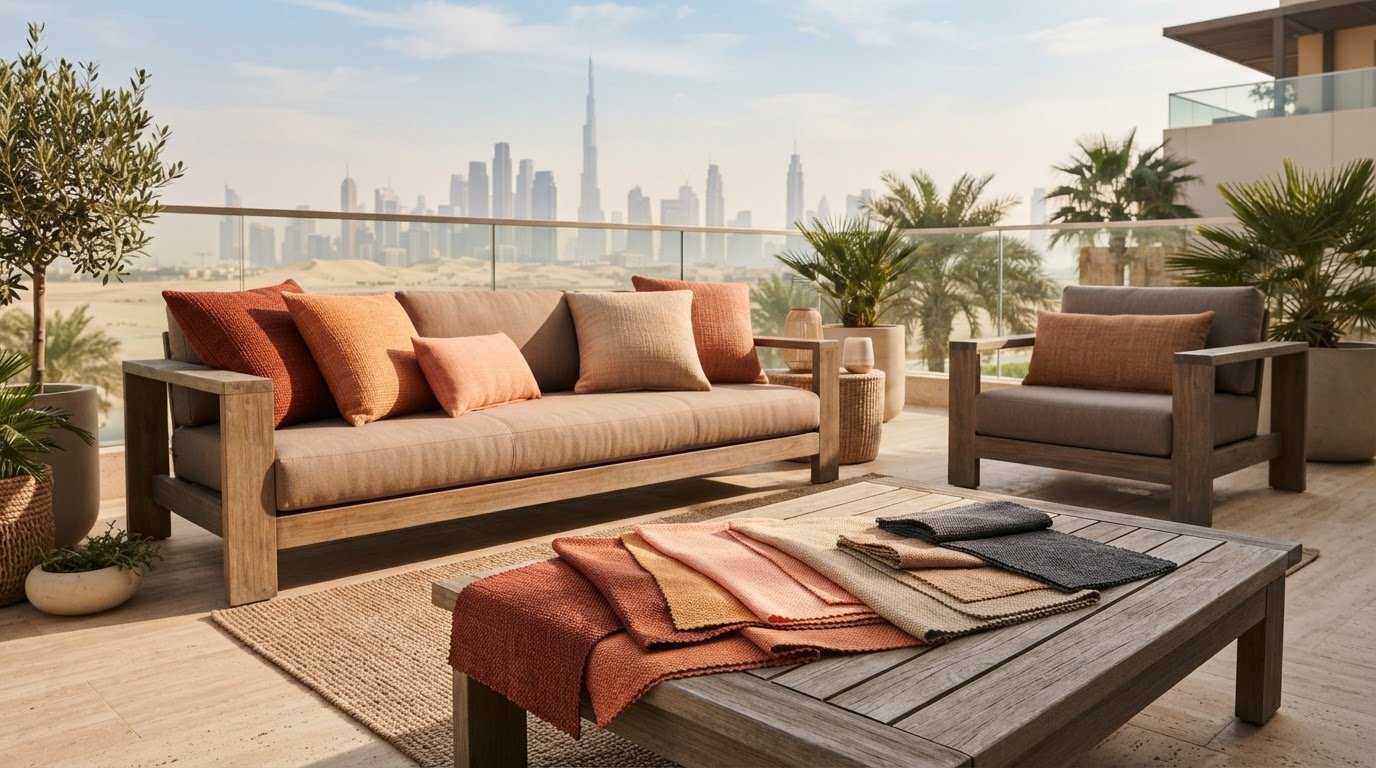

In Dubai’s strong sun, choosing outdoor cushion fabric that doesn’t fade means looking beyond a “weatherproof” label or a single protective treatment. UV exposure can gradually affect dyes and fibres, while water repellency addresses moisture, not colour retention.
It’s understandable to want cushions that keep their appearance without sacrificing comfort, easy care or a refined finish. No fabric can be promised never to fade, but comparing fibre, dyeing method and suitability for your space can help you make a more informed choice.
This guide compares options such as solution-dyed acrylic and polypropylene, and explains what performance details to check with a supplier. You’ll also learn how direct sun, shade, poolside use and everyday wear affect fabric selection, and how to distinguish UV resistance from stain- or water-repellent treatment before ordering custom cushions.
Key Takeaways
- Choose outdoor cushion fabric that doesn’t fade by comparing fibre, dyeing method and relevant test evidence, rather than relying on a fabric label alone.
- Consider how direct sun, shade, poolside moisture, dust and everyday use affect the cushions’ exposure and care needs.
- Request the fabric specification, care instructions and colourfastness documentation. Treat test results as evidence, not a lifetime guarantee.
- Compare solution-dyed acrylic, polyester and polypropylene by their practical strengths and limitations before deciding what suits your space.
- When ordering custom cushions from Fabrico, review available fabrics, fit, intended use and care requirements together.
What makes outdoor cushion fabric fade in Dubai’s sun?
Fade resistance describes how well a fabric retains its colour under particular conditions. It does not mean the colour is permanent. When choosing outdoor cushion fabric that doesn’t fade, consider how the material is likely to perform in the cushion’s actual location, rather than expecting it to resist every change over time.
Why does outdoor fabric lose colour?
Sunlight can trigger chemical changes in textile dyes and, in synthetic fabrics, the fibres themselves. Light and oxygen contribute to the degradation of a polymer surface, which helps explain why prolonged exposure can alter appearance. Heat, moisture and regular use can add to outdoor wear, though these are not all the same process.
Dust and spills can make a cushion look dull without changing its dye. Abrasion may flatten or roughen the fabric, while unsuitable cleaning products or harsh cleaning can strip or bleach colour. Follow the fabric’s care instructions, and distinguish a surface that needs cleaning from colour that has genuinely changed.
Colourfastness is a fabric’s ability to resist colour change under specified exposure or use conditions. It describes performance in particular conditions, not a promise that colour will remain unchanged indefinitely.
How does the cushion’s location affect fading?
A cushion left in direct sun for much of the day generally receives more light exposure than one placed in a shaded balcony or beneath a covered terrace. Shade reduces direct exposure, but doesn’t necessarily eliminate daylight. By a pool, moisture and frequent use may affect care needs, but they do not indicate on their own how well the colour resists light.
Look at the arrangement closely. One side of a cushion may face the sun while another stays shaded; a seat near an open edge may receive more direct light than one farther under a roof. Sun exposure can also shift with the seasons and the way the space is used.
Before comparing fabric claims, note where each cushion will sit and whether it will remain outdoors or be stored when not in use. Then compare construction, dye method, colour and care together. The same fabric may show different wear in a fully exposed seating area than in a protected one, so start with the conditions in your Dubai space.
Which outdoor cushion fabrics retain colour best?
Fibre names are a useful starting point, not a performance guarantee. Construction, dyeing method, finish and documented test results all matter. The best choice of outdoor cushion fabric that doesn’t fade depends on whether the cushions will sit in direct Dubai sun, under cover or beside a pool, as well as the feel and care you prefer.
Solution-dyed acrylic, polyester, and polypropylene compared
Solution-dyed acrylic and polypropylene, also called olefin, are often considered for outdoor use because of their potential for colour retention and practical performance. Polyester covers a broad range of fabrics, so its suitability depends on the particular construction and colourfastness evidence. These are general material considerations, not ratings of any particular fabric. Ask the supplier for specifications and test documentation that apply to the option you’re considering.
| Fibre | Colour-retention evidence | Feel and care | Exposure to consider |
|---|---|---|---|
| Solution-dyed acrylic | Ask for confirmation of the dyeing method and test results for the exact fabric. | Feel and cleaning guidance vary by weave and finish; check the care instructions. | Consider it for sun-exposed settings only after reviewing product-specific evidence. |
| Polyester | Fibre name alone doesn’t establish lightfastness. Request results for the fabric and colour. | Feel and care characteristics depend on construction and finish. | Compare its documented performance with the exposure at your location. |
| Polypropylene | Confirm the fibre, dye method and relevant test results with the supplier. | Check the sample and care instructions; performance varies by product. | Assess the exact fabric for sun, moisture and use rather than relying on the fibre name. |
Test results are meaningful only in context. Ask which method was used, what the rating measures and whether it applies to the specific colour and fabric construction. Resources explaining color fastness to light can help clarify how light exposure is assessed, but a test result is not a promise of permanent colour.
What does solution-dyed mean for colour retention?
In solution dyeing, colour is added to the polymer before it is formed into fibre, rather than applied only after the fibre is made. This process can support colour retention, but the term alone doesn’t prove how a finished fabric will perform. Ask the supplier to confirm the process and provide relevant documentation for the specific fabric.
Dye method is one selection factor, not the whole decision. Compare it with test evidence, construction, care requirements and the cushion’s intended exposure. If you’re specifying custom cushions, a discussion with Fabrico about outdoor cushions can help you review fabric options for your setting and identify what documentation to request.
How can you verify fade-resistance claims before buying?
A fabric description is only a starting point. Before choosing outdoor cushion fabric that doesn’t fade, ask for information tied to the specific fabric and colour, not just a general claim about the fibre. This lets you compare options against the cushions’ actual exposure and intended use in Dubai.
Which test information should buyers ask for?
Request the fabric specification, care instructions and any colourfastness documentation the supplier can provide. Ask for the named test method, reported rating and test conditions. Confirm whether the result applies to the exact colour and fabric construction you’re considering.
ISO 105-B02 is one possible reference for testing colourfastness to artificial light, but a standard name alone doesn’t establish how a fabric will perform in your setting. Confirm that the method is applicable to the product and ask the supplier to explain what the result indicates. Ratings from different methods may not be directly comparable, and no single score should be treated as a universal guarantee.
- Fabric specification: Confirm fibre content, construction and any stated dyeing process.
- Test documentation: Check the method, rating, conditions and product or colour covered.
- Care guidance: Ask how to clean and maintain the fabric without compromising its appearance.
Test results describe performance under defined conditions. They can inform a buying decision, but they can’t promise that a cushion will retain its original colour for its entire life. Actual results also depend on exposure, use and care.
What do fabric treatments protect against?
Different claims address different concerns. UV resistance and lightfastness relate to exposure and colour change. Water-repellent treatment addresses how moisture interacts with the fabric, while stain resistance relates to marks and cleaning. Antibacterial treatment has a separate purpose. None of these claims, by itself, proves that a fabric is colourfast.
Fabrico offers stain- and water-repellent fabric treatment, but compatibility and care requirements should be confirmed for the selected fabric. Ask whether the treatment is suitable for that material and how it may affect cleaning or maintenance. Water repellency is not evidence of UV resistance or colour retention.
Describe the intended conditions clearly: direct sun or shade, poolside moisture, how often the cushions will be used, and whether they’ll stay outdoors. Then ask the supplier to relate the available specifications and test evidence to that use. Reviewing both documentation and care guidance gives you a sounder basis for comparing options than relying on a broad “fade-resistant” label.
How to choose outdoor cushion fabric for your Dubai space
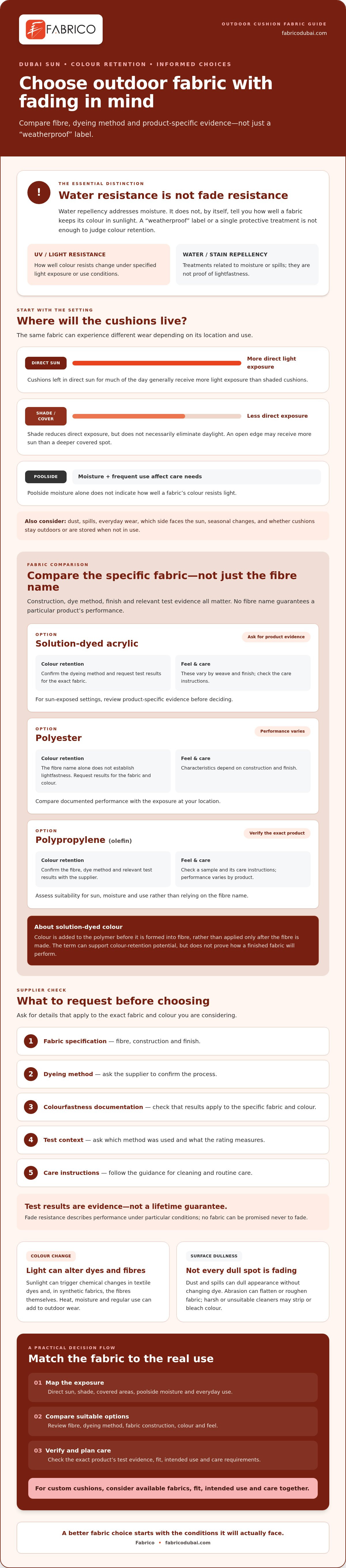
A practical selection process starts with the cushion’s location, not a colour swatch. Map the exposure, define how the cushions will be used, compare fabric evidence, then confirm care requirements. This helps you weigh colour retention against comfort, appearance and day-to-day upkeep.
Match fabric choice to sun exposure and daily use
Observe the space at different times of day. Note which cushions receive direct sun, which stay in shade, and whether the arrangement changes with the seasons. Consider poolside moisture, dust, and whether cushions will remain outdoors or can be stored when not in use. A covered terrace may reduce direct exposure, but the fabric should still suit its actual conditions.
Next, define how the cushions will be used. Decorative cushions may be handled occasionally, while seating cushions used every day face more contact and cleaning. Consider your preferred feel, firmness and colour, then ask whether the specific fabric suits that application. Don’t assume its general fibre category confirms its performance in your setting.
Compare care needs and complementary protection
Read the cleaning instructions before choosing a texture or shade. A fabric that suits the look of the space may require care that doesn’t fit your routine. Ask how to address dust and spills, and whether the guidance applies to the fabric in its finished cushion form.
Shade and a well-fitted cover can reduce direct exposure when cushions aren’t in use, but neither guarantees that colour won’t change. Fabrico offers outdoor protection covers and stain- and water-repellent treatment. Check the relevant product guidance and confirm treatment compatibility for the chosen fabric. Water repellency addresses moisture, not UV resistance or colourfastness.
When custom cushions make the decision easier
Custom sizing can help cushions fit existing outdoor furniture and suit their intended placement, from a deep seat to a compact balcony bench. Share the dimensions alongside how often the cushions will be used, where they’ll sit and how you plan to care for them. Then ask which fabric options match those exposure and maintenance needs, and what supporting information is available.
For a considered choice of fit, fabric and use, discuss custom outdoor cushions with Fabrico. The aim is not to find outdoor cushion fabric that doesn’t fade under every condition, but to select a suitable option with clear expectations about its performance and care.
Choosing custom outdoor cushions with Fabrico
Custom outdoor cushions let you consider fit, intended use and fabric together, rather than adapting a standard size to your furniture. Fabrico offers custom outdoor cushions in Dubai. The right specification depends on the seating dimensions, the space’s exposure and the care you’re prepared to provide. The aim is a well-informed choice, not a promise that any fabric will never fade.
What to prepare before discussing a custom cushion
A few details can make a conversation about your cushions more useful. Prepare measurements of the seats and existing cushions, along with photographs of the furniture and its surroundings. Note whether the cushions will be used for everyday seating or mainly for decoration, and whether they’ll stay outdoors or be stored when not in use.
Describe the setting clearly: how much direct sun it receives, where shade falls, and whether the cushions are near a pool or exposed to dust. It’s also helpful to explain your cleaning expectations and preferred feel, colour and texture. Ask specific questions about colour-retention evidence, test documentation and maintenance instructions. If treatment is being considered, check whether it’s compatible with the selected fabric.
How Fabrico can support the fabric decision
Fabrico can discuss custom cushion sizing alongside intended placement and use, and review fabric options for your project. Ask what specifications or colourfastness documentation can be provided for an option, and how its care requirements fit your routine. This gives you a clearer basis for deciding whether a fabric is appropriate for your setting and expectations.
Fabrico also offers outdoor protection covers and stain- and water-repellent fabric treatment. Water repellency relates to moisture behaviour; it isn’t evidence of UV resistance or colourfastness. Confirm treatment compatibility and care instructions for the particular fabric before proceeding. A cover may help reduce exposure when cushions aren’t in use, but it can’t guarantee that their colour will remain unchanged.
Fabrico has approximately 35 years of experience in the Dubai market. If you’re looking for outdoor cushion fabric that doesn’t fade, discuss your furniture measurements, exposure and care needs with the team, then review the options and supporting information together. A specific conversation can help you make a more confident selection for your outdoor space.
Choose cushions with confidence for your outdoor space
The right outdoor cushion fabric that doesn’t fade is not defined by a label alone. Compare the fibre and dyeing method, ask for colourfastness evidence for the specific fabric, and consider how sun exposure, everyday use and care will affect your cushions. Water-repellent treatment can address moisture, but it isn’t proof of UV resistance or colour retention.
Fabrico brings approximately 35 years of experience in the Dubai market and offers custom outdoor cushions, outdoor protection covers and water-repellent treatment. A custom specification lets you consider fit and intended use alongside fabric suitability, with care requirements and available documentation part of the conversation.
Ready to explore options for your space? Discuss custom outdoor cushions with Fabrico and share your furniture measurements, exposure conditions and preferences. With the right questions and a considered comparison, you can make a choice suited to your outdoor setting.
Frequently Asked Questions
What is the best outdoor cushion fabric that doesn’t fade?
No outdoor fabric is completely immune to fading, and the best option depends on its construction, dyeing method, test evidence and location. Solution-dyed acrylic and polypropylene are commonly considered for outdoor use, but the exact fabric specification matters more than the fibre name alone. For Dubai’s sun-exposed spaces, ask for colourfastness documentation for the fabric and colour you’re considering, then compare care instructions and suitability for your cushions’ exposure.
Does solution-dyed fabric resist fading better?
Solution-dyed fabric can offer an advantage because colour is added to the polymer before it becomes fibre, rather than applied only after the fibre is formed. That process doesn’t make a fabric fade-proof or confirm how a specific finished textile will perform. Ask the supplier to verify the dyeing method and provide relevant lightfastness evidence for the exact fabric. Consider test conditions, exposure and care guidance as part of the decision.
Can outdoor cushion fabric fade in Dubai’s sun?
Yes. Prolonged sunlight can contribute to colour change, and direct exposure in Dubai can place more demand on outdoor cushions than a shaded or covered position. The rate and visibility of fading depend on the fabric, dye method, colour, construction, use and care. Cushions near a bright terrace edge or beside a pool may have different exposure patterns. Check the intended placement and ask for fabric-specific performance information before ordering.
How do I check if outdoor fabric is UV resistant?
Ask the supplier for the fabric specification and relevant test documentation, including the named method, rating and test conditions. Confirm that the results apply to the exact fabric and colour, and ask how the rating relates to your cushion’s intended exposure. A standard such as ISO 105-B02 may be relevant to lightfastness testing, but test methods and ratings aren’t automatically interchangeable. Treat documentation as useful evidence, not a lifetime guarantee.
Is water-resistant outdoor fabric also fade-resistant?
No. Water resistance or water repellency describes how a fabric responds to moisture, not how well it retains colour in sunlight. A separate lightfastness or colourfastness claim needs relevant supporting evidence. Fabrico offers stain- and water-repellent treatment, but buyers should confirm compatibility and care instructions for the selected fabric. For cushions exposed to Dubai’s sun, assess UV-related performance separately from moisture protection before choosing.
What colour outdoor cushion fabric fades the least?
No colour can be identified as the least likely to fade without evidence about its dye, construction and tested performance. Colour can affect how noticeable a change appears: a subtle shift may be easier to see on some shades than others. Request colourfastness information for the specific colour, not just a general fabric rating. Also consider dust, cleaning needs and your preferred look when choosing cushions for a Dubai outdoor setting.
How can I protect outdoor cushions from fading?
Start by choosing fabric with relevant colourfastness evidence for its intended exposure, then follow its care instructions. Reduce direct sun where practical by using shaded placement or storing cushions when they’re not in use. Outdoor protection covers can help limit exposure while cushions are covered, but they don’t guarantee colour won’t change. Keep cushions clean using the recommended method, since unsuitable products or harsh cleaning can affect appearance.