
A heavier Roman blind may seem like the safest shield against Dubai’s sun, but too much weight can make neat folds and smooth operation harder. Choosing the best fabric for Roman blinds in hot climates means balancing sunlight management with the way the blind hangs, moves and feels in the room. Colour and texture matter, but so do fabric weight, weave, lining and care requirements.
This guide compares linen, cotton, polyester and blended fabrics, with practical points to check before choosing one for a particular window. You’ll also find ways to compare lining options, consider direct sunlight and assess samples in your room. Use these details to narrow down a suitable combination, then confirm the fabric, lining and measurements with a Dubai window-treatment specialist before custom fabrication.
Key Takeaways
- The best fabric for Roman blinds in hot climates balances sunlight management, crisp folds, appearance and everyday care.
- Compare linen, cotton, polyester and blends by their texture, fold behaviour and cleaning needs before choosing for a room.
- Consider how fabric weight, colour and lining affect the finished blind’s drape, light control and overall bulk.
- Use window orientation, privacy needs and daily use to narrow your choices, then review samples and confirm the final specification.
- Custom fabrication brings fabric, lining, window measurements and room requirements into one discussion with a Dubai-based Roman blind specialist.
What Makes a Roman Blind Fabric Suitable for a Hot Climate?
A suitable Roman blind fabric balances the room’s needs for light and privacy with the way the cloth folds and the care it requires. No single material works the same way on every window. Sun exposure, preferred appearance, how often you operate the blind and the lining all affect the result. These are useful starting points when comparing the best fabric for Roman blinds in hot climates, rather than relying on broad claims that one fibre is inherently “cooler.”
Assess the face fabric and lining as separate parts of the specification. The face fabric contributes colour, texture and fold character. The lining can change light control, privacy and the bulk of the finished blind. They work together, but a lining does not make every face fabric suitable for every window. Weave, weight, colour and material can all influence how textiles interact with sunlight. For background, see this overview of sun protective fabric properties, while noting that clothing guidance is not a performance rating for window blinds.
How sunlight and room use affect Roman blind fabric
For a window exposed to direct, bright sun, consider glare, privacy and how the fabric looks as daylight changes. In a shaded room, you may prefer a lighter or more open-feeling fabric if preserving natural light is a priority. Neither setting has one automatic solution. Start with the room’s purpose, the view outside and whether you want filtered daylight or a more covered window.
Think about daily use as well. If you raise and lower the blind often, its fold behaviour and the combined weight of fabric and lining deserve particular attention. Before choosing, decide how much privacy you need during the day and what level of light feels comfortable in the room.
Why Roman blind construction changes the fabric choice
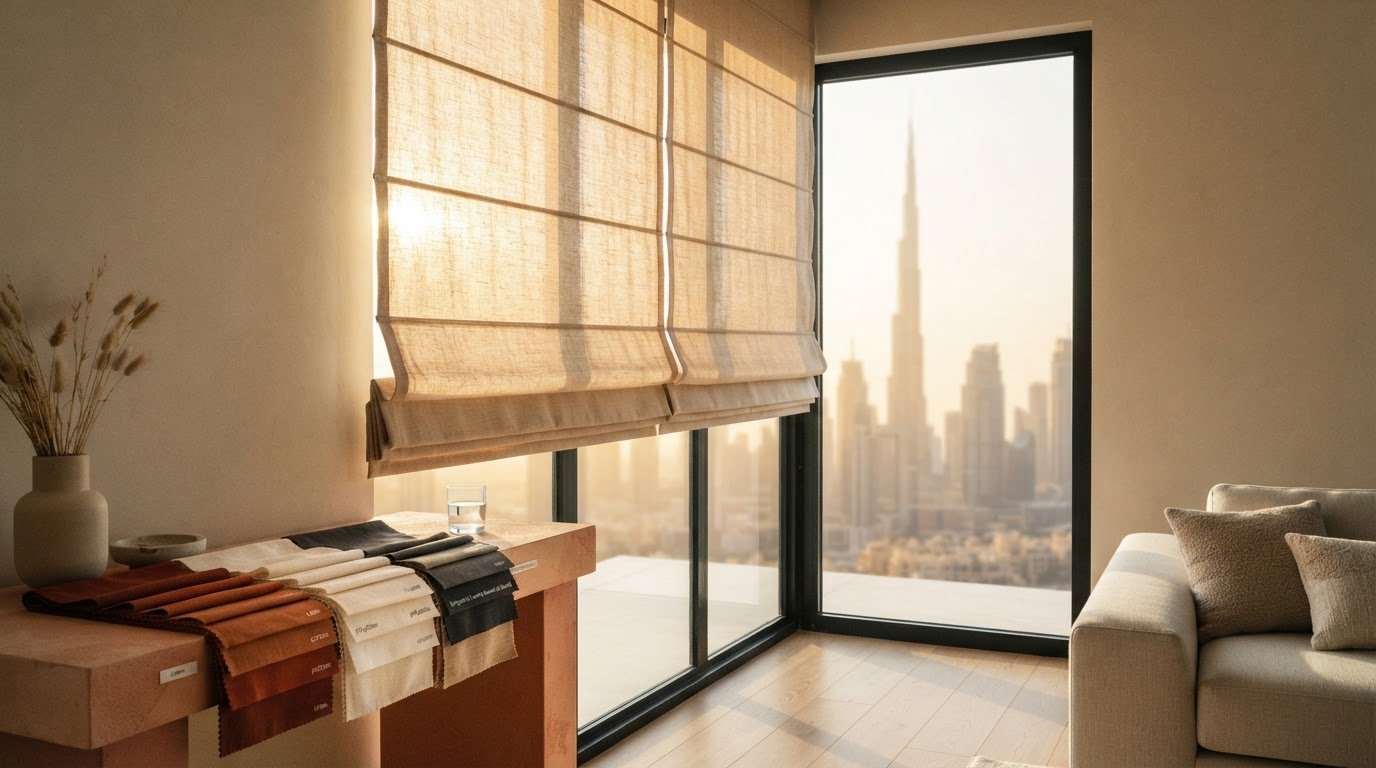
Roman blinds gather into horizontal folds when raised, so fabric weight and flexibility affect how those folds sit. A cloth that hangs fluidly when fully lowered may stack differently at the top. Ask to see the selected material in a folded sample, not only as a flat swatch.
The lining adds another layer and may increase the blind’s bulk, changing its finished appearance and operation. Review the fabric and lining together, and confirm that the combination suits the window measurements and how you plan to use the blind. This helps prevent choosing a fabric for its appearance alone, without considering how it will function once made up.
Which Roman Blind Fabrics Handle Dubai Sunlight and Daily Use?
Linen, cotton, polyester and blended fabrics can all be considered for Roman blinds, but they differ in texture, fold character and care needs. A fibre name alone does not predict how a finished blind will look or perform. Weave, finish, lining and construction matter too. Compare the actual fabric specification and sample instead of choosing by material label alone.
| Fabric | Texture and folds | Light control and care | Room suitability to consider |
|---|---|---|---|
| Linen | Often chosen for a natural, textured look. Its drape and fold definition depend on the weave and fabric weight. | Light control depends on the fabric’s openness and lining. Check the care instructions and whether the finish is suitable for the intended use. | May suit living areas where a relaxed natural texture is desired. Review a sample in the room’s daylight. |
| Cotton | Offers a familiar, soft appearance; fold neatness varies with the fabric’s structure and weight. | Privacy and light levels depend on the weave and lining. Follow the specified cleaning method to help maintain the fabric. | Can be considered for bedrooms or living spaces, with the lining selected to match privacy and light preferences. |
| Polyester | Available in varied textures and constructions, so inspect how the chosen sample gathers into folds. | Care requirements differ by specification. Confirm cleaning guidance and the fabric’s suitability for the window’s exposure. | Worth comparing for rooms where practical upkeep is a priority, including kitchens, subject to the maker’s guidance. |
| Blends | Combine fibres, but texture and drape depend on the particular composition and weave. | Light control and maintenance aren’t uniform across blends. Check the full fabric and lining details. | Compare individual samples for the room rather than assuming all blends offer the same benefits. |
Natural fibres and blends: appearance versus practical needs
Linen and cotton are worth considering when texture and a natural appearance matter. Their behaviour in a blind varies with the weave, finish and manufacturer’s specification, which can affect how the fabric hangs, folds and should be cared for. Blends vary too. Ask about the specific composition and inspect a sample, particularly if the blind will be raised and lowered regularly.
Synthetic fabrics and linings: what to compare
Judge polyester and blended fabrics by their specific construction and care instructions, not by broad claims about synthetic fibres. A light-filtering lining may suit a room where softened daylight is welcome. Blackout lining may better match a need for stronger light control, such as in a bedroom. Either lining can affect the finished blind’s bulk, so check fabric and lining compatibility together.
Before deciding, check how both the fabric and lining should be cleaned and whether either has care restrictions. To compare options for custom Roman blinds in Dubai, discuss the fabric, lining and window requirements together with a specialist.
How Do Fabric Weight, Lining, and Colour Change the Result?
A Roman blind’s finished look depends on the full specification, not just the face fabric. Weight affects how the cloth hangs and gathers; lining adds a layer and can change the blind’s bulk; colour influences how the window looks in the room. When comparing the best fabric for Roman blinds in hot climates, assess these factors together and ask for product details to support any performance claims.
Choosing fabric weight for neat, functional folds
Lighter fabrics may create a softer, more fluid drape, while more structured fabrics can produce more defined folds. These are tendencies, not guarantees: weave, flexibility, lining and fabrication also affect the result. A very light sample may look graceful when lowered but behave differently when gathered. A heavier one may look substantial yet create a bulkier stack.
Assess a sample both hanging and folded, ideally with the intended lining. Consider the window’s proportions and how much fabric will gather at the top when the blind is raised. Before ordering, ask the fabricator to confirm that the chosen fabric and lining suit the blind’s dimensions and intended operation.
Selecting lining and colour for the room
Choose lining according to the room’s privacy and light-control priorities. A light-filtering option may suit a space where softened daylight is welcome, while blackout lining may be appropriate when stronger light control is preferred. The extra layer can affect the blind’s thickness and fold profile, so review the combined sample or specification rather than judging the face fabric alone.
Colour is primarily a visual decision. Pale shades can create a lighter, more understated impression, while deeper tones may add contrast or create a stronger focal point. Check samples against the wall colour, furnishings and the room’s daylight, since their appearance can shift between bright and shaded conditions. Colour alone does not establish a fabric’s thermal performance.
For performance details, request relevant supplier documentation for the specific fabric and lining combination. Distinguish documented properties from general assumptions about fibre, weight or shade. If a claim relates to heat or sunlight, ask what it measures and whether it applies to the finished blind. Check the care instructions too, especially if the face fabric and lining require different handling. A carefully specified combination can match the room’s practical needs while maintaining the intended appearance.
How to Choose Roman Blind Fabric for a Dubai Home
A clear selection process helps match the fabric to the window, room and your routine. Rather than starting with colour alone, consider light, privacy, operation and maintenance, then confirm the details for the made-to-measure blind.
A five-step fabric selection checklist
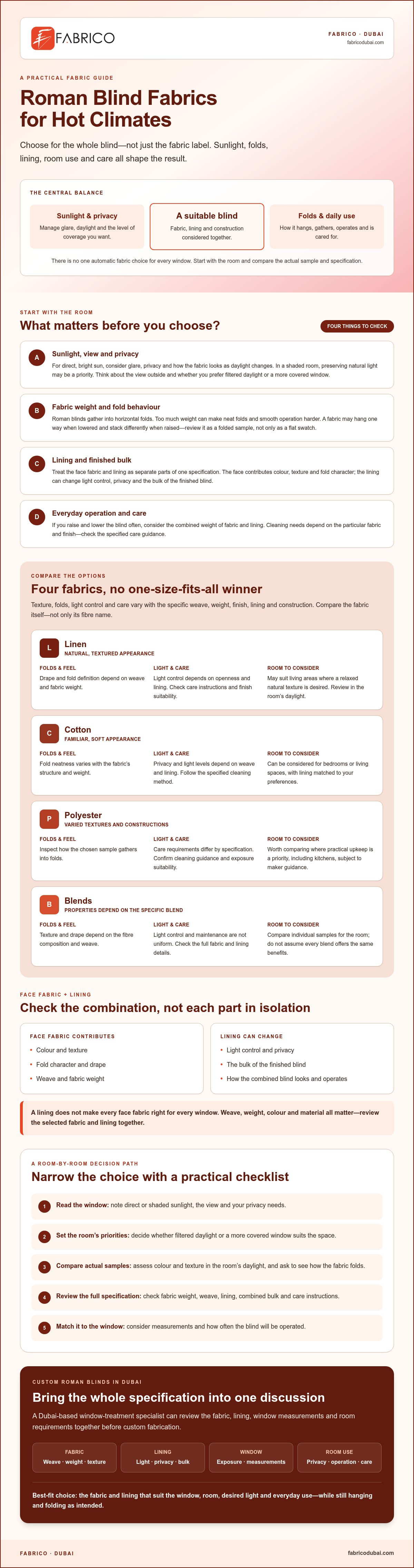
- Define the room’s priorities. Decide how much privacy you need, whether you prefer filtered daylight or stronger light control, and what appearance will complement the space.
- Assess the window and its exposure. Note whether it receives direct sunlight or is mostly shaded, then consider the room’s use. A bedroom, living area and kitchen may call for different balances of privacy, light and upkeep.
- Consider how you’ll operate the blind. Think about how often it will be raised and lowered. With regular operation, fold behaviour and the combined weight of fabric and lining become especially relevant.
- Compare the full specification. Review fabric samples alongside lining options. Check how the material drapes and gathers, what light control the lining is intended to provide, and what care instructions apply to both.
- Review samples, then confirm measurements. View samples in the intended room at different times of day, since daylight can change how colour and texture appear. Before production, confirm the window measurements, fabric, lining and operating requirements.
Questions to ask before ordering custom Roman blinds
Use the final discussion to clarify details that a flat swatch cannot show. Ask how the selected fabric and lining are expected to affect the folds, drape and overall bulk. Confirm the recommended cleaning method, routine maintenance and whether the materials suit the window’s exposure and intended use.
If a fabric is described as offering a particular level of sunlight or heat performance, ask for the relevant supplier specification. Clarify whether it applies to the fabric alone, the lining or the finished blind. Do not rely on a fibre name or colour as proof of performance. For a custom blind, consider these details alongside the window measurements and room requirements.
This process helps narrow the best fabric for Roman blinds in hot climates to a combination that suits your home, rather than a one-size-fits-all recommendation. For broader UAE guidance, consult a Roman blind fabric guide that covers local room and window considerations. To discuss fabric, lining and measurements for custom Roman blinds in Dubai, speak with a Dubai Roman blind specialist.
Choosing Custom Roman Blinds with Fabrico in Dubai
With custom fabrication, the fabric, lining, window measurements and room requirements can be considered together. Fabrico is a Dubai-based specialist offering custom Roman blinds. A focused discussion can help you compare options for your space and understand how the selected materials may affect the finished blind.
What to prepare for a Roman blind consultation
Prepare a few details to make it easier to explain what you need. Bring any measurements you have, photographs of the window and room, and notes about direct sunlight, privacy and when you usually raise or lower the blind. Treat your measurements as reference points and confirm how final measuring will be handled before fabrication.
- Bring fabric preferences, colour ideas or sample references that show the texture and appearance you like.
- Note whether you prefer filtered daylight or stronger light control, and ask which lining options are currently available.
- Ask for the care instructions and whether the fabric and lining are suitable for the intended window and room.
Availability and suitability depend on the specific material and application. Ask the specialist to confirm the current options rather than assuming a particular fabric or lining can be supplied.
When professional fabric guidance can help
A specialist discussion can help when a fabric looks appealing as a flat sample but you are unsure how it will gather into folds or work with a lining. Review the sample against the room’s needs, then ask how the proposed combination may affect the blind’s appearance and operation. Confirm the care instructions and request relevant documentation for any stated performance properties.
Resolve practical details before ordering: which fabric and lining are proposed, how the window measurements will be confirmed, and whether the combination suits the intended use. This turns a preference for the best fabric for Roman blinds in hot climates into a considered specification for your room, without relying on general claims about a fibre or colour.
For broader design ideas, refer to the pillar article Mastering Roman Blinds for Modern Interiors. To discuss fabric options, lining and project requirements for custom Roman blinds in Dubai, speak with Fabrico and ask which choices are currently suitable for your window.
Choose a Roman Blind Combination That Works for Your Home
The best fabric for Roman blinds in hot climates is not determined by fibre name alone. In Dubai, consider the window’s sunlight, privacy needs and daily use, then assess how fabric, lining and construction work together. Reviewing a sample in the room helps you judge colour and texture; the full specification clarifies care and light-control expectations.
Fabric weight and lining also affect how the blind gathers and how much bulk sits at the top when raised. Compare these details before ordering to balance the appearance you want with practical operation, rather than relying on broad claims about colour or material.
Fabrico is a Dubai-based specialist offering custom Roman blinds. Discuss your window measurements, room requirements and fabric preferences with the team, and confirm which options are currently suitable for your project. Discuss custom Roman blinds and fabric options with Fabrico.
With the right questions and a considered specification, you can choose a blind that suits your space and the way you use it every day.
Frequently Asked Questions
Which fabric is best for Roman blinds in a hot climate?
There is no single fabric that suits every room or window. The best fabric for Roman blinds in hot climates depends on its weave, weight, finish, lining options, care requirements and how it gathers into folds. In Dubai, consider the window’s sunlight exposure and your privacy needs. Compare samples and product specifications rather than relying on the fibre name alone.
Are linen Roman blinds suitable for Dubai?
Linen can suit a room where a natural texture is desired, but its suitability depends on the specific fabric and how the blind will be used. Check the weave, finish, lining options and care instructions, and ask how the material behaves when gathered into folds. Review a sample in the room’s daylight. If you have concerns about maintenance or sunlight exposure, discuss them with the fabricator before ordering.
Do polyester Roman blinds work well in hot climates?
Polyester and polyester blends are worth comparing, but the fibre label alone cannot predict how a Roman blind will look or perform. Check the specific fabric’s weight, weave, finish, light-control options and cleaning guidance, as well as its suitability for blind construction. For claims about fading or heat, ask the supplier for supporting product specifications. This helps you assess the actual material instead of relying on general assumptions about polyester.
Should Roman blinds have blackout lining in Dubai?
Blackout lining may suit a bedroom or another room where stronger light control and privacy are priorities, but it is not necessary for every window. If you prefer softened daylight, compare other lining options. Consider how an added lining affects the blind’s bulk and folds, and check care requirements for the complete combination. Match the specification to the room’s use rather than choosing blackout lining by default.
Can Roman blinds help reduce heat from a sunny window?
A Roman blind can affect how much light enters a room, but its impact depends on the fabric, lining, window and installation. A particular fibre or colour alone does not guarantee a measurable change in room temperature. If solar control is important, ask for specifications that apply to the proposed fabric or lining, and clarify what those details measure. Consider the complete window treatment rather than making a decision based on colour alone.
How do I choose Roman blind fabric for a west-facing Dubai window?
Start by observing when the window receives direct sun and deciding how much privacy and daylight the room needs. Then compare fabric and lining samples in the room, checking their appearance, fold behaviour and care instructions. Consider how often you will raise and lower the blind. A Dubai window-treatment specialist can discuss your priorities and clarify which currently available fabric and lining combinations may suit the window.
How should I clean Roman blind fabric?
Follow the care instructions for the specific fabric and lining, since suitable cleaning methods vary. Before ordering, ask whether the finished blind can be spot-cleaned, professionally cleaned or needs another method, and what routine maintenance is recommended. Do not assume a fabric treatment makes every cleaning method safe. If a treatment is being considered, confirm its compatibility with the selected Roman blind fabric and ask for the relevant care guidance.