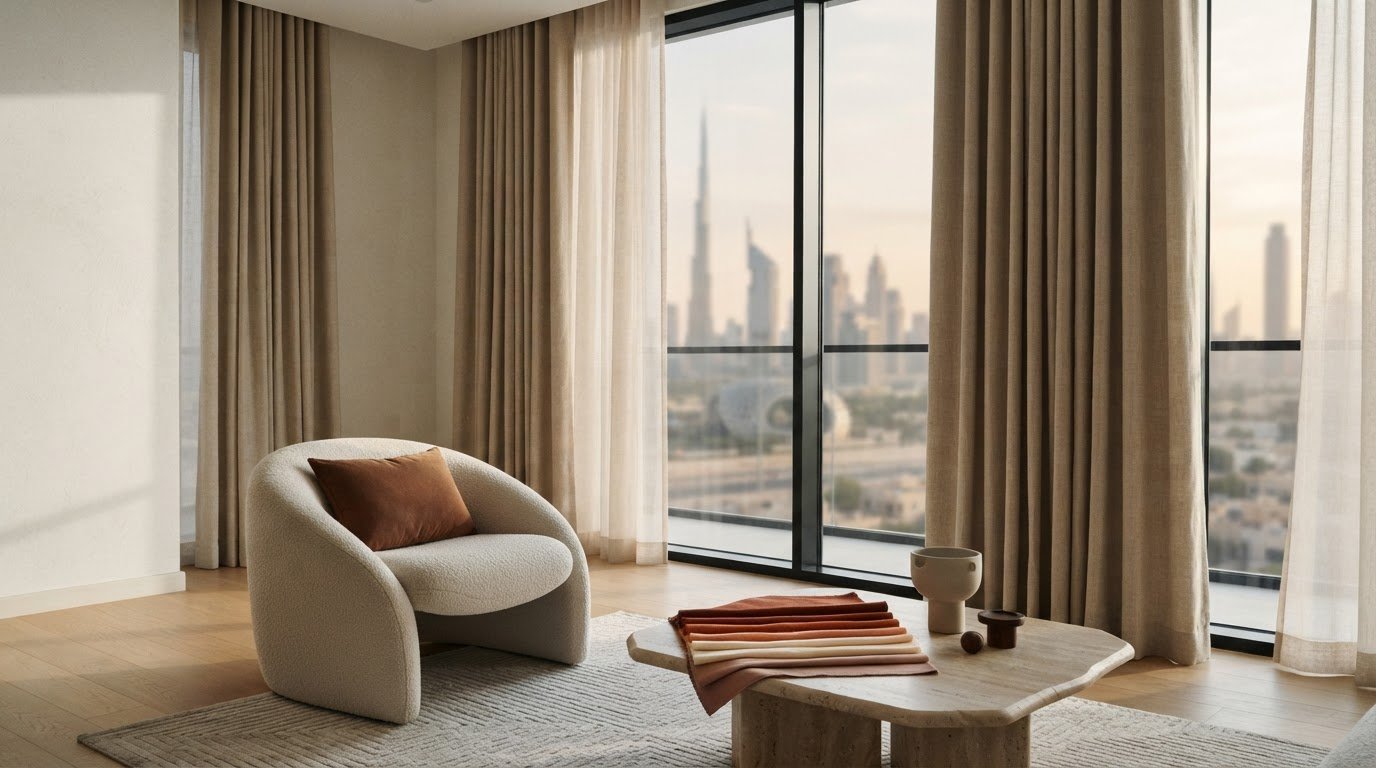

A fire-retardant treatment is not a blanket promise that a fabric is fireproof. For curtains or upholstery, its suitability depends on the textile, its intended use and the supporting test evidence. If you’re considering fire resistant fabric treatment Dubai, that distinction matters as much as the treatment itself.
It’s understandable to want added protection without compromising the look, feel or care of your furnishings. Treatment may change how a fabric responds to flame, but it doesn’t replace structural fire protection or automatically meet every project requirement. In Dubai, the UAE Fire and Life Safety Code of Practice and Dubai Civil Defence requirements may be relevant. Check that any documentation applies to the material and application, rather than relying on a provider’s general credentials.
This guide explains what treatment can and cannot do, what to ask about fabric compatibility, appearance and aftercare, and which test reports or approvals to request. It also covers how to assess a local provider, including Fabrico, a Dubai-based furnishings and treatment specialist with approximately 35 years of market experience. Experience can provide local context, but it is not proof of a particular treatment result.
Key Takeaways
- Fire-retardant treatment is different from fireproofing. It should not be described as making fabric fireproof.
- Before considering fire resistant fabric treatment Dubai, identify the fabric, furnishing and intended use. These details affect whether treatment may be suitable.
- Compare post-purchase treatment with textiles supplied with fire-performance documentation. Check the care requirements and evidence for either option.
- Before making a project compliance decision, ask for test reports, certificates and a written scope that relate to the specific fabric and application.
- Fabrico is a Dubai-based option for discussing furnishings and treatment. Its approximately 35 years in the market should be considered separately from evidence of treatment performance.
What Does Fire Resistant Fabric Treatment Mean for Dubai Furnishings?
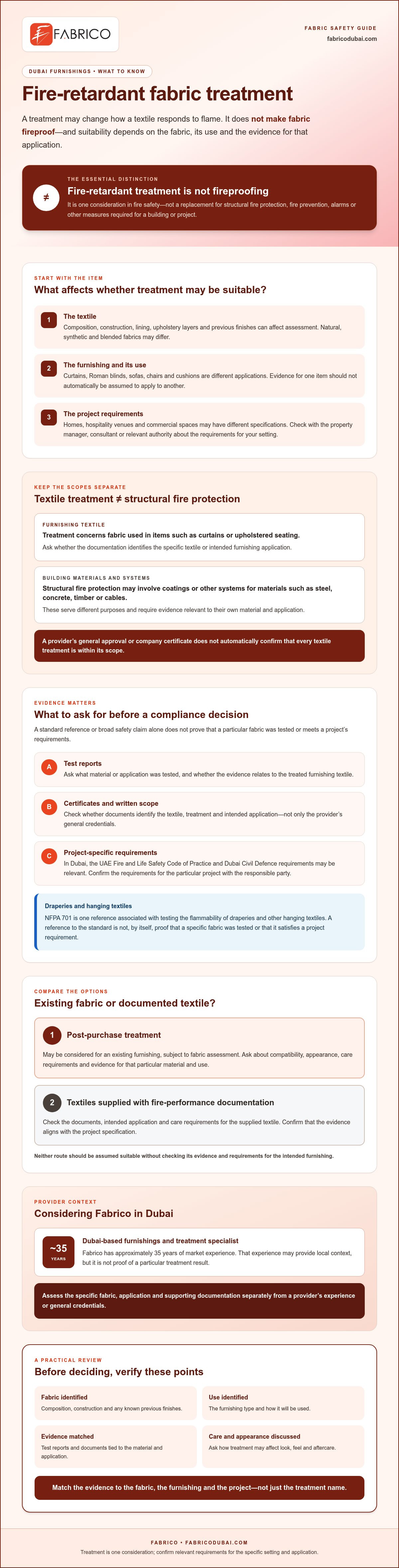
Fire-resistant fabric treatment is an application intended to change how a furnishing textile responds to flame. It may be considered for curtains, Roman blinds, upholstery and cushions, but it does not make fabric fireproof or remove the risk of fire. Suitability and performance depend on the textile, treatment, test evidence and intended use. For fire resistant fabric treatment Dubai, look for evidence relevant to the particular material and application, not a broad safety claim.
Fire-retardant substances, known as flame retardants, are used in different ways and materials. The name of a treatment alone does not show how it performs on a particular furnishing textile. Fabric composition, construction and previous finishes can affect suitability. Ask the provider what evidence applies to the item being assessed.
How Is Fabric Treatment Different from Structural Fireproofing?
Textile treatment concerns fabric used in furnishings. Structural fire protection, by contrast, may involve coatings or other systems for materials such as steel, concrete, timber or cables. These serve different purposes and require evidence relevant to the material and application.
A contractor’s general approval or company certificate does not automatically confirm that every textile treatment is within its scope. Ask whether the documentation identifies the furnishing textile or intended application, such as curtains or upholstered seating, and whether test evidence relates to the treated material. A general statement that a provider is approved is not a substitute for checking the specific treatment and its documented scope.
Which Furnishings Might Need Assessment in Dubai?
Items to discuss with a provider can include curtains, Roman blinds, sofas, chairs and cushions. Whether treatment is appropriate depends on the fabric and the needs of the space. Do not assume that evidence for one item also applies to another, even if both are fabric furnishings.
Homes, hospitality venues and commercial spaces may have different project specifications. Before arranging treatment, check with the property manager, consultant or relevant authority about the requirements for your setting. If a project specifies a test or document, confirm that requirement before choosing a treatment. This keeps the decision grounded in both the furnishing and the project’s actual needs.
How Fire Resistant Fabric Treatment Works, and What Its Limits Are
Fire resistant fabric treatment Dubai involves treating an existing textile with the aim of changing how it responds to flame. Processes and results can vary, so do not assume every fabric can be treated or that one treatment will produce the same outcome across different furnishings. A provider should assess the material and explain what evidence, if any, supports treatment for that use.
Performance claims need evidence for the relevant treated textile. Ask for documentation that identifies the material or application tested, rather than relying on a general claim about a treatment or company. For draperies, the NFPA 701 standard is one reference associated with testing the flammability of draperies and other hanging textiles. A reference to a standard alone does not prove that a particular fabric was tested or that it satisfies a project’s requirements.
Treatment is only one consideration in a wider approach to fire safety. It does not replace fire prevention, alarms or other measures required for a building or project. Confirm relevant requirements with the property manager, consultant or authority responsible for the setting.
Why Fabric Type and Intended Use Matter
Natural, synthetic and blended fabrics can differ in composition and construction. Lining, upholstery layers, previous finishes and the way an item is used may also affect suitability. A treatment that is appropriate for a curtain should not automatically be assumed suitable for a sofa, chair or cushion.
Before proceeding, share any available fabric details, the item type and how it will be used. For a project, include the relevant specification. Ask the provider to confirm whether the fabric can be assessed and what test evidence applies. This helps distinguish a general service description from evidence for your particular material.
What Should Customers Know About Care and Durability?
Care can matter after treatment. Ask whether cleaning, laundering or abrasion may affect the performance described in the documentation, and whether particular care processes could mean the item needs re-treatment. Do not rely on assumed wash counts or service-life claims unless they are supported by relevant evidence.
Request written aftercare instructions for the treated fabric and its intended use, and keep them with any test reports or treatment records. If you’re considering Fabrico’s fire retardant treatment, ask whether your specific furnishing textile can be assessed and what documentation and care guidance is available.
How to Compare Fabric Treatment, Treated Textiles, and Other Protection
There is no single best option for every curtain or upholstered item. Compare the evidence for the particular textile, its suitability for the intended use, care requirements and project specification. Treatment applied after purchase may be worth assessing for existing furnishings. For a project that specifies documented performance, a textile supplied with fire-performance documentation may be another option. Do not assume untreated fabric has tested fire performance.
| Option | Evidence to review | Suitability and care | Project fit |
|---|---|---|---|
| Post-purchase treatment | Ask for test reports or certificates that identify the treated textile or relevant application. | Confirm the fabric can be assessed, and request care instructions for the treated item. | Check whether the evidence meets the project’s stated criteria. |
| Textile supplied with fire-performance documentation | Review documentation for the exact textile, including the test method, sample and any stated limitations. | Check whether the supplied material and its care requirements suit the furnishing. | Ask the project consultant or relevant authority whether the documentation is acceptable. |
| Untreated fabric | Do not assume performance without relevant test evidence. | Assess it as an untreated material, considering its composition and intended use. | It may not meet a project requirement for documented fire performance. |
Treatment Versus Fabric Supplied with Performance Documentation
Look beyond a certificate title. Does its supporting evidence identify the test method, sample, treatment and any conditions or limitations? For curtains and other hanging textiles, the NFPA 701 standard is a reference for flammability testing. Mention of a standard does not establish that your fabric was tested against it or meets your project’s acceptance criteria. Where applicable, confirm those criteria with the consultant or authority.
Fire Retardant Treatment Versus Water-Repellent Protection
These treatments address different concerns and are not interchangeable. Fire-retardant treatment concerns a textile’s response to flame; water-repellent protection concerns its interaction with moisture. Do not assume one provides the other benefit unless evidence confirms this for the specific fabric. For a separate look at moisture protection, see Fabrico’s water-repellent upholstery treatment guide. Customers considering upholstery can also review the bespoke upholstery services guide when weighing fabric choices.
For fire resistant fabric treatment Dubai, compare options against the furnishing and project specification rather than relying on a universal ranking.
How to Check a Fire Resistant Fabric Treatment Provider in Dubai
Choose a provider by checking whether its assessment and documents relate to your furnishing and project, rather than relying on a broad treatment claim. Before making a compliance decision, request relevant test reports, certificates and a written scope. Use this checklist to make the discussion more specific:
- Describe the fabric, item, location and project specification. Share what you know about the textile, whether it is a curtain, blind, cushion or upholstered item, where it will be used, and any requirements already supplied for the project.
- Confirm that the fabric can be assessed. Ask whether the provider accepts that material and furnishing type for treatment. Do not assume a result for one fabric or item applies to another.
- Request evidence for the treated material. Ask for test reports or certificates that identify the tested textile and treatment, not documents that describe only the provider.
- Check the evidence’s scope. Review the test method or standard, sample description, document date, treatment covered and any limitations or maintenance conditions. Ask whether the evidence supports the specific performance claim.
- Get the project scope in writing. If the treatment is intended to meet a named project requirement, request written confirmation of what is covered and clarify any exclusions before proceeding.
Which Documents and Questions Should You Request?
Ask which test method or standard supports each claim and whether it is relevant to your fabric and intended use. Check that the report describes the tested sample and treatment, and note any conditions that could affect how its findings apply. If a document is unclear, request an explanation in writing instead of treating a certificate as universal proof.
Useful questions include: Does this report relate to my fabric or a comparable, clearly identified sample? Which treatment does it cover? Are there care or maintenance conditions? Does it address the project’s stated requirement? Keep the answers with the documentation for review.
How to Confirm Dubai Project Requirements
Requirements can depend on the specific building and use. Ask the project consultant, building management or relevant authority which criteria apply and whether the proposed documentation is acceptable for that setting. If Dubai Civil Defence or UAE fire-safety guidance is referenced, verify the project’s relevant requirement rather than relying on a provider’s general statement.
A provider’s general approval does not automatically establish that every treatment, textile or document will be accepted for your application. For fire resistant fabric treatment Dubai, keep the project specification and textile-specific evidence at the centre of the decision. To discuss a furnishing for assessment, contact Fabrico about fire retardant treatment.
Choosing Fabrico for Fire Resistant Fabric Treatment in Dubai
Fabrico is a Dubai-based option for customers considering fire-retardant treatment for furnishings. The company has approximately 35 years of experience in the Dubai market, which provides local context, but does not prove a particular treatment standard or result. Confirm suitability, available documentation and performance for the specific fabric and intended use.
A clear enquiry can establish whether an item can be assessed and what information is available before you decide. If you’re considering fire resistant fabric treatment Dubai, prepare details about the furnishing and any project requirements, then ask for written clarification of the proposed scope.
What to Share When Requesting a Treatment Assessment
Start by identifying the item, such as a curtain, Roman blind, sofa, chair or cushion. Confirm directly whether Fabrico can assess your particular fabric or furnishing. Share the fabric composition or care label if available, along with clear photographs and any known cleaning history. These details can help the provider understand what needs assessment, but they do not replace an examination or relevant test evidence.
Explain where the item will be used and whether it is part of a home, hospitality venue or commercial project. Include written requirements from a consultant, landlord, building manager or relevant authority. If a project specifies a test method or documentation, share the exact wording so the provider can clarify whether its service and available evidence address it.
What to Confirm Before Moving Forward
Before agreeing to treatment, request written answers about:
- Whether the specific fabric and furnishing can be assessed, and what the service scope includes.
- Which test reports or certificates are available, and whether they relate to the relevant textile, treatment and intended application.
- Any stated limitations, including conditions that affect how the evidence applies.
- Care and cleaning instructions, and whether particular maintenance could affect documented performance.
Keep any documentation with the item’s care information and project records. Do not assume treatment guarantees compliance, prevents ignition or remains effective indefinitely. If the furnishing is subject to project requirements, confirm acceptance with the project consultant, building management or relevant authority before relying on the treatment.
For an enquiry, share your furnishing details and any project specification with Fabrico, then ask what suitability information, documentation and aftercare guidance are available. Contact Fabrico about fabric treatment to discuss the item you’re considering.
Make Your Next Fabric Treatment Decision with Confidence
The right choice starts with the furnishing and its intended use. Fire-retardant treatment is not fireproofing, and suitability can vary by textile, so ask for evidence that relates to the specific treated material. If your project has fire-safety requirements, confirm which documentation is acceptable with the relevant project professional or authority before proceeding.
For fire resistant fabric treatment Dubai, make your enquiry specific: share the item, available fabric information and any project specification, then ask about suitability, supporting documents, limitations and aftercare. These checks help you weigh a treatment option without relying on broad safety promises.
Fabrico is a Dubai-based specialist with approximately 35 years of market experience and furnishing expertise across curtains, blinds, upholstery and cushions. Its local experience can inform your enquiry, while the treatment scope and supporting evidence still need to be confirmed for your item.
Contact Fabrico to discuss fire-resistant fabric treatment for your furnishings. Share the item and any project requirements to start a focused discussion about suitability, documentation and aftercare.
Frequently Asked Questions
What is fire resistant fabric treatment?
Fire-resistant fabric treatment is a service intended to change how a textile responds to flame. For furnishings, it may be considered for items such as curtains, blinds, upholstery or cushions, subject to assessment of the material and its intended use. If you’re considering fire resistant fabric treatment Dubai, ask what evidence applies to your specific fabric. A general service description does not establish its performance.
Is fire-resistant fabric treatment the same as fireproofing?
No. Fabric treatment concerns a textile and its response to flame; it is not the same as structural fire protection for materials such as steel, concrete or timber. Neither term means that an item is immune to fire. If a provider discusses both services, ask which applies to your furnishing and request evidence that specifically covers the textile treatment and intended application.
Can curtains and upholstery be treated with fire retardant?
They may be considered for treatment, but suitability depends on the fabric, construction, existing finishes and intended use. Curtains, Roman blinds, sofas, chairs and cushions may involve different textile materials or project needs. Before arranging treatment, share item details and any fabric labels or specifications with the provider. Confirm directly whether that particular furnishing and fabric can be assessed, and what supporting evidence is available.
Does fire retardant treatment make fabric completely fireproof?
No. Fire-retardant treatment should not be described as making fabric fireproof. It does not eliminate fire risk or replace prevention, alarms or other required safety measures. The fabric’s response depends on the material, treatment and conditions covered by relevant testing. Review documentation for the specific treated textile and intended use, and avoid relying on broad claims without applicable evidence.
How can I verify a fire-resistant fabric treatment certificate in Dubai?
Check whether the report or certificate identifies the tested material, treatment, test method, sample and any limitations or care conditions. A provider’s general certificate alone may not show that a particular curtain or upholstery fabric was covered. For a Dubai project, ask the project consultant, building management or relevant authority which requirements apply and whether the evidence is acceptable for that building and use.
Will fire retardant treatment change the look or feel of fabric?
It may, but the effect can depend on the fabric and treatment, so do not assume the appearance or texture will remain unchanged. Ask the provider what to expect for your specific textile and how its assessment relates to the finish and feel. If appearance matters, raise this before proceeding and request any available information about the fabric’s condition after treatment.
Does cleaning or washing affect fire-resistant fabric treatment?
Cleaning, laundering or abrasion may affect documented performance, depending on the fabric and treatment. Ask which care methods are suitable, whether particular cleaning could affect the treatment, and whether reassessment or re-treatment may be needed. Request written aftercare instructions for the specific furnishing. Do not assume a set number of washes or a service life unless relevant evidence supports that claim for the treated textile.