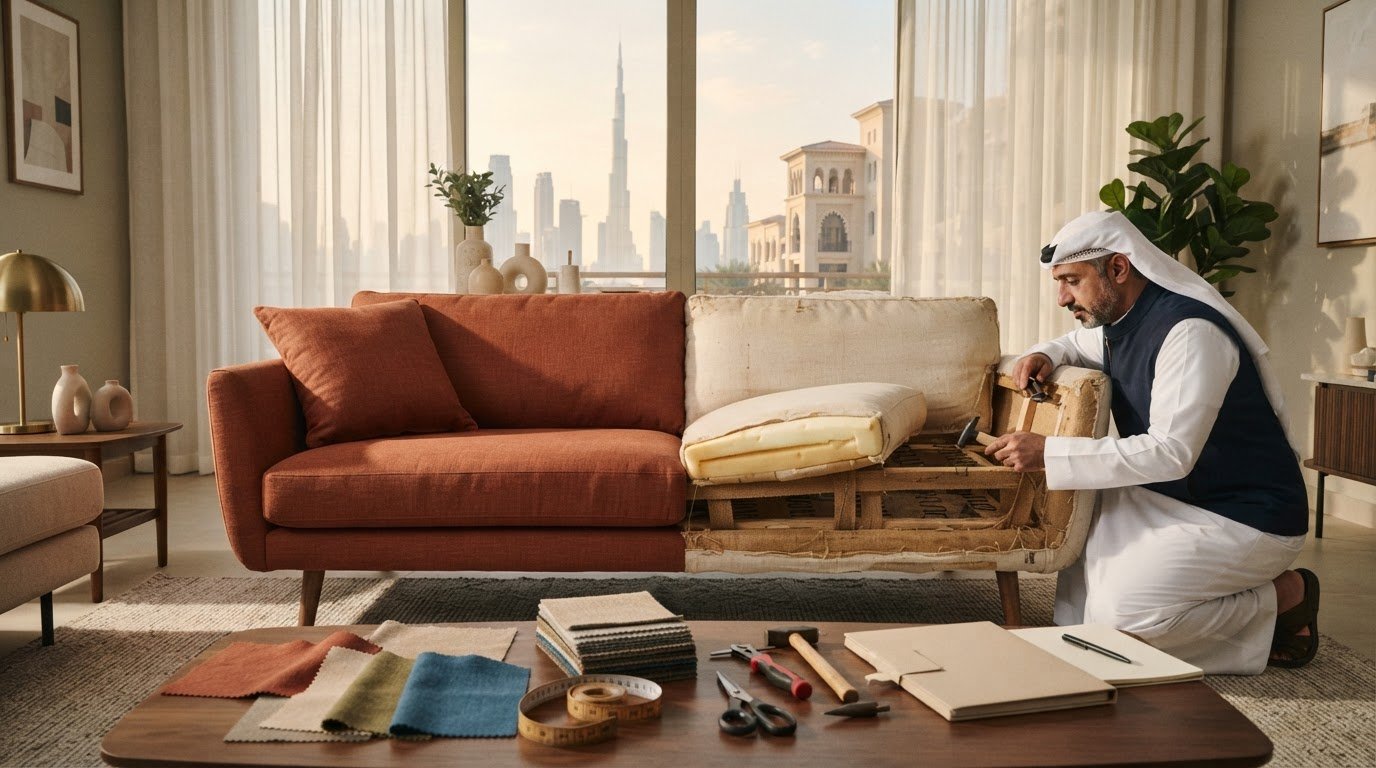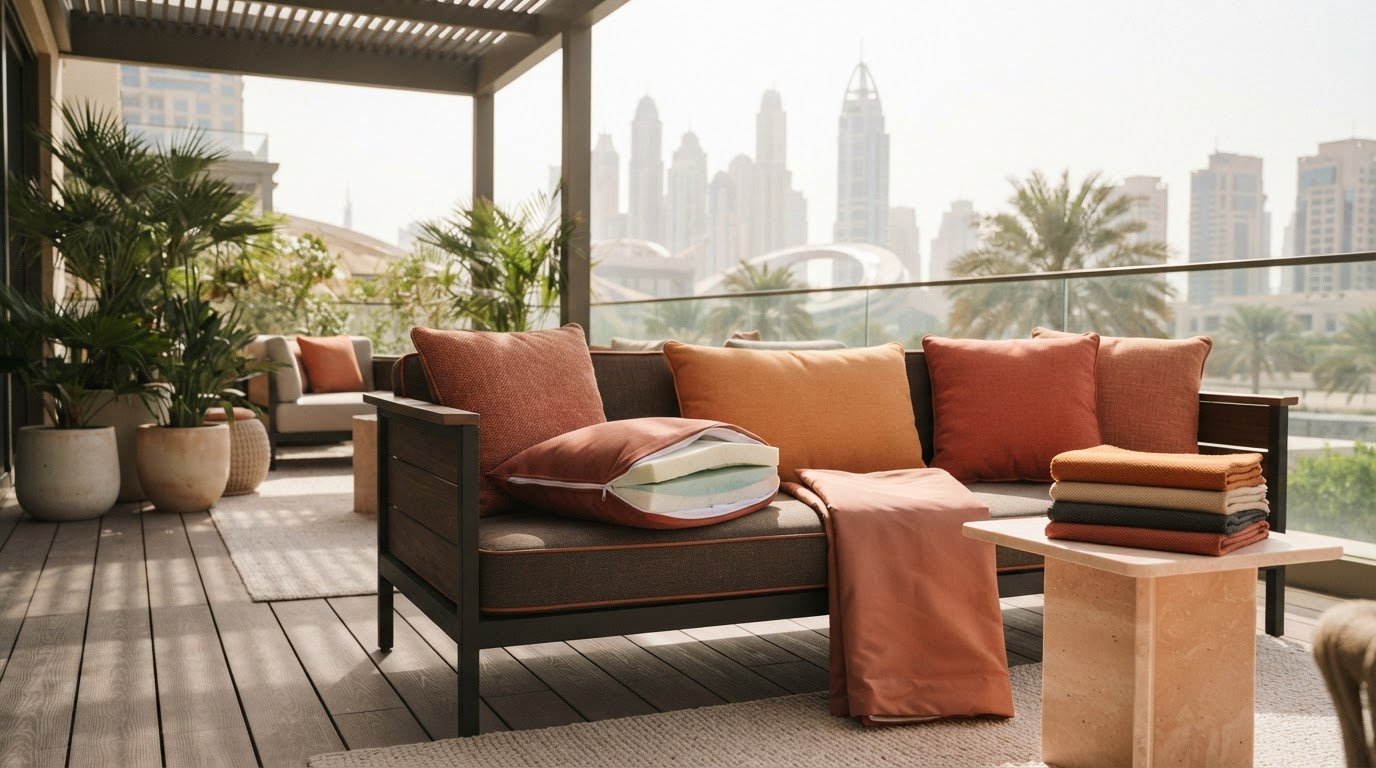

A premium fabric alone won’t make outdoor cushions last in the UAE. For durable outdoor cushions UAE homeowners can rely on, the whole setup matters: intense sun, fine dust, humidity and occasional rain all affect the fabric, filling, fit and everyday care. Colour and appearance matter, but fading, trapped moisture or cushions that shift on the furniture can affect comfort and condition just as quickly.
This guide explains how to match cushions to their setting, whether they’re on an exposed terrace, a shaded balcony or beside a pool. You’ll learn what to consider in fabric and construction, how accurate measurements support fit and comfort, and which habits can help protect cushions between uses. We’ll also look at how custom cushions and outdoor protection covers work together, so you can choose for your furniture, routine and space.
Key Takeaways
- Match cushions to how each seating area is used, from a sheltered balcony to garden or poolside furniture.
- Assess seams, filling and fit alongside fabric. A fabric label alone can’t tell you whether a cushion suits your setup.
- Compare standardized sizes with bespoke options to balance convenient replacement against a precise fit and design flexibility.
- Measure seating width, depth and back height, including irregular sections, before choosing cushions for your furniture.
- Plan care and protection as part of your choice. Fabrico’s custom cushions and outdoor protection covers can be made for your space and intended use.
Why durable outdoor cushions need a UAE-specific plan
The goal is simple: cushions that stay comfortable and presentable through regular outdoor use. The right choice depends on where they’ll sit. A balcony sheltered by an overhang has different demands from an exposed terrace, a poolside seating area or a garden lounge with little shade. Choosing durable outdoor cushions UAE spaces can rely on starts with assessing those differences, rather than treating every outdoor setting as equally exposed.
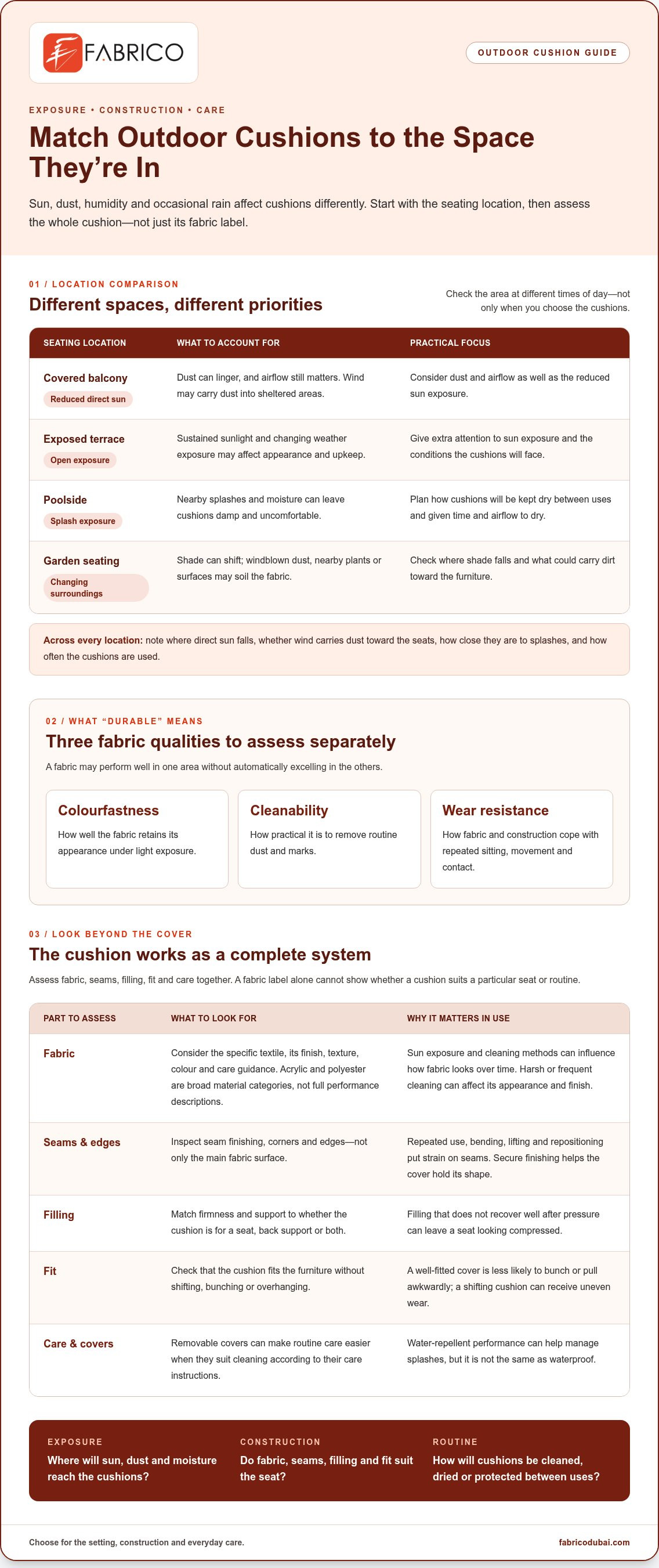
Sunlight, airborne dust, humidity and occasional rain affect cushions in different ways. Repeated direct sun can gradually change colour and surface appearance. Dust settles on cushions and may mean more frequent cleaning, while humidity and moisture can make seating uncomfortable if cushions stay damp. Wind can also carry dust into sheltered areas, so shade does not always mean less upkeep.
“Weather-resistant” describes a useful quality, not a promise that cushions need no care or will suit every location. Materials and construction vary. A cushion designed for a covered seating area may not be the best match for regular exposure beside a pool. Consider the conditions together before choosing fabric, filling and a care routine.
How UAE outdoor conditions affect cushions
Sun exposure can vary across a single seating set. One cushion may sit in direct light for much of the day while another stays shaded by a wall or pergola. Over time, colours may look less uniform. Dust affects how cushions look and feel between cleanings, particularly on seats in regular use. Humidity and occasional rain matter too: damp cushions may be unpleasant to use and need time and airflow to dry. Since no single fabric responds to every combination in the same way, assess the actual exposure rather than relying on a general outdoor label.
Start with where the cushions will be used
Check the seating area at different times of day. Note where direct sun falls, which spots stay shaded, whether wind carries dust towards the furniture and how close the seats are to a pool or another source of splashes. Then consider how often you use the cushions. Everyday seating needs to suit regular contact and cleaning. Decorative cushions used occasionally may face less wear, but still need suitable protection.
- Covered balcony: Consider lingering dust and airflow as well as reduced direct sun.
- Exposed terrace: Give more attention to sustained sunlight and changing weather exposure.
- Poolside area: Account for splashes and how cushions will be kept dry between uses.
- Garden seating: Check for shifting shade, windblown dust and nearby plants or surfaces that may soil the fabric.
This quick location check turns a broad “outdoor” requirement into practical priorities. It also helps you decide whether cushions will stay in place or be stored or covered when the seating isn’t in use. A considered plan balances appearance, comfort and upkeep without assuming one fabric or care routine suits every outdoor space.
What makes outdoor cushions durable beyond the fabric
A cushion’s durability depends on its fabric, seams, filling, fit and care as a whole. A fabric described as suitable for outdoor use may still be a poor match for a particular seat if it’s uncomfortable, difficult to clean, loosely fitted or regularly exposed to conditions beyond its intended use. When choosing cushions, assess the complete construction and how each element will perform in daily life, not just the label on the cover.
It helps to separate three qualities that are often treated as one. Colourfastness concerns how well a fabric retains its appearance under light exposure. Cleanability is about how practical it is to remove routine dust and marks. Wear resistance relates to how the fabric and construction cope with repeated sitting, movement and contact. A fabric may perform well in one area without automatically excelling in all three.
Fabric performance and construction work together
Acrylic and polyester are broad material categories, not complete performance descriptions. The specific fabric, its finish, UV exposure and cleaning method all influence how it looks over time. Follow the care guidance and use methods suited to the textile. Harsh or frequent cleaning can affect its appearance and finish. When reviewing a sample, consider texture and colour alongside the care routine the cushion will need.
Construction matters just as much. Repeated use puts strain on seams, especially where a cushion bends around an edge or is lifted and repositioned often. Secure seam finishing helps the cover hold its shape, while a well-fitted cover is less likely to bunch or pull awkwardly. Inspect corners and edges as well as the main fabric surface. These details can give you a better sense of how the cushion may handle everyday use, not only how it looks when new.
Filling, covers and comfort affect everyday use
Filling affects both the first impression and how a seat feels over time. A cushion that’s too firm or too soft for its purpose may be uncomfortable. Filling that doesn’t recover well after pressure can leave the seat looking compressed. Consider how long people typically sit there and whether the cushion is for back support, a seat or both. Fit matters too: a cushion that shifts or overhangs the furniture can feel less settled and may receive uneven wear.
Removable covers can make routine care more manageable when they’re part of the design and suitable for cleaning according to their care instructions. They don’t replace suitable fabric or construction, but they can make it easier to care for the cover separately from the cushion insert. Water-repellent performance can help manage splashes, but it isn’t the same as waterproof construction. Water-repellent fabric can resist light moisture; it isn’t necessarily waterproof or intended for prolonged exposure to water.
For a project that needs tailored dimensions and appearance, custom outdoor cushions can be designed around the furniture’s use and care needs, rather than chosen by fabric alone.
Ready-made or bespoke outdoor cushions: which suits your space?
Standardized and made-to-measure cushions can both be sensible choices. The better fit depends on your furniture’s dimensions, the look you want and how easily you may need to replace a cushion later. A close-fitting standard size can work well for common outdoor chairs and loungers. Bespoke sizing is useful when furniture has unusual proportions or is part of a built-in arrangement.
| Consideration | Standardized sizes | Tailored sizing |
|---|---|---|
| Fit | Works when a listed size closely matches the seat | Can be shaped to existing furniture and less common dimensions |
| Design flexibility | Choose from the available formats and appearance | Coordinates dimensions and appearance across a seating area |
| Replacement | A familiar size can be straightforward to match again | Future replacements may require the recorded measurements |
Use the comparison as a starting point, not a rule that one approach is always better. The aim is a cushion that sits securely, suits the furniture and supports the way you use the space. Accurate fit is one part of choosing cushions for comfortable outdoor use in the UAE.
When standard outdoor cushions are a practical choice
Ready-made formats can be convenient for furniture with familiar chair, seat or lounge dimensions. If a cushion closely matches the seat, it can provide a neat appearance without requiring a custom shape. Measure the furniture before selecting a size. Product photographs can make proportions difficult to judge, and even a small difference may leave a cushion looking loose, crowded or short at the edges.
Measure the usable seating area rather than estimating from the overall frame. Note the width and depth of the seat, then compare them with the stated cushion dimensions. For a chair with separate seat and back cushions, consider how the pieces meet in use. A close match can make a standardized option practical and simpler to replace with the same format later.
When made-to-measure cushions make more sense
Built-in benches, curved seats and furniture with unusual dimensions may not correspond neatly to standard formats. Multi-piece outdoor arrangements can also benefit from tailored sizing, particularly when cushions need to align across connected seats or follow a consistent visual scheme. Custom outdoor cushions let you consider dimensions and appearance in relation to existing furniture, rather than making the furniture fit an off-the-shelf size.
Measure each section carefully and note where corners, joins or changes in depth affect the shape. For built-in seating, this guide to custom bench cushions can help you consider the details involved. Fabrico creates custom outdoor cushions for furniture-specific requirements, bringing fit and appearance together in a considered way.
A practical checklist for choosing and protecting outdoor cushions
A simple sequence helps turn general preferences into a practical specification. Consider the setting, dimensions, fabric care and protection plan before choosing cushions. That makes it easier to compare options based on how they’ll fit your furniture and routine, not appearance alone. Use these steps to choose cushions suited to UAE conditions and everyday use.
- 1. Map the exposure. Note where direct sun falls, which seats remain shaded, whether wind carries dust into the area, and how close the furniture is to a pool or another source of splashes. Record whether the cushions are used daily or brought out occasionally.
- 2. Measure every section. Record seating width and depth, back height and any irregular corners or changes in shape. Measure each seat, back cushion and corner separately rather than assuming sections in one set are identical.
- 3. Describe the furniture and arrangement. Note whether the seating is a chair, built-in bench or multi-piece arrangement. Include the intended cushion thickness and how you want the pieces to meet or align, so the finished set suits the furniture rather than obscuring its proportions.
- 4. Choose for use and care. Consider expected sun, contact and cleaning. Review the textile’s care instructions before selecting it, and make sure the recommended routine is realistic for the way you use the space.
- 5. Plan for time out of use. Decide whether cushions will be stored or protected when they’re not needed, particularly during harsh conditions. A tailored outdoor protection cover can reduce direct exposure while cushions are put away or the seating is unused.
- 6. Consider additional fabric protection. A water-repellent treatment may form part of the care plan, but it doesn’t remove the need to follow cleaning guidance or protect cushions appropriately. Understand the intended role of the treatment before relying on it for moisture management.
Measure and specify cushions before ordering
Use a tape measure and write down each dimension clearly, including back height if you’re planning back cushions. For irregular furniture, sketch the outline and mark changes in width, depth or corner shape. Note the cushion thickness you have in mind and whether separate sections should sit flush or leave a deliberate gap. These details help tailor a bespoke cushion to its intended setting and reduce guesswork during specification.
Plan simple protection and maintenance
Remove surface dust routinely and use only care methods suited to the chosen textile. After moisture or cleaning, follow the fabric guidance before returning cushions to regular use. Covers can help limit exposure while seating is unused, but use them in a way that allows cushions to remain appropriately dry. A treatment can help manage certain spills or moisture, but shouldn’t be treated as protection against all staining, water or fading.
With measurements, intended use and upkeep considered together, you can make a more informed choice for your outdoor furniture. Explore custom outdoor cushions with Fabrico to bring those practical details into a tailored solution.
How Fabrico helps create durable outdoor cushions in Dubai
Outdoor seating varies from one space to the next. A built-in bench, a set of separate chairs and a deep terrace sofa each need cushions suited to their dimensions and intended use. Fabrico creates custom outdoor cushions in Dubai as part of its soft-furnishings and upholstery expertise, bringing practical requirements and visual choices together for existing furniture.
Fabrico’s more than 35 years of experience informs its work with textiles and bespoke fabrication. That experience supports a considered approach to cushion details, from how pieces fit the furniture to how their appearance complements the outdoor setting. It doesn’t replace careful choices about exposure and care. Instead, those choices remain part of planning cushions for outdoor use in Dubai.
From outdoor furniture measurements to a considered cushion design
Dimensions and layout provide a useful starting point. Seat width and depth, back height, unusual corners and the arrangement of separate sections all help shape a cushion brief around the furniture. Intended use matters too: a frequently used seat may call for different comfort priorities from a decorative piece used occasionally.
Appearance can be considered alongside those practical details. Colour, texture and the way cushions align across a seating arrangement contribute to a cohesive finish, while the location helps guide decisions about suitable fabric categories and upkeep. Fabrico tailors custom cushions to the furniture and desired look, without treating one specification as suitable for every setting.
A coordinated approach to cushions and protection
Cushions are only one part of caring for outdoor textiles. If seating will be unused for periods, tailored outdoor protection covers can be considered alongside custom cushions to help reduce exposure during storage or between uses. Fabrico also provides stain- and water-repellent fabric treatments as part of its wider textile expertise. These options can support a practical care plan, while regular maintenance and attention to fabric guidance remain important.
Bringing dimensions, intended use, appearance and protection into one project helps create a considered solution. Whether you’re updating a terrace sofa or specifying cushions for built-in seating, Fabrico can tailor outdoor cushions to your furniture and space. Explore custom outdoor cushions with Fabrico.
Make your outdoor seating feel more considered
Picture how you want your outdoor space to feel in everyday use. Perhaps it’s a comfortable place for a quiet morning, a welcoming setting for guests or a relaxed extension of your living room. Let that purpose guide choices about cushion shape, colour and texture, so the finished seating feels at home rather than added as an afterthought.
Choosing durable outdoor cushions UAE homeowners can enjoy is an opportunity to make existing furniture more personal and inviting. Fabrico can tailor cushions to your furniture and bring them together with outdoor protection covers or fabric treatments as part of a considered project. Share the space you’re shaping and explore a solution made for it.
Explore custom outdoor cushions with Fabrico and take the next step towards outdoor seating that feels comfortable, distinctive and truly yours.
Frequently Asked Questions
Are outdoor cushions waterproof?
Not necessarily. Outdoor cushions may use fabrics that resist moisture, but water can still pass through seams or reach the filling, depending on the construction. For a Dubai poolside or uncovered terrace, treat splashes and rain as exposure to manage, not proof that a cushion can stay wet. If cushions get soaked, let them dry thoroughly before using or storing them.
Can outdoor cushions stay outside all year in the UAE?
They can remain outdoors, but year-round placement doesn’t mean every cushion suits every exposure without care. In Dubai, prolonged direct sun and periods of moisture can affect appearance and comfort, while dust adds to cleaning needs. If seating won’t be used for an extended period, storing cushions in a dry place or using a suitable protection cover can limit unnecessary exposure.
How do I choose durable outdoor cushions for a balcony or terrace?
Start with how you use the area, then consider the furniture, the amount of direct sun and whether wind carries dust onto the seats. For a compact Dubai balcony used most evenings, comfortable seating and straightforward upkeep may matter most. An open terrace used for entertaining may need a more considered protection plan. Compare options for the actual location, not just their appearance online.
What fabric is best for outdoor cushions in the UAE?
There isn’t one fabric that’s best for every setting. Solution-dyed acrylic is often considered for its UV resistance, while olefin, coated polyester or marine-grade vinyl may suit particular uses such as covered seating or poolside areas. Compare care requirements and intended exposure as well as colour. The right choice for durable outdoor cushions depends on the specific space and routine.
How should I measure furniture for custom outdoor cushions?
Measure the usable seating surface rather than the full outer frame, and label each measurement clearly. For a tapered seat, record the width at both the front and back. For a curved bench, a paper outline can help communicate the shape. Use one unit of measurement throughout and include the desired cushion thickness, so the finished pieces relate accurately to the furniture.
Do outdoor cushions need covers when they are not in use?
A suitable outdoor protection cover can reduce exposure to sun, dust and moisture while cushions are not in use. Before covering them, make sure they’re dry and follow the cover’s care guidance to keep the protection itself in good condition. Covers are especially useful when cushions remain on exposed furniture between uses, but they don’t remove the need for routine cleaning and inspection.
Can water-repellent treatment make outdoor cushions waterproof?
No. Water-repellent treatment can help fabric resist moisture, but it doesn’t automatically make the entire cushion waterproof. Seams, construction and the cushion interior also affect how it handles water. Fabrico provides stain- and water-repellent fabric treatments in Dubai. Consider them as one part of textile care, not a substitute for suitable exposure management and drying after cushions get wet.