

One fabric treatment can’t address every risk. If a drink spills on your sofa, dust settles on your curtains, or humidity shapes your fabric-care concerns, the right fabric protection treatment Dubai homes need depends on the textile and how it’s used. A treatment suited to one everyday challenge may not address another.
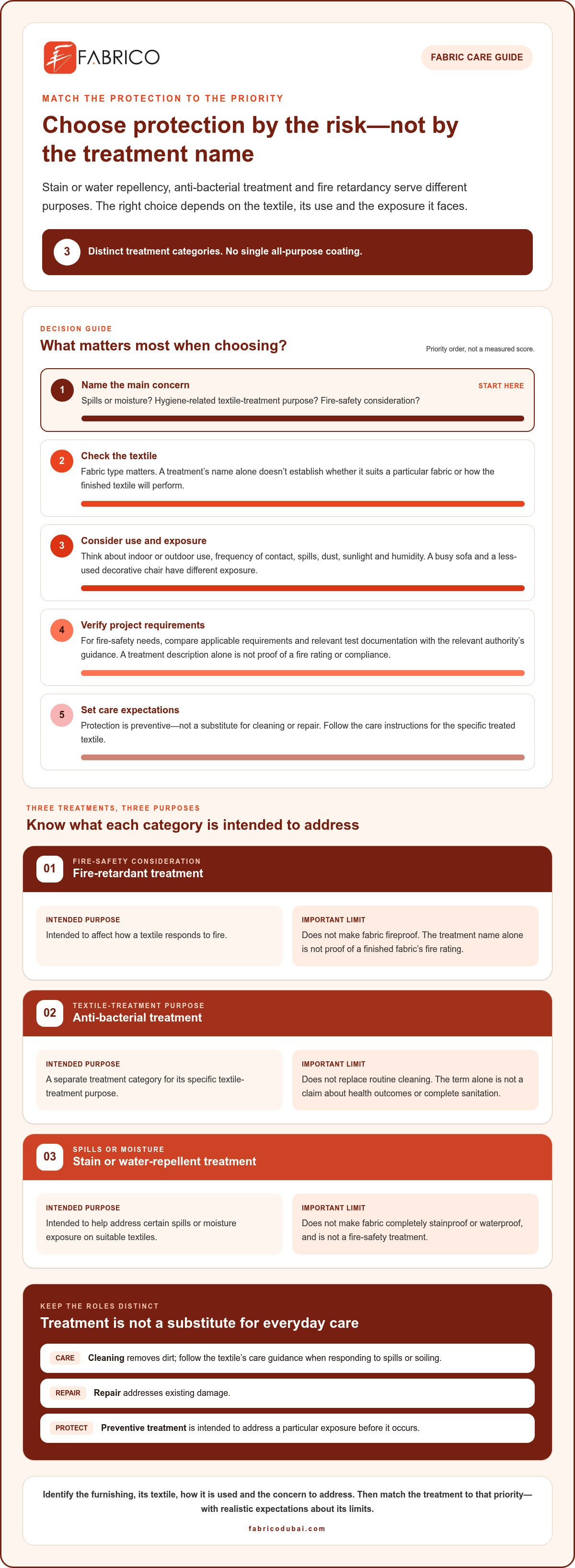
Stain or water-repellent, anti-bacterial and fire-retardant describe different kinds of protection, not one all-purpose coating. To choose an approach, consider the fabric, whether it is used indoors or outdoors, and the exposure it faces. This guide explains how to compare those factors and set practical expectations.
Dubai’s heat, dust and humidity are part of the decision, alongside each fabric’s characteristics. Fabrico provides fabric treatments for furnishings including curtains and upholstered furniture, drawing on approximately 35 years of experience in the local market. Read on to understand what each treatment is intended to address and how to prepare for professional treatment of your textiles.
Key Takeaways
- Identify the fabric and your main concern, such as spills, hygiene priorities or fire-safety needs.
- Choose a treatment for its specific purpose. Stain or water repellency, anti-bacterial treatment and fire retardancy address different concerns.
- Compare the textile’s intended use and exposure before choosing a fabric protection treatment in Dubai.
- Before treatment, describe the fabric and the concern, then follow the care instructions for that treated textile.
- Fabrico provides fire-retardant, anti-bacterial and stain or water-repellent treatments for furnishings such as curtains and upholstery.
Why fabric protection treatment matters for furnishings in Dubai
A fabric protection treatment is intended to address a particular exposure or concern, not every possible cause of fabric damage. Stain or water-repellent treatment relates to spills and moisture, while anti-bacterial and fire-retardant treatments serve different purposes. Choosing a fabric protection treatment Dubai households can use begins with the textile and how it is used.
Dubai’s living conditions also inform fabric care. Dust can settle on curtains and upholstery, and direct sunlight may contribute to fading over time. Indoor humidity and regular contact matter too, particularly in busy rooms. These factors don’t make one treatment suitable for every home. Instead, they help identify which concern to prioritize and what routine care the textile will need.
Protection is preventive, not a substitute for cleaning or repair. A treatment may address a defined risk, but it can’t promise that fabric will remain undamaged or that every stain can be removed. Let the fabric type and its intended use guide your choice, not the treatment name alone.
Which furnishings may benefit from fabric protection?
Curtains, upholstered sofas and chairs, and indoor cushions are common furnishings to consider. A sofa in a family living room may face frequent contact and occasional spills, while a decorative chair in a less-used room has a different exposure. Curtains can collect dust and receive varying amounts of sunlight depending on their placement, so their needs may differ from seating.
Suitability depends on both the textile and the treatment’s purpose. Before choosing, note the furnishing, how often it is used and the concern you want to address. Fabrico provides treatments for furnishings such as curtains and upholstery, with the approach tailored to the textile and its intended use.
What fabric protection can and cannot promise
Each treatment has a defined role. Stain or water repellency relates to spill exposure; anti-bacterial treatment addresses a different textile-treatment purpose; and fire-retardant treatment is intended to affect how a textile responds to fire. These categories aren’t interchangeable. None makes fabric completely stainproof, waterproof, antibacterial or fireproof. For background on the distinct subject, see this overview of fire-retardant fabrics.
Treatments don’t replace everyday care. Follow the instructions for the specific textile and respond to spills or soiling in line with that guidance. Cleaning removes dirt, repair addresses existing damage, and preventive treatment is intended to address a particular exposure before it occurs. Keeping these roles separate helps set realistic expectations for each furnishing.
How fire-retardant, anti-bacterial, and stain-repellent treatments differ
These categories address different priorities. Fire-retardant treatment relates to a textile’s response to fire, anti-bacterial treatment has a specific textile-treatment purpose, and stain or water repellency is intended to help manage certain spills or moisture exposure. Start with the concern you want to address rather than assuming one treatment covers every risk.
When considering a fabric protection treatment in Dubai, separate the treatment’s purpose from any performance claim. The treatment name alone doesn’t establish how a finished fabric will perform, whether it suits a particular setting or whether it meets project requirements.
Fire-retardant treatment: a distinct safety-related purpose
Fire-retardant treatment is intended to affect how a fabric responds to fire. It doesn’t make the textile fireproof, and the treatment name by itself isn’t proof of a finished fabric’s fire rating. The fabric, treatment, application and relevant test documentation all matter when a project has specific safety requirements.
For a UAE project, compare applicable fire-safety requirements and documentation with the relevant authority’s guidance before relying on a treatment for compliance. A general description of a treatment isn’t evidence that a particular curtain or upholstered item meets a required standard.
Anti-bacterial and stain or water-repellent treatments
Anti-bacterial treatment is a separate category with a specific textile-treatment purpose. It doesn’t replace routine cleaning, and the term alone shouldn’t be taken as a claim about health outcomes or complete sanitation. Its relevance depends on the furnishing, intended setting and treatment purpose.
Stain or water-repellent treatment is intended to help address spills or moisture exposure on suitable textiles. It doesn’t make fabric completely stainproof or waterproof, and it isn’t a fire-safety treatment. For more detail on upholstered seating and this particular treatment, see the water-repellent upholstery treatment guide.
Use the concern to distinguish the categories:
- Fire-safety consideration: Consider fire-retardant treatment, while treating ratings and compliance as separate matters that depend on applicable requirements and relevant documentation.
- Textile-treatment purpose: Consider anti-bacterial treatment for the concern it is designed to address, alongside appropriate cleaning and care.
- Spills or moisture: Consider stain or water repellency for suitable fabrics, with realistic expectations about its limits.
Don’t assume these treatments are interchangeable or combine into an all-purpose coating. Identify the furnishing and its intended use, then match the treatment to the priority. Fabrico provides fire-retardant, anti-bacterial, and stain or water-repellent treatments for furnishings such as curtains and upholstery. Explore Fabrico’s fabric treatment services to learn about options suited to your textile and its purpose.
How to compare fabric protection treatments for your specific needs
Start your comparison with two details: what the furnishing is made from and what it faces in daily use. Fibre composition, weave, existing finish, colour and current condition can all affect whether a treatment is suitable and how it may affect the textile. A delicate curtain in a bright room has different considerations from frequently used sofa upholstery near a dining area.
Start with the fabric and where it is used
Consider location, exposure and use together. Curtains may receive direct sunlight and collect dust; sofa upholstery may experience repeated contact; and cushions may be used in family spaces where food and drinks are nearby. Indoor humidity is another part of the Dubai home environment to consider. No fabric type is automatically suitable for every treatment.
Use this comparison to clarify the purpose before deciding:
| Concern | Relevant treatment category | Fabric-suitability considerations |
|---|---|---|
| Spills or occasional moisture on seating or cushions | Stain or water-repellent | Will the fabric’s composition, finish, colour and condition suit the intended treatment? |
| A specific hygiene priority for a textile | Anti-bacterial | Is this treatment appropriate for the furnishing’s material and intended setting? |
| Fire-safety considerations for curtains or upholstery | Fire-retardant | What requirements apply to the finished fabric, and what documentation is relevant? |
Match the treatment to the main concern
For likely spills, consider stain or water repellency as a targeted option, not a promise that marks can never occur. If hygiene is the priority, anti-bacterial treatment is a separate category and doesn’t replace routine cleaning. Fire-retardant treatment addresses another concern: liquid repellency doesn’t establish fire performance. Don’t assume all treatments can be combined or suit every textile.
Appearance and hand-feel matter too. The effect of a treatment depends on the textile and application, so don’t assume every material will respond in the same way. If you want to preserve a soft finish or the fabric’s original colour appearance, include that preference when considering suitability.
For a considered fabric protection treatment Dubai choice, prepare a short fabric-and-use profile:
- Identify the item: curtain, sofa upholstery, chair or cushion, along with any fabric details available.
- Describe its setting: note sunlight, dust, indoor humidity and contact with people, food or drinks.
- Name the main concern: spills, hygiene priorities or fire-safety considerations.
- Share its condition and finish: note visible wear, colour sensitivity or a texture you want to preserve.
These details help connect the treatment discussion to the furnishing’s purpose. Fabrico tailors fabric treatments to textiles and intended use, so you can focus on the relevant option rather than treating one coating as a universal solution.
How to prepare treated fabrics and care for them in Dubai
Preparation helps you make a considered treatment decision and follow aftercare instructions. Identify the furnishing, clarify the concern and note any care guidance already available for the textile. Curtains, sofa upholstery and cushions can have different materials and use patterns, so don’t assume one preparation or cleaning routine suits them all.
What to establish before treatment
Gather details that describe the textile and its setting. Note the item, its fabric composition if known, its current condition and where it is used. A curtain near a bright window, for example, has a different setting from a sofa in a frequently used family room.
Point out visible stains, worn areas and any previous treatments. Existing marks or changes may not be reversible through a new treatment, so include them when describing the fabric. Fabrico tailors treatment decisions to the project and textile, taking the furnishing’s purpose and the concern being addressed into account.
- Identify: the item and available fabric details.
- Clarify: the main concern and intended setting.
- Follow: the guidance for that specific treatment and textile.
Aftercare for curtains and upholstery
Follow the care instructions for the treated fabric. Don’t assume a household cleaner, stain remover, steam treatment or washing method suits every textile or treatment. If the instructions specify an approach, use it. If they advise against a method, avoid experimenting on the treated surface.
Protection doesn’t remove the need for routine care. Dust can settle on curtains and upholstery in Dubai homes, and spills still need suitable, prompt attention. Follow the fabric-specific guidance rather than automatically scrubbing or applying a product. Care should respect both the textile and its treatment.
For upholstered furniture, the textile’s construction and condition remain central to care decisions. Readers considering the broader needs of seating can explore the Dubai upholstery services guide for related information.
Aftercare should follow fabric-specific guidance because the right method for one textile or treatment may not suit another. Keep the instructions accessible, especially for furnishings used often, and refer to them before cleaning a mark or arranging routine maintenance. This helps you avoid relying on assumptions based on a treatment label alone.
For a fabric protection treatment Dubai plan that considers the textile, its current condition and its intended use, discuss tailored fabric treatment with Fabrico.
Choose tailored fabric protection treatment in Dubai with Fabrico
A useful treatment discussion starts with the furnishing, not a one-size-fits-all coating. Fabrico is a Dubai-based soft-furnishings and fabric-treatment specialist with approximately 35 years of experience in the local market. Its fabric treatments include fire-retardant, anti-bacterial, and stain or water-repellent options, each intended for a different concern.
To make the choice relevant, consider what the textile is made of, where it sits, how often it is used and which exposure matters most. A curtain in a sunlit room, a sofa in a busy family space and a cushion used near food or drinks each have a distinct context. These details help focus the discussion on suitability and treatment purpose, without assuming a particular outcome for every fabric.
Fabric treatments for curtains and upholstered furniture
Fabrico’s work with curtains, sofa and chair upholstery, and indoor cushions connects protection decisions to the furnishings used throughout a home. Match the treatment purpose to the textile’s intended use: spill exposure, a specific hygiene priority and fire-safety considerations are separate needs. Naming the item and describing its setting helps keep the discussion focused on the relevant category.
Curtains vary in construction and use. If you’re choosing or reviewing this type of furnishing, the American pleated curtains guide offers related information to consider alongside the fabric’s care and protection needs.
A clear next step for Dubai customers
Before discussing treatment, make a concise note of the item and your main concern. Include any fabric composition details you know, its current condition and where it is used. For example, describe whether you’re considering upholstery in a frequently used room or curtains exposed to strong daylight. Clear details help tailor the discussion to your project and textile.
Keep expectations precise. A treatment is selected for its purpose and suitability; it isn’t a promise that fabric will become completely stainproof, waterproof, antibacterial or fireproof. Care guidance for the treated textile remains important after application.
For a considered fabric protection treatment Dubai choice, share which furnishing you have in mind and the concern you want to address. Fabrico can align the treatment discussion with the textile and its intended use. Explore Fabrico’s fabric protection treatments.
Choose a thoughtful next step for your furnishings
Begin with the furnishing you most want to care for. Note what it is, where it sits, how often it is used and the concern you want a treatment to address. If you know the fabric composition or have its care instructions, keep those details close. This gives the treatment discussion a clear starting point and focuses it on the textile’s suitability and practical needs.
A considered fabric protection treatment Dubai choice doesn’t need to begin with every furnishing at once. Start with one curtain, sofa, chair or cushion, then consider other pieces according to their use and your priorities. This measured approach respects the character of each textile rather than treating the home as one uniform setting.
Fabrico provides fabric treatments tailored to furnishings and their intended use. Explore Fabrico’s fabric protection treatments and discuss the right approach for the fabrics you want to care for.
Frequently Asked Questions
Can fabric protection treatment change the look or feel of upholstery?
It can, depending on the textile and how the treatment is applied. Upholstery with a pronounced texture, delicate finish or distinctive colour may respond differently from a more robust fabric. Before treatment, describe the appearance and hand-feel you want to preserve. For a fabric protection treatment Dubai homeowners choose, consider suitability for the specific upholstery rather than assuming every fabric responds the same way.
How long does fabric protection treatment last?
There isn’t one duration that applies to every treatment or furnishing. The textile, its use, the treatment selected and subsequent care can all affect its performance over time. A frequently used sofa, for example, may experience different wear from curtains in a lightly used room. Follow the care guidance for the treated fabric and don’t rely on a fixed lifespan unless it’s specified for that treatment.
Can treated curtains still be cleaned?
Yes. Treated curtains still need appropriate routine care, guided by the instructions for their particular fabric and treatment. Before using a household cleaner or cleaning method, make sure it’s suitable for the textile. Don’t assume a method suitable for one curtain is appropriate for a lined or textured curtain. Care guidance helps you clean without guesswork.
Does water-repellent treatment make fabric completely waterproof?
No. Water-repellent treatment doesn’t make fabric completely waterproof. Its intended purpose is to address water or spill exposure, but results can depend on the textile and treatment. If a drink spills on upholstery, follow the care instructions rather than assuming liquid can be left on the surface. Treat repellency as a specific protective measure, not permission to ignore spills or routine care.
Can fabric protection treatment be applied to fabric that has already been used?
Previously used fabric may be suitable, but its condition and history matter. Existing stains, wear, cleaning products or earlier treatments can affect the decision. Describe these details before treatment, especially if the textile has been cleaned with a product that may leave residue. Treatment shouldn’t be expected to reverse existing damage or remove old marks; suitability depends on the furnishing and fabric condition.
Is anti-bacterial fabric treatment a replacement for regular cleaning?
No. Anti-bacterial treatment doesn’t remove the need for regular cleaning and appropriate fabric care. Dust, soil and spills can still accumulate on upholstery or curtains, so follow the textile’s care instructions as part of normal upkeep. Think of treatment as addressing a particular textile concern, not as a cleaning method or a guarantee of complete sanitation. Use the guidance for the specific treated item.
Can one fabric protection treatment address stains, bacteria, and fire safety?
Don’t assume a single treatment addresses all three concerns. Stain or water repellency, anti-bacterial treatment and fire-retardant treatment have distinct purposes. A spill concern on a dining-area chair, for example, differs from a fire-safety requirement for curtains. Identify the priority for each furnishing and consider whether the fabric suits that purpose. Fabrico offers these treatment categories for relevant furnishings, with the choice guided by the textile and its intended use.