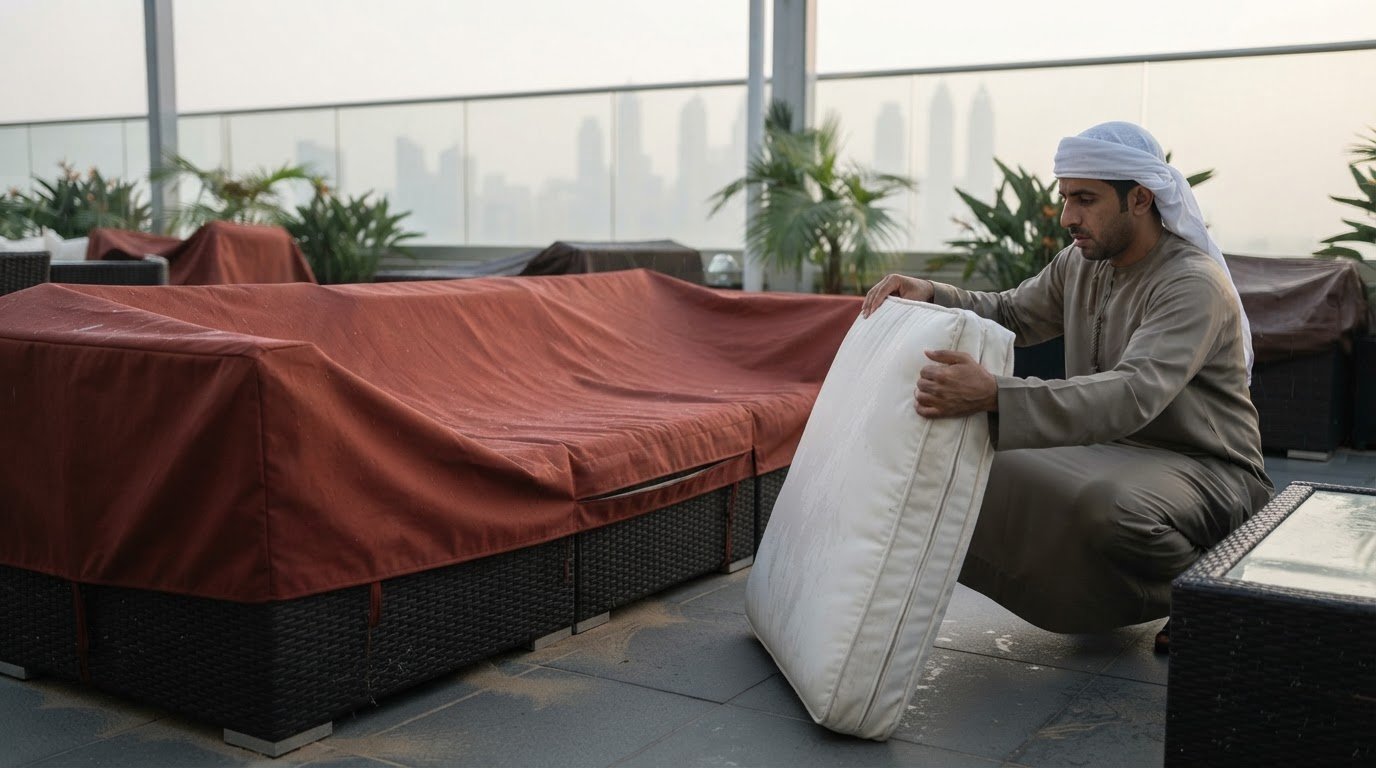

Wind-blown sand doesn’t automatically ruin patio cushions, but repeated grit can abrade fabric and work into seams. In Dubai, gusts of 40 to 50 km/h can drive sand into outdoor furniture, so protecting patio cushions from rain and dust starts with covering or storing them when severe weather approaches.
It’s understandable to worry that a dusty storm or spell of rain will mark cushions you’ve chosen with care. To protect them, limit exposure, gently remove dry grit, and let damp cushions dry fully instead of trapping moisture beneath a cover.
This guide explains how to reduce exposure to wind-blown sand, rain, mildew and mould, including when to use covers, bring cushions indoors and manage wet fabric. You’ll also learn how custom outdoor cushions and protective covers can support a considered approach to keeping an outdoor seating area comfortable and presentable.
Key Takeaways
- Wind-blown sand can wear at cushion fabric over time; brush away dry grit gently rather than rubbing it into the weave.
- Use a protective cover that allows ventilation, and store cushions in a clean, dry place when severe weather is expected.
- After rain, separate wet cushions and position them so air can circulate around the fabric and filling.
- Bring cushions indoors or place them in ventilated storage before storms to limit repeated exposure to rain and dust.
1. Will wind-blown sand permanently ruin my outdoor cushions?
Wind-blown sand doesn’t automatically ruin outdoor cushions, but repeated exposure can grind grit into fabric and seams. In the UAE, gusts of 40 to 50 km/h can drive sand into outdoor furniture. To protect cushions, move them to a clean, dry place or cover them during severe weather.
A practical routine for protecting patio cushions from rain and dust starts by removing dry debris before it gets rubbed into the fabric. Brush away sand, leaves and pollen with a soft brush, then vacuum dry dust on low suction. Avoid scrubbing gritty fabric, as friction can wear the surface. Clean outdoor furniture weekly: dry-brush first, then rinse away any remaining sand.
For everyday dirt, use mild dishwashing liquid mixed with warm water and a soft cloth. Rinse the fabric thoroughly and let it air-dry in the sun before storing or covering it. For a fresh stain, blot rather than rub. A paste of baking soda and water can sit on the mark for 15-20 minutes before gentle scrubbing.
For mildew, apply equal parts white vinegar and water, then rinse the fabric thoroughly. Test any cleaning solution on an inconspicuous area first and follow the cushion fabric’s care instructions. Avoid bleach on removable covers because it can weaken the material. Don’t put a damp cushion in a storage box or stack it against another cushion.
Before storing cushions between seasons, remove visible debris and make sure each one is completely dry. Choose a clean, dry storage area; a damp or dusty corner can expose fabric to trapped humidity and fresh debris. During unpredictable weather, a dry storage box offers a useful place to stow cushions. Regular cleaning and careful storage help preserve their appearance and may delay replacement.
2. Water-repellent finishes and removable cushion covers
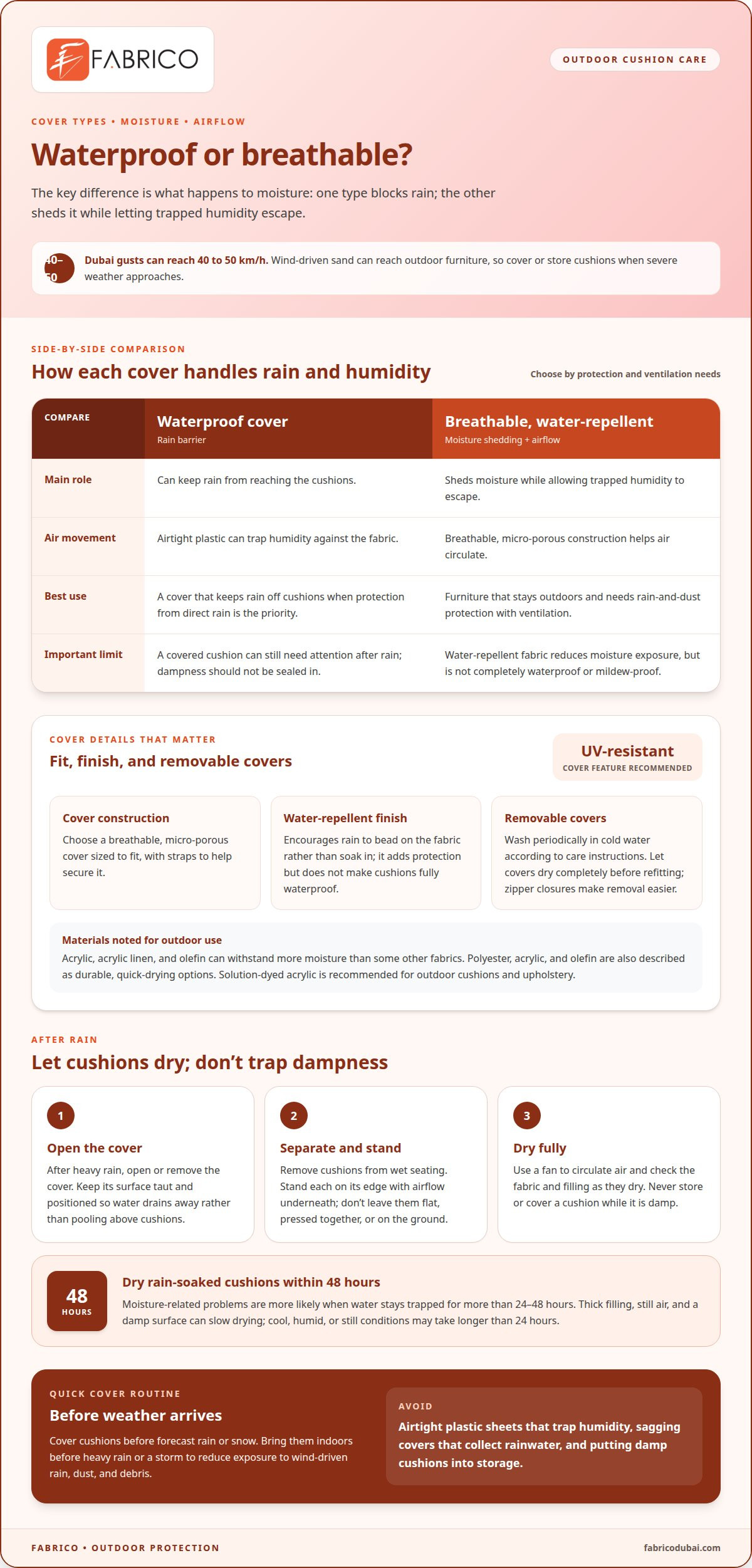
Waterproof and water-resistant covers serve different purposes outdoors. A waterproof cover can keep rain from reaching cushions, while a breathable, water-repellent cover sheds moisture and allows trapped humidity to escape. For outdoor furniture in the UAE, ventilation matters: moisture sealed beneath an airtight plastic sheet can linger against the fabric.
Water-repellent finishes encourage rain to bead on cushion fabric rather than soak in. They reduce moisture exposure but don’t make cushions completely waterproof or mildew-proof. Materials also matter: acrylic, acrylic linen and olefin can withstand more moisture than some other fabrics. Polyester, acrylic and olefin are also described as durable, quick-drying options.
Removable covers make routine care more manageable. If your cushion has removable covers, take them off and wash them periodically in cold water, following the care instructions. Zipper closures make removal easier. Let each cover dry completely before putting it back on, as damp fabric can hold moisture against the filling.
For furniture that stays outside, choose a breathable, micro-porous cover sized to fit, with straps to help secure it. Cover cushions before forecast rain or snow, rather than waiting for the first drops. A fitted cover can limit direct exposure to rain and dust, while breathable construction helps air circulate. Avoid airtight plastic sheets that can trap humidity underneath.
Rainwater can still collect in a sagging cover. Keep its surface taut and positioned so water can drain away, rather than pooling above cushions. After heavy rain, open or remove the cover and separate wet cushions so each can dry fully. A water-repellent finish can add another layer of protection; water-repellent fabric treatment is a relevant option for outdoor cushions exposed to regular weather.
Solution-dyed acrylic, water-repellent finishes and removable covers are recommended for outdoor cushions and upholstery. Custom-fit, micro-porous, UV-resistant covers with straps are also recommended.
3. Preventing moisture, mildew, and mould
Moisture is the main concern after rain: cushions that remain wet can develop mildew, mould, unpleasant odours, and health risks. Outdoor cushions have a greater chance of moisture-related problems when water stays trapped for more than 24-48 hours. Thick filling, still air, and a damp surface can slow drying, so don’t leave wet cushions flat or pressed together.
After rain, remove cushions from the wet seating surface and stand them upright so water can drain from the filling. Place each cushion on its edge with airflow underneath, and use a fan to help circulate air. Aim to dry rain-soaked cushions within 48 hours. In cool, humid, or still conditions, drying can take longer than 24 hours, so keep checking the filling and fabric.
Reduce moisture around the outdoor space by keeping cushions off the ground, where dampness can collect underneath. Tilt cushions at an angle after a shower so water runs off instead of pooling on the surface. Once dry, store cushions in a clean, dry area during winter storage. Check outdoor furniture monthly for trapped leaves, dirt, standing water, or damp cushions, and clear debris promptly.
If mildew appears, treat the affected fabric with a suitable cleaner and follow its label, including any instructions to rinse after application. Don’t cover or store a cushion while it’s damp. After cleaning, separate it from other cushions and allow air to reach both sides. Sunlight can help with drying, but check the fabric’s care guidance before leaving it in direct sun.
A breathable cover can limit rain exposure, but it must allow ventilation rather than trap humidity against the cushions. Open or remove the cover after heavy rain, then separate any wet cushions. This simple routine helps prevent persistent dampness from carrying into the next day and keeps the seating ready for use.
4. Bringing cushions indoors during storms
Patio cushions can stay outdoors during light showers, but they aren’t completely waterproof or mildew-proof. Before heavy rain or a storm, bring them indoors to reduce exposure to wind-driven rain, dust and debris. In the UAE, forecasts can change quickly, so make moving cushions part of your outdoor-space preparation instead of waiting for rain to begin.
Keep the process simple. Lift cushions from the furniture, remove loose pieces such as lumbar pads, and carry them to a clean, dry indoor area. A ventilated storage bin is another option when indoor space is limited. Avoid sealing damp cushions in an airtight container, since trapped humidity can leave the fabric and filling wet.
Before storing, check each cushion for wet patches, sand and fresh stains. Brush off dry grit rather than pressing it into the fabric, then follow the cushion’s care instructions for spot cleaning. If a cushion is wet, stand it on its edge in an airy place and let it dry completely before stacking or storing it.
After a storm, inspect the furniture and cushions before putting them back. Clear standing water from seats and remove leaves or debris that could transfer marks. If rain reached the cushions, separate them and allow air to circulate around each piece. This is especially useful during summer storms, when outdoor cushions may face sudden showers and dusty gusts.
For a reliable routine, keep an indoor storage spot ready and move cushions there whenever severe weather is expected. This reduces repeated exposure and helps limit moisture-related odours, mildew and stains. Plan storm-ready protection for outdoor seating with a considered approach to storing and protecting cushions.
Moving patio cushions inside ahead of heavy rain or storms keeps them dry and prevents repeated exposure to harsh weather. The UAE article recommends stowing outdoor cushions before storms, making early action a straightforward way to protect them when conditions are expected to worsen.
Fabrico: Outdoor Protection Covers
Fabrico offers Outdoor Protection Covers to help shield outdoor seating from rain, dust and everyday exposure. They’re a practical option when cushions need to remain outside between uses. Bringing cushions indoors is still preferable before severe storms or when prolonged rain is expected.
For better moisture management, use a cover that allows ventilation, and remove or open it after heavy rain so damp cushions can dry. This balance helps protect your outdoor space without trapping humidity beneath the cover. Fabrico also offers outdoor and indoor cushions, a related option when planning or refreshing your seating.
To discuss Outdoor Protection Covers for your outdoor seating, contact Fabrico.
Make your outdoor seating easier to care for
A considered approach to protecting patio cushions from rain and dust can shape how you use your entire outdoor space. Think about where cushions will go between gatherings, how easily you can move them before a storm, and whether your chosen cover fits the furniture without trapping moisture. A simple routine that suits your home is more useful than a complicated one that’s hard to maintain.
Fabrico offers Outdoor Protection Covers for outdoor seating, alongside Sofa and Chair Upholstery, Pleated American curtains and Roman blinds. These furnishings can help create a coordinated setting indoors and out, while the right cover supports practical care for cushions that remain outdoors.
If you’re planning a more manageable way to care for your outdoor cushions, contact Fabrico for cushion advice. A thoughtful next step can help you enjoy your outdoor space with greater confidence.
Frequently Asked Questions
Will wind-blown sand permanently ruin my outdoor cushions?
Not necessarily. The outcome depends on how often sand reaches the fabric and how it’s handled. Grit rubbed into a cushion can wear the surface, while sand left in seams can make regular use uncomfortable. After a dusty spell, inspect the stitching and edges as well as the visible surface. If the fabric becomes thin or the filling is exposed, cleaning won’t reverse that structural wear.
What is the best way to protect patio cushions from rain and dust?
Use a breathable outdoor cover for everyday exposure, and move cushions to sheltered storage when severe weather is expected. A water-repellent finish can help rain bead on fabric, but it doesn’t make a cushion fully waterproof. For seating that remains outdoors, Fabrico’s Outdoor Protection Covers provide a practical protective layer. Let cushions dry fully before covering them again after rain.
How should patio cushions be stored when not in use?
Store cushions in a clean, dry place where air can circulate, such as a ventilated storage bin or sheltered indoor area. Before putting them away, check that the seams and underside are dry, not just the visible fabric. Avoid tightly compressing separate pieces together, as pressure can trap dampness between them and make them harder to air later.
Do patio cushion covers need ventilation to prevent mildew?
Yes. Airflow helps moisture escape, while an airtight plastic sheet can trap humidity against a cushion and encourage mildew. Choose a breathable cover rather than sealing furniture completely, and open or remove it after rain. If the cushion feels damp underneath, uncover it and let air reach both sides before covering it again.