
A protective finish can’t compensate for fabric that stays damp. A suitable fabric treatment to prevent mold and mildew works best alongside good airflow, prompt drying, and a choice of fabric suited to its setting. Outdoor canvas can be vulnerable when relative humidity remains above 60-70%, so moisture control matters as much as the treatment itself.
It’s understandable to want one dependable solution, but the right approach depends on where the fabric is used, what it’s made from, and whether it can tolerate a particular treatment. A method suited to durable outdoor canvas may damage delicate or coloured material.
This guide explains how humidity and ventilation affect mildew, how fabric type shapes prevention, and what to consider before using DIY treatments. You’ll also learn how protective finishes fit into a broader care routine, helping you protect fabrics while respecting their appearance and care needs.
Key Takeaways
- Reduce moisture and improve airflow to make fabric less welcoming to mildew.
- Match cleaning and prevention methods to the fabric’s material, colour, and care requirements.
- Consider how weave and protective finishes affect a fabric’s suitability for indoor or outdoor use.
- Explore professional fabric protection and upholstery options when you want a tailored solution for your home.
Moisture and humidity conditions that encourage mildew
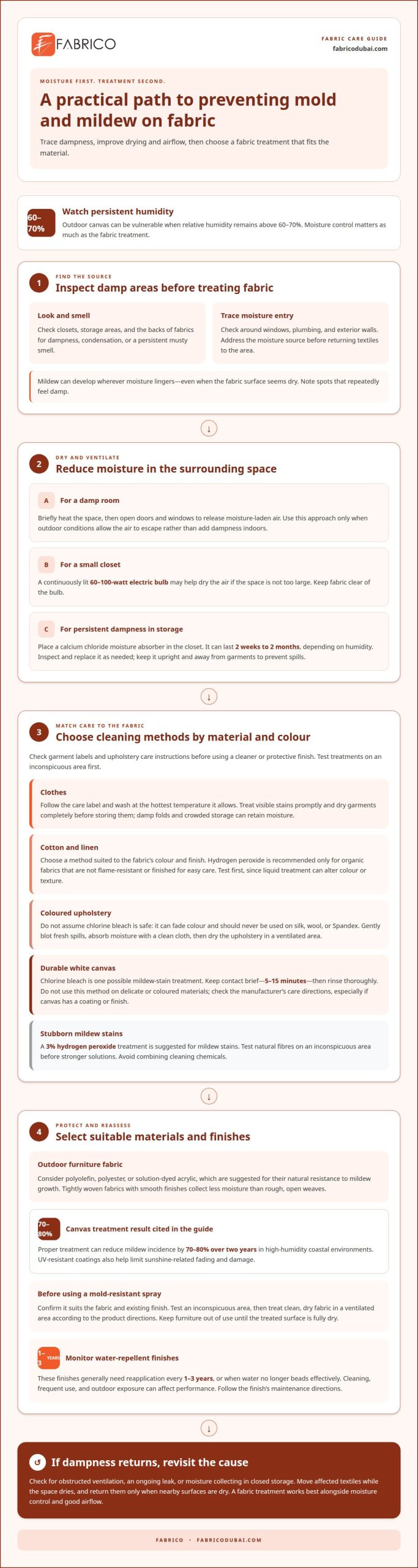
Trace dampness to its source before choosing a protective approach. A fabric treatment to prevent mold and mildew works best when you also manage moisture in the surrounding space.
-
Identify Moisture and Humidity Conditions
Inspect closets, storage areas, and the backs of fabrics for dampness, condensation, or a persistent musty smell. Look for water entering around windows, plumbing, or exterior walls, and address the source before returning textiles to the area. Mildew can develop wherever moisture lingers, even if the fabric’s surface seems dry. Note which spots repeatedly feel damp so you can focus ventilation or moisture control there.
-
Control Moisture and Improve Air Circulation
For a damp room, briefly heat the space, then open doors and windows to release moisture-laden air. Use this method only when outdoor conditions allow the air to escape rather than adding dampness indoors. In a small closet, a continuously lit 60- to 100-watt electric bulb may help dry the air, provided the space is not too large. Keep fabric clear of the bulb.
- Place calcium chloride moisture absorber in a closet when stored fabric is exposed to persistent dampness. It can last from 2 weeks to 2 months, depending on humidity, so inspect it regularly and replace it as needed. Keep the container upright and away from stored garments to prevent spills from reaching the fabric. This simple step targets moisture in the enclosed space, rather than treating stains on cloth.
- If dampness returns, reassess the room conditions before applying another fabric treatment to prevent mold and mildew. Check for obstructed ventilation, an ongoing leak, or moisture collecting in closed storage. Move affected textiles while the space dries, and return them only when nearby surfaces are dry. This addresses the cause rather than relying on repeated fabric applications alone.
Choosing prevention strategies by fabric type
Prevent mold and mildew on clothes and upholstery by keeping fabrics clean and fully dry, then choosing care methods that suit the material. Check garment labels and upholstery care instructions before using a cleaner or protective finish.
- For clothes, follow the care label and wash at the hottest temperature it allows. This helps address mold spores without exceeding the garment’s stated care limits. Dry garments completely before returning them to a wardrobe, since damp folds and crowded storage can retain moisture. Treat visible stains promptly rather than storing affected clothing.
- For cotton and linen, choose a method suited to the fabric’s colour and finish. Hydrogen peroxide is recommended only for organic fabrics that aren’t flame-resistant or finished for easy care. Test any cleaner on an inconspicuous area first, as even a suitable liquid treatment can alter colour or texture.
- For coloured upholstery, don’t assume chlorine bleach is safe. It can fade colour and should never be used on silk, wool, or Spandex. Gently blot a fresh spill rather than rubbing it across the surface. Absorb moisture with a clean cloth, then let the upholstery dry in a ventilated area.
- For durable white canvas, chlorine bleach is one possible mildew-stain treatment, but keep contact brief. The recommended contact time is 5 to 15 minutes before rinsing thoroughly. Don’t apply this method to delicate or coloured materials. Check the manufacturer’s care directions, especially when canvas includes a coating or finish.
- For stubborn stains, match the cleaning method to the fabric, not just the mark. A 3% hydrogen peroxide treatment is suggested for mildew stains, but natural fibres need an inconspicuous-area test before stronger solutions. Avoid combining cleaning chemicals. If upholstered surfaces need ongoing moisture protection, consider a stain and water-repellent treatment suited to the material.
Fabric materials, treatments, weaves, and finishes
Choose materials and finishes according to the fabric’s setting and care needs. Outdoor furniture faces different moisture and sunlight exposure from household upholstery.
- For outdoor furniture, consider polyolefin, polyester, or solution-dyed acrylic, which are suggested for their natural resistance to mildew growth. Tightly woven fabrics with smooth finishes collect less moisture than rough, open weaves. For canvas, proper treatment can reduce mildew incidence by 70-80% over two years in high-humidity coastal environments. UV-resistant coatings also help limit sunshine-related fading and damage.
-
Apply Mold-Resistant Spray to Fabric
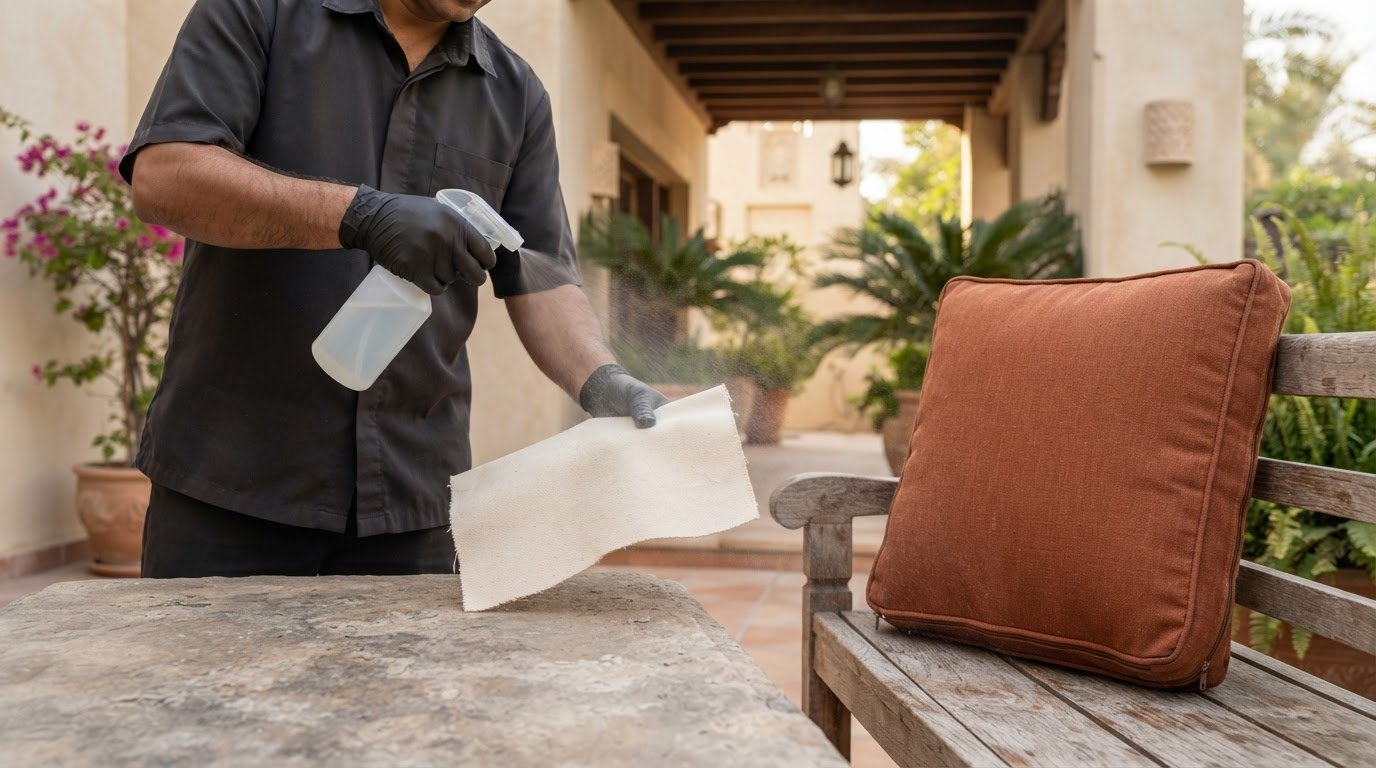
Read the spray manufacturer’s instructions and confirm the product is suitable for the fabric and its existing finish. Test it on an inconspicuous area first, since treatment may change colour or texture. Treat clean, dry fabric in a ventilated area, following the label’s directions for coverage and drying. Keep household furniture out of use until the treated surface is fully dry.
-
Assess Treatment Duration and Reapplication
Track how water behaves on fabric treated with a water repellent. These finishes generally need reapplication every 1-3 years, or when water no longer beads effectively. Cleaning, frequent use, and exposure to outdoor conditions can affect performance. Follow the treatment label’s maintenance directions, and don’t reapply before preparing the fabric as instructed.
- Check the fabric care label before choosing a protective finish. A treatment can damage or discolour fabric if it is incompatible with the fibre, dye, or existing finish. Test an inconspicuous patch and let it dry fully before treating visible areas. For delicate materials, avoid unlabelled household mixtures and use only a method suitable for the fabric.
For outdoor materials, include sunshine exposure among the conditions considered when selecting protective finishes. UV-resistant coatings on outdoor fabrics help avoid fading and damage from sunshine exposure. The hydrogen peroxide treatment described uses a 20% solution. Keep that concentration tied to that treatment rather than confusing it with the specification of a coating. These are separate considerations when planning fabric protection: one concerns the effect of sunshine on outdoor fabrics, while the other identifies the solution used in the hydrogen peroxide treatment.
What fabric treatments prevent mold and mildew?
Choose a fabric-safe cleaning method for existing mildew, then keep the material dry. Borax, diluted hydrogen peroxide, and vinegar may suit particular fabrics, but no treatment replaces moisture control.
- Use borax on suitable washable fabric by following the product instructions. A common solution uses one cup of borax in one gallon of warm water. For powdered borax, mix half a cup thoroughly with hot water according to its label. Apply only to fabric that can tolerate the treatment, and rinse as directed.
- Consider diluted hydrogen peroxide for a larger area or more delicate canvas. Diluting 3% hydrogen peroxide with an equal part of water makes a 1.5% solution. Test a discreet patch first, then apply carefully and allow the fabric to dry completely. Avoid treating fibres or finishes that may react poorly.
- Use vinegar in a washing-machine cycle to address mildew odours on suitable washable items. The suggested amount is 1-2 cups per cycle. Follow the garment’s care label and the machine instructions; don’t combine vinegar with other cleaning products. Dry the item fully after washing.
- Separate stain removal from prevention. Cleaning products address existing marks or odours, while a stain and water-repellent finish helps resist liquid penetration. It does not make fabric mould-proof: trapped moisture can still encourage growth. Choose a finish suited to the fabric and its intended setting.
- Prevent recurrence by storing only clean, dry fabric and maintaining airflow around cushions, curtains, and covers. For tailored protection on suitable furnishings, explore stain and water-repellent treatment. Match the finish to the material, and continue drying fabric promptly after it becomes damp.
For another hydrogen peroxide dilution, use 1 part hydrogen peroxide with 4 parts water. Apply it only where the material can tolerate the solution, and test an inconspicuous area before treating a larger section. The aim is to address mildew without damaging the fabric or its finish; after treatment, let the material dry completely and keep it in a well-aired place.
For powdered borax, the recommended preparation is half a cup mixed thoroughly with hot water according to the product instructions. Check the fabric care guidance before applying it, and rinse as directed. Whether treating a mark or choosing a protective finish, match the method to the material. Don’t leave damp fabric folded or stored, as treatments do not replace thorough drying and airflow.
Fabrico
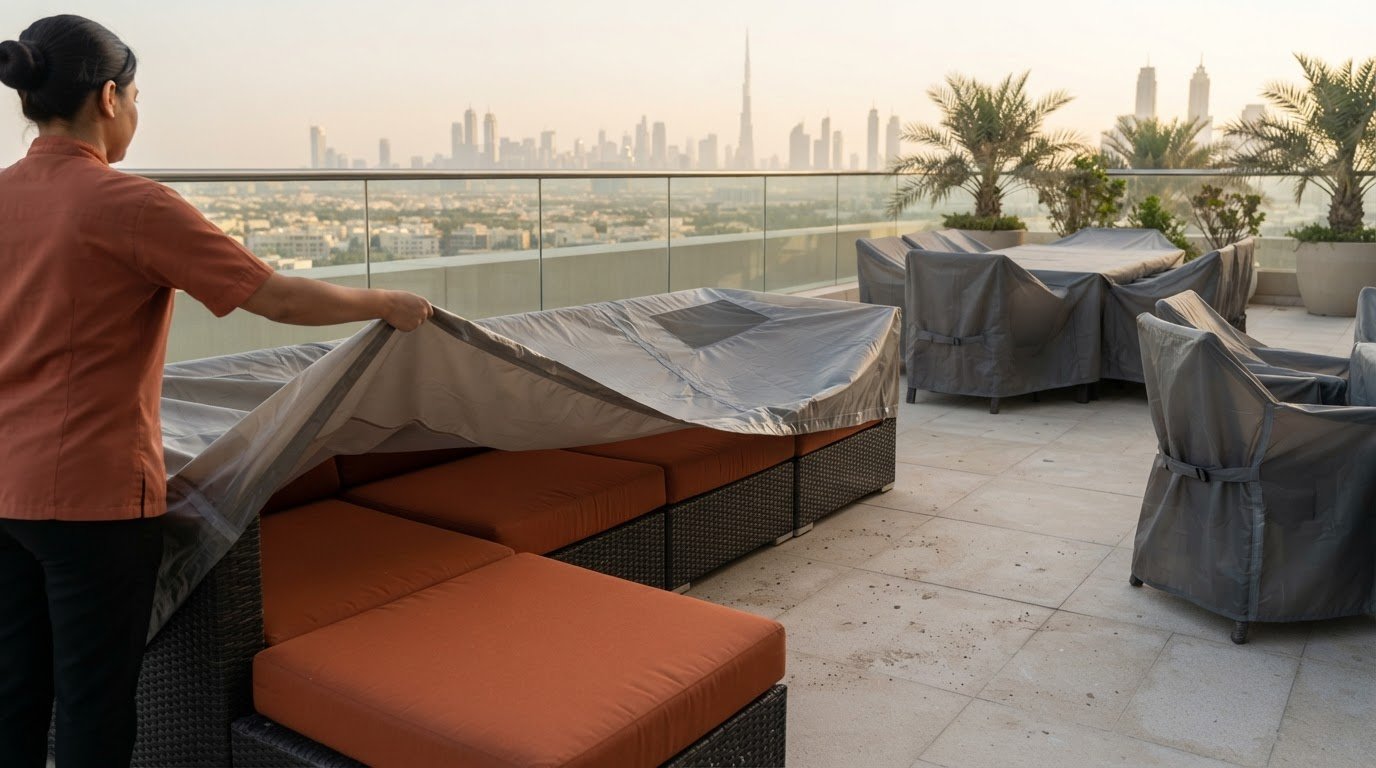
When mold prevention prompts you to review your home’s fabric furnishings, Fabrico offers Sofa and Chair Upholstery for pieces that need renewed fabric. Pleated American curtains and Roman blinds are options for window treatments. Outdoor Protection Covers can help shield outdoor furnishings from direct exposure to moisture, but use them only over dry items.
These services support a broader prevention approach: choose furnishings thoughtfully, limit moisture exposure, and keep fabrics clean and dry. They don’t replace ventilation or appropriate cleaning, but can be a practical next step when existing upholstery or window treatments no longer suit your needs.
Contact Fabrico to discuss your fabric furnishing requirements.
Make fabric care part of your routine
Keep a simple care record for each important fabric. Note its material, where it is used, the cleaning method allowed by its care label, and when it was last treated. This reference helps you make consistent decisions when a cushion, curtain, or upholstered piece needs attention. It also helps prevent applying a product without considering the fabric’s existing finish.
Before choosing a fabric treatment to prevent mold and mildew, use your record to clarify the goal: moisture resistance, care for an existing mark, or protection for a particular furnishing. A clear purpose makes it easier to choose an approach that suits the fabric and its use, rather than relying on one product for every surface.
If you’d like help considering the fabric care needs of your furnishings, contact Fabrico about fabric care. A considered next step can help you care for your fabrics with greater confidence.