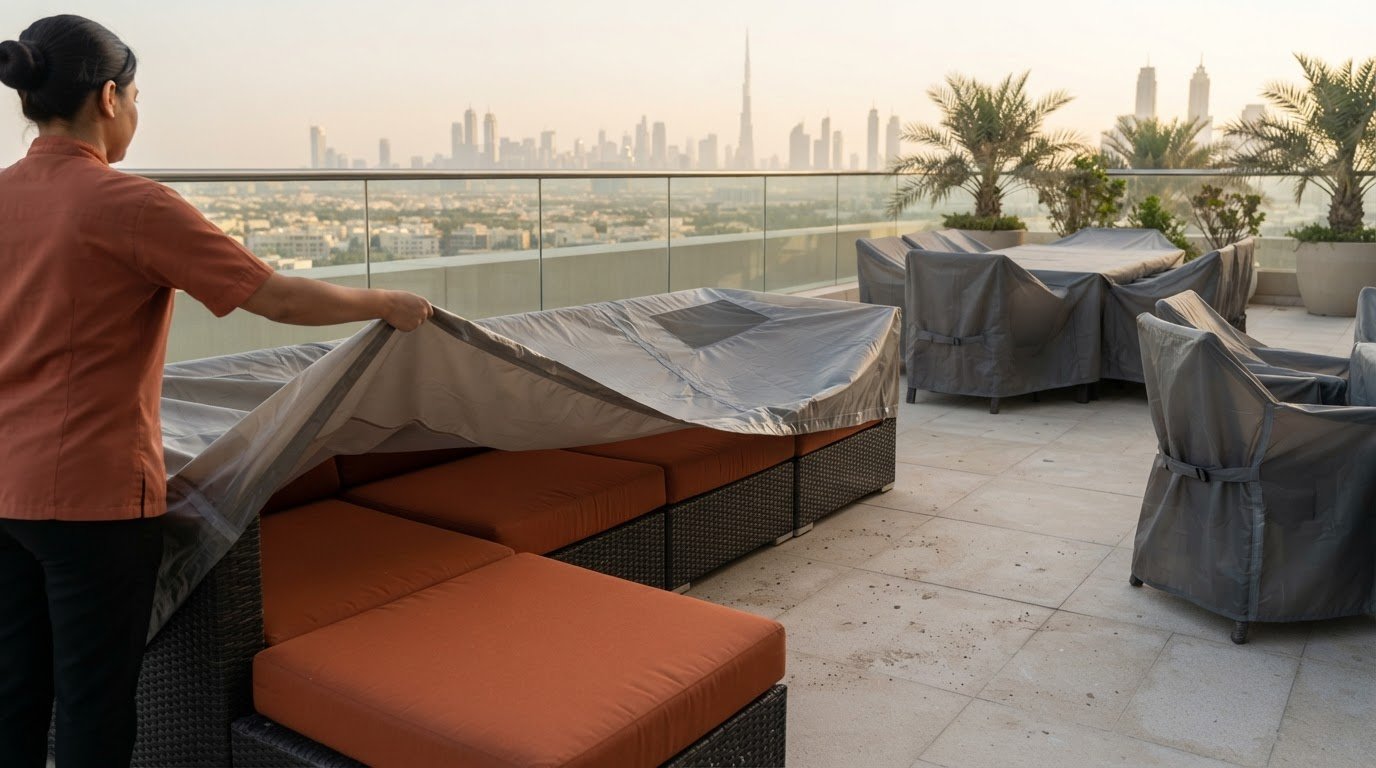

The right cover protects outdoor restaurant furniture without treating every piece as the same shape. In Dubai, protective covers for restaurant outdoor seating should be breathable and water-resistant, with a fit suited to chairs, dining sets or sectionals. TPU covers help shield furniture from sun, rain, dust and sand, while breathable layers help reduce heat and moisture buildup.
Keeping outdoor seating clean and ready for guests takes more than covering it at closing. A loose cover can leave gaps, while one that does not match the furniture’s shape can be awkward to put on and remove. Start by identifying the pieces that need coverage and how they are arranged.
This guide explains how breathable TPU covers work, what to consider when protecting different seating categories, and how to measure for a more suitable fit. You’ll also learn how Fabrico’s Outdoor Protection Covers can support the care of restaurant furniture in Dubai.
Key Takeaways
- Choose cover shapes around the furniture: individual chairs, full dining sets and sectionals each need a considered fit.
- Breathable, water-resistant layers can help manage moisture and heat while shielding outdoor seating from the elements.
- Measure the furniture’s width, depth and height to guide cover selection and reduce gaps or excess fabric.
- Consider how Dubai sun, rain, dust and sand affect your seating when deciding which material and coverage are suitable.
Water-resistant, breathable TPU cover materials
Thermoplastic polyurethane, or TPU, can form a water-resistant layer in outdoor cover fabric. For restaurant seating, that layer helps keep rain from reaching chair upholstery and table surfaces. Breathable construction matters too: airflow through the cover can reduce trapped heat and moisture, helping limit mildew risk. Water-resistant and breathable describe different functions, so neither should be assumed from the other.
Polyester is a common base fabric for outdoor covers, but the fibre name alone does not tell you how a cover will perform. Its coating, weave and construction also matter. A cover may repel water yet restrict airflow, so avoid covering damp cushions or furniture and allow them to dry first.
Waterproof covers prioritize keeping liquid out; breathable designs also allow some air exchange. For Dubai patios, consider the balance between rain protection and ventilation. A cover that blocks airflow completely can leave moisture trapped beneath it after rain or cleaning.
Fire-safety requirements depend on the restaurant premises and applicable conditions. Water resistance does not establish fire performance, so assess the cover against the venue’s fire-safety requirements rather than assuming its material is fire-rated.
Custom sizing starts with the furniture’s width, depth and height. Branded covers involve a separate logo and artwork specification; TPU construction alone does not indicate that a cover carries branding.
To reduce wind movement, use fitted edges and purpose-made ties or straps where provided. For theft deterrence, secure the cover to fixed furniture with a suitable lockable cable, without blocking walkways.
For routine cleaning, brush off loose dust and sand, then follow the fabric’s care instructions. Before storing a cover, clean and dry it fully and keep it somewhere dry. Avoid leaving water to pool on flat surfaces.
Moisture trapped beneath an unventilated cover can keep fabric and cushions damp, encouraging mildew. Allow air circulation and cover only dry furniture after cleaning.
Cover categories for chairs, dining sets, and sectionals
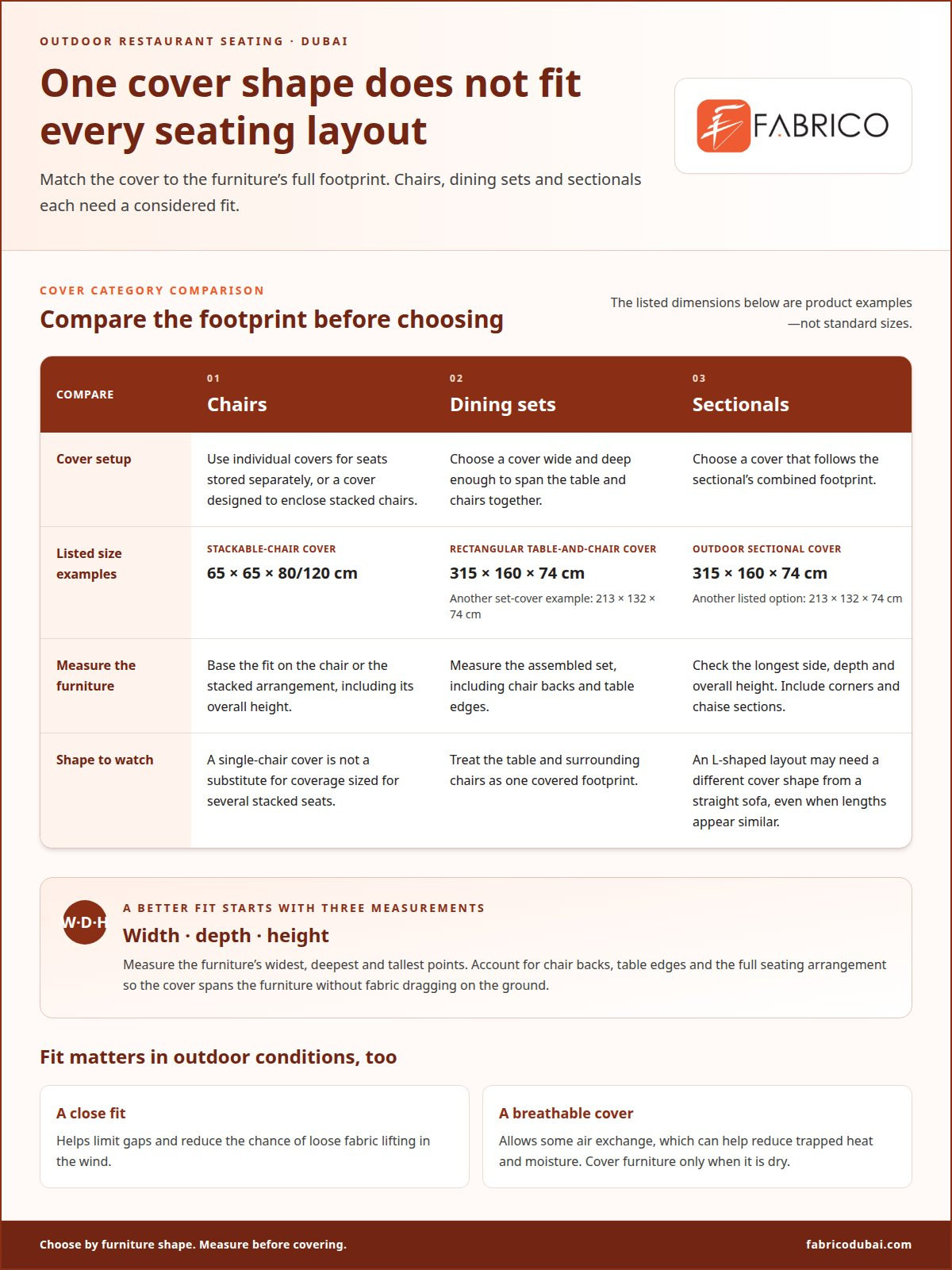
Start by matching each cover to the furniture layout, not just its material. A cover for one chair won’t protect a full dining arrangement efficiently. Individual chair covers suit seats stored separately, while a cover designed for stacked chairs can enclose several seats together. One listed stackable-chair cover measures 65 × 65 × 80/120 cm, illustrating how cover dimensions can account for different heights.
Dining-set covers need enough width and depth to span the table and chairs together. A listed rectangular table-and-chair cover measures 315 × 160 × 74 cm. Another set cover measures 213 × 132 × 74 cm. These are product examples, not standard sizes. Measure the assembled furniture, including chair backs and table edges, before choosing a cover. Allow for the furniture’s shape without leaving fabric dragging across the ground.
Sectionals need covers that follow their combined footprint. A cover listed for outdoor sectional furniture measures 315 × 160 × 74 cm, while another listed option measures 213 × 132 × 74 cm. Check the arrangement’s longest side, depth and overall height. An L-shaped sectional may need a different shape from a straight sofa, even when their lengths appear similar.
- Chairs: Choose individual or stackable coverage based on the storage arrangement.
- Dining sets: Measure the table and surrounding chairs as one covered footprint.
- Sectionals: Account for the full configuration, including corners and chaise sections.
For restaurant layouts with mixed seating, separate covers can make daily handling easier. A chair cover, a rectangular dining-set cover and a sectional cover each serve a distinct footprint. Outdoor protection covers offer a relevant option for protecting these furniture categories.
Protection from Dubai sun, rain, dust, and sand
Dubai’s heat makes sun exposure a daily concern for outdoor seating. Temperatures can exceed 50°C, so covers should reduce direct exposure without trapping heat against upholstery. A 600D patio cover measuring 308 × 138 × 89 cm is described as waterproof and UV-resistant. Treat those as listed product attributes, not a guarantee of protection for every furniture shape or setting.
Rain protection depends on coverage and how water drains. A waterproof outer surface helps keep rain off chairs and tables, but water can still collect on a flat cover. Position covers so water can run off, and remove pooling water after rainfall. Before long-term storage, clean and dry the furniture, then cover it only when dry.
Dust and sand can settle on cushions, chair joints and table surfaces. Brush loose grit away before fitting a cover rather than trapping it against the furniture. After a dusty spell, remove the cover carefully and clear accumulated particles to avoid rubbing grit against furniture finishes.
- Sun: Use a cover described as UV-resistant, such as the listed 600D example.
- Rain: Check that the cover spans exposed seating and allows runoff.
- Dust: Clear loose particles before covering or uncovering furniture.
- Sand: Brush grit away from seams and contact points before refitting.
For a restaurant patio, match coverage to the furniture footprint and exposure. A 308 × 138 × 89 cm cover suits only furniture that fits those dimensions. Measure the widest, deepest and tallest points, including chair backs or table edges, to avoid uncovered areas. A close fit also helps limit wind from lifting loose fabric.
After rain or cleaning, lift the cover and let both surfaces dry before storage. Check seams, corners and fastening points as part of routine opening or closing. In Dubai’s changing outdoor conditions, these small steps help keep seating cleaner and ready for service.
What materials are best for outdoor restaurant furniture covers in hot, sunny, or rainy climates?
For Dubai patios, choose fabric around the main exposure: sun, rain, or both. TPU layers can combine water resistance with breathability, helping limit rain entry while allowing air exchange. That balance matters after a shower, when damp furniture beneath a sealed cover can stay wet. A breathable construction helps reduce heat buildup and mildew risk.
Polyester is a common cover fabric, but coatings, weave and construction affect how it handles water and ventilation. A coating may help shed rain, while a tightly sealed design can restrict airflow. Match the cover to the furniture’s exposure and how often staff will remove it.
Marine-grade fabric textures draw on materials originally designed for yachts and high-end maritime environments. Their use signals a material category, not a specific performance rating. Compare the stated properties of each cover, including water resistance, breathability and UV protection. Custom outdoor furniture covers are described as blocking 99% of UV rays, a useful claim to assess alongside fit and ventilation.
- Hot, sunny patios: Prioritize stated UV protection and breathable construction.
- Rain-exposed seating: Look for water resistance and a shape that sheds water.
- Mixed exposure: Balance rain protection with airflow beneath the cover.
Consider the furniture type as well as its material. A metal chair and a fabric-upholstered sectional have different shapes and surfaces to cover. Choose a cover that matches the furniture’s size and configuration; a poor fit can leave edges exposed or allow water to collect. Ventilation and drainage also matter.
Discuss suitable cover materials for your outdoor seating requirements.
Fabrico: Outdoor Protection Covers
Fabrico provides Outdoor Protection Covers for furniture and other outdoor items, including restaurant chairs, dining sets and sectionals. A cover suited to the furniture helps protect patio furnishings from Dubai’s sun, rain, dust and sand between services.
Turn to Fabrico when your existing covers do not suit your furniture layout or you need a protective solution for outdoor seating. The furniture’s shape and dimensions guide the cover requirements. For seating that also needs refreshed upholstery, Fabrico provides Sofa and Chair Upholstery.
Share the furniture types and protection needs for your outdoor dining area with Fabrico. Contact the team to discuss Outdoor Protection Covers for your restaurant seating.
Plan the next step for your outdoor seating
Make cover selection part of your restaurant’s furniture-care plan. Consider which pieces remain outdoors, how staff handle covers during opening and closing, and where covers will be stored between uses. A consistent routine can help keep furniture care practical without disrupting the dining area. Choose protective covers for restaurant outdoor seating to suit the way your team uses the patio, not simply its appearance.
Fabrico’s related services can support other furnishing needs across your venue. These include Pleated American curtains, Roman blinds, and Sofa and Chair Upholstery. Keeping indoor and outdoor furnishings in view can help you plan a coherent approach to maintaining the space, while each service addresses a distinct requirement.
When you’re ready to discuss covers for your restaurant’s outdoor furniture, contact Fabrico about outdoor covers. A clear conversation about your seating and its use is a practical place to begin. Give your outdoor area thoughtful care, and keep it ready to welcome guests.
Frequently Asked Questions
How to protect outdoor furniture from the sun?
If a cover is specified as UV-resistant, use it when patio furniture is not in service. During periods of strong sun in Dubai, cover cushions or store them in a shaded area where practical. Make covering part of the closing routine, then uncover the seating before guests arrive so the area is ready for service.
How do I ensure I get the right fit for my patio set?
Measure furniture in the arrangement you plan to cover, then compare those measurements with the cover’s dimensions. Include fixed parts such as armrests, table edges and sectional corners. Consider how staff will put on and remove the cover during daily opening and closing. It should reach the furniture’s edges without dragging heavily on the ground or obstructing walkways.
What Types of Covers Are Best for Restaurant Patios?
The suitable cover type depends on how patio furniture is arranged and used. Individual covers may suit chairs stored separately, while a set cover can cover a table and its surrounding chairs together. A sectional needs coverage for its full configuration. For restaurants, also consider whether staff can handle the cover easily during service transitions.
What types of protective covers are available for restaurant outdoor seating?
Common cover types are designed for individual chairs, stacked chairs, dining sets, tables, benches and sectional seating. Some cover one piece at a time; others cover a coordinated furniture group. Choose according to the layout and intended use rather than assuming one large cover will suit every patio. Separate cover types can make storage and daily handling more orderly in mixed restaurant layouts.
How do I measure restaurant patio furniture for protective covers?
Measure each piece in the position it will be covered, recording its width, depth and height with a tape measure. For a table set, decide whether chairs will be tucked in or pulled out, then measure that arrangement. Include the arms and back of benches or sofas. For a sectional, measure its outermost edges, including any corner or chaise section.
Which protective covers fit restaurant chairs, tables, benches, and sofas?
Use individual or stackable-chair covers for chairs, and a table cover for a table kept on its own. A dining-set cover suits a table and chairs arranged together. For benches, account for their length and backrest; for sofas and sectionals, measure the full outline. Matching the cover type to each piece helps avoid exposed areas.