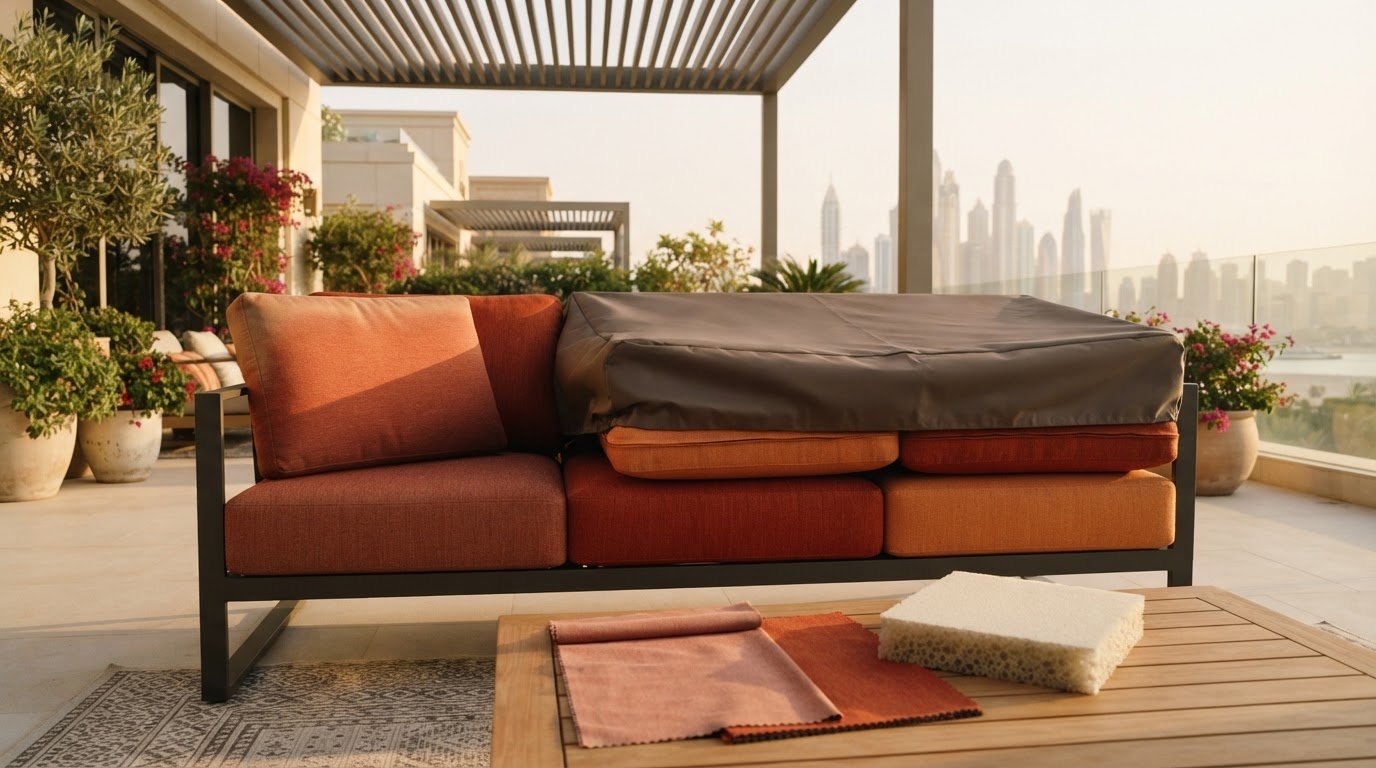

A quick mist from a retail aerosol can will never save patio upholstery from relentless solar radiation. When high UV indices take their toll, uncovering the best way to protect outdoor cushions from sun exposure becomes essential to preserving your outdoor living space. You have likely experienced the frustration of watching deep, vibrant fabrics bleach into dull, washed-out tones within a single season, leaving fibers brittle and prone to tearing. Custom outdoor seating represents a considerable investment in comfort, and replacing damaged cushions every couple of years is both disheartening and expensive.
You don’t have to surrender your terrace to rapid heat degradation. In this guide, you will discover the exact protocols needed to defend your upholstery against aggressive photo-oxidation, safely extending cushion lifespan past five years. We walk through a synchronized three-tier defense, examining inherently UV-stable solution-dyed textiles, the superior durability of specialized protective treatments, and how custom outdoor protection covers provide effortless, dependable defense against the elements.
Key Takeaways
- Understand how photo-oxidation splits textile polymers and discover how early intervention prevents fabric embrittlement and rapid color loss.
- Identify why inherently UV-stable, solution-dyed textiles outlast surface-dyed fabrics under intense solar exposure.
- Compare short-lived over-the-counter sprays against specialized protective fabric treatments designed to withstand extreme regional climates.
- Discover why custom-fitted outdoor protection covers represent the best way to protect outdoor cushions from sun exposure and airborne dust.
- Establish a structured, year-round maintenance routine that safeguards both outer fabric covers and quick-drying foam cores beyond five seasons.
Understanding Sun Damage: How UV Rays and Heat Degrade Outdoor Cushions
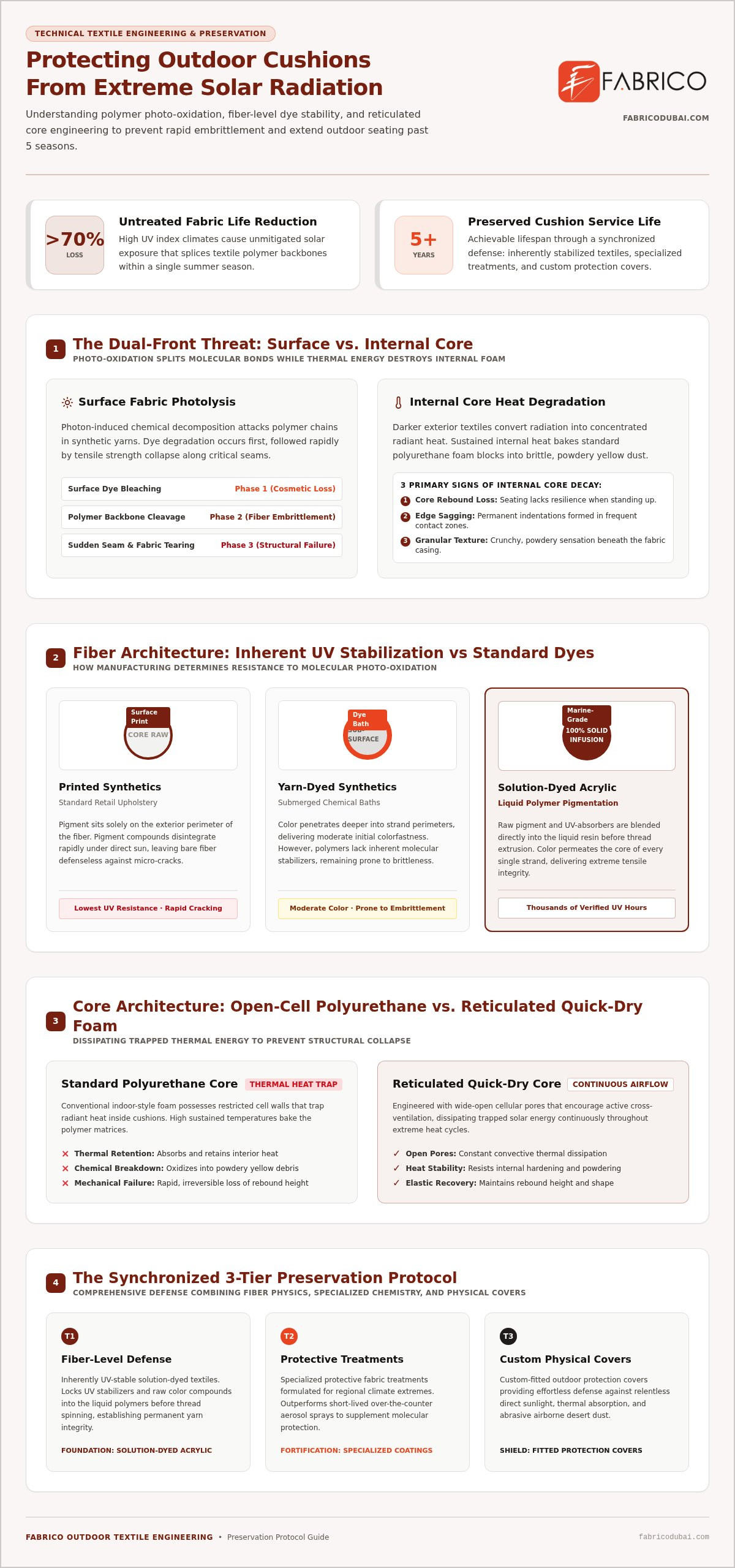
Solar energy is an aggressive adversary to exterior furnishings. Cushion photolysis is the photon-induced chemical decomposition of polymer chains within synthetic yarns, which fundamentally destroys the structural stability and service life of outdoor textiles. When direct sunlight strikes patio seating, ultraviolet radiation initiates photo-oxidation, splitting the molecular bonds within unprotected threads. In high UV index climates, this unmitigated solar exposure can reduce untreated fabric life expectancy by over seventy percent within a single summer season.
Discovering the best way to protect outdoor cushions from sun exposure requires looking beneath surface aesthetics. While most owners focus solely on fading, radiation and thermal heat mount a dual-front attack on both the outer upholstery weave and the internal filling.
Surface Fading vs Structural Fiber Breakdown
Cosmetic fading and mechanical structural breakdown are entirely different forms of degradation. The fundamental science of how UV rays degrade materials demonstrates that ultraviolet radiation breaks down surface dye compounds long before the yarn itself splits. However, as exposure continues, photo-oxidation attacks the polymer backbone, causing a severe drop in tensile strength that leads to sudden, irreparable tears along critical seams.
The manufacturing process determines how quickly this deterioration occurs:
- Printed synthetic textiles: Pigment sits entirely on the exterior perimeter of the fiber, leaving it defenseless against rapid surface fading and cracking.
- Yarn-dyed synthetics: Color penetrates deeper into the strand, offering moderate color retention but remaining prone to embrittlement if unshielded.
- Inherently stabilized fibers: UV-absorbers are blended directly into the liquid resin, resisting tensile decay far longer.
The Hidden Threat to Cushion Foam Cores
While fabric fading is immediately obvious, trapped thermal energy silently ruins the interior cushion architecture. Darker exterior fabrics absorb radiant heat, transforming the cushion cavity into a thermal trap where temperatures climb high enough to bake internal fillings. Standard open-cell polyurethane foam reacts poorly to this sustained heat, oxidizing and collapsing into brittle, powdery yellow dust that permanently flattens your seating.
Recognizing the primary signs of internal heat decay will help you protect your investment:
- A noticeable loss of core rebound when standing up
- Sagging edges and permanent indentation in seating zones
- A crunchy, granular sensation beneath the fabric casing
Selecting custom outdoor and indoor cushions engineered with reticulated quick-dry foam cores provides critical resilience against heat degradation. Unlike standard polyurethane blocks, reticulated foam features wide-open cellular pores that encourage continuous airflow, dissipating trapped thermal energy while resisting core breakdown. Pairing porous, heat-stable inserts with tailored external defense remains the best way to protect outdoor cushions from sun exposure and premature structural collapse.
Selecting the Right Fabric: Inherent UV Resistance vs Standard Outdoor Textiles
The best fundamental defense against sun damage begins with fiber-level UV stabilization. While exterior coatings offer supplemental shielding, relying on inherently light-stable textiles remains the best way to protect outdoor cushions from sun degradation over multiple years. In standard manufacturing, finished fabrics are submerged in chemical dye baths or surface-stamped with designs. Under relentless solar thermal loads, these surface-level pigments deteriorate rapidly, whereas marine-grade solution-dyed acrylic locks raw pigment directly into liquid polymers prior to thread extrusion, delivering several thousand hours of verified UV resistance. Homeowners investing in durable patio setups can explore specialized outdoor furniture offerings and current seasonal deals at tropicraftpatio.com.
Solution-Dyed Acrylic vs Olefin vs Polyester
Selecting the right textile requires balancing molecular stability against physical comfort under direct heat. Each fiber category performs differently when subjected to intense solar radiation:
- Solution-Dyed Acrylic: The benchmark for luxury exterior upholstery. The color permeates the core of every strand, ensuring superior colorfastness, excellent breathability, and an exceptionally soft tactile finish that remains cool against skin.
- Olefin (Polypropylene): A durable, economical alternative. Olefin carries notable natural moisture and UV resistance because its polymers absorb virtually no water, though it has a lower melting threshold under extreme radiant heat.
- Dip-Dyed Polyester: Standard retail fabric with limited inherent resistance. While affordable, the exterior dye breaks down quickly under continuous exposure, leading to brittle yarns and chalky discoloration.
Color Selection and Sunlight Absorption Dynamics
Color choice directly influences surface temperatures and the rate of yarn decay. Deep charcoal, navy, and dark brown dyes absorb substantial solar radiation, turning exterior seating into heat sinks that accelerate core breakdown. Conversely, pastel tones, sandstone, taupe, and mineral neutrals reflect radiant energy naturally. These lighter shades maintain cooler surface temperatures, reduce localized thermal stress, and disguise minor atmospheric bleaching far more effectively over extended patio seasons.
When curating materials for custom bench cushions in Dubai, opting for high-performance, solution-dyed acrylics establishes a solid defense against thermal fading. Working with an experienced artisan like Fabrico ensures your bespoke outdoor cushions feature premium marine-grade weaves tailored specifically to endure severe desert climates.
Topical UV Sprays vs Professional Fabric Treatments: What Really Works?
Topical UV protectant sprays function much like sunscreen for textiles, utilizing chemical compounds to absorb or reflect destructive ultraviolet wavelengths before they penetrate the yarn. While many homeowners wonder if simple aerosol cans are the best way to protect outdoor cushions from sun damage, the true performance depends on molecular bonding. Light surface coatings provide temporary relief, but intense solar heat quickly evaporates topical layers, making lasting protection a matter of application depth and chemical formulation.
How Retail UV Fabric Sprays Function
Commercial aerosol protectants typically rely on benzotriazole UV absorbers or hindered amine light stabilizers suspended in light solvent carriers. Proper DIY application demands a thoroughly cleaned, completely dry surface, spraying evenly from fifteen to twenty centimeters away, followed by twenty-four hours of curing out of direct sunlight. While helpful for low-exposure shaded balconies, these aerosol mists merely sit on the fabric face. Under extreme desert heat, the carrier agents break down rapidly, often requiring messy reapplication every four to six weeks to maintain even baseline water and UV resistance.
The Advantage of Commercial Barrier Applications
Professional textile treatments bypass the shortcomings of consumer misting through controlled, pressurized application techniques that encapsulate the entire yarn structure. Fluoropolymer-based chemical barriers cross-link around individual fibers to establish a resilient hydrophobic shield that repels moisture-borne minerals and significantly inhibits photo-oxidation at the core of the weave.
Unlike store-bought sprays that wash away during routine cleaning, a specialized water repellent upholstery treatment provides durable protection that survives repeated washing and heavy seasonal use. These commercial treatments deliver distinct advantages for exterior soft furnishings:
- Deep penetration: Protective agents lock into woven crevices rather than creating a brittle film on the surface.
- Comprehensive defense: Cohesive barriers simultaneously resist staining, liquid spills, and ultraviolet degradation.
- Extended intervals: Professional treatments keep outdoor cushions resilient for twelve to eighteen months before requiring reapplication.
For fine patio lounge suites and poolside daybeds, pairing specialized barrier treatments with inherently colorfast fabrics remains the best way to protect outdoor cushions from sun exposure, preserving both tactile comfort and vibrant colors through every season.
Physical Barriers: The Role of Custom Covers, Shade, and Strategic Habits
Physical barriers remain the single most dependable safeguard against aggressive solar degradation. While advanced yarns and specialized treatments establish vital chemical defense, physically intercepting sunlight prevents ultraviolet rays from striking the textile surface entirely. Combining durable physical shields with mindful patio arrangements is undeniably the best way to protect outdoor cushions from sun exposure while locking out windborne dust and humidity.
Investing in Precision-Fit Custom Protective Covers
Loose, generic store-bought covers often cause more harm than good. Ill-fitting tarps billow in strong winds, abrading fabric surfaces and trapping stifling humidity beneath unvented plastic backing. Precision-tailored covers, by contrast, match the exact contours of your furniture. Engineered with marine-grade exterior textiles, waterproof backings, breathable ventilation ports, and secure drawstring perimeter fasteners, they protect cushion firmness and preserve delicate upholstery seams. Consult The Ultimate Guide to Outdoor Protection Covers in the UAE to review precise measurement techniques and ventilation standards tailored for regional conditions.
To shield your terrace furniture against blistering summer afternoons, order custom outdoor protection covers from Fabrico crafted specifically to your exact furniture dimensions.
Optimizing Patio Shade and Spatial Positioning
Strategic placement dramatically limits solar thermal impact across open terraces. Calculating solar trajectories during peak midday hours allows you to position primary seating beneath pergolas, tension fabric shade sails, or cantilever umbrellas. For homeowners looking to introduce permanent architectural shading, outdoor living specialists like Patios Coast2Coast showcase how custom-built patio solutions help shield exterior furniture from intense overhead radiation. Be cautious of micro-climate heat traps. White perimeter walls and large glass sliding doors reflect intense thermal radiation, effectively doubling the UV load on adjacent furniture. Shifting lounge sets just one meter away from reflective glass significantly lowers surface heat exposure.
Consistent care habits ensure your outdoor seating ages uniformly rather than suffering localized fading:
- Bi-weekly rotation: Flip and swap matching cushion seats and backrests every two weeks so exposure distributes evenly across both faces.
- Peak-season retreat: During extreme midsummer periods when outdoor entertaining pauses, relocate cushions indoors or inside a shaded, ventilated storage box.
- Pre-storage inspection: Confirm soft furnishings are thoroughly dry before sealing them away, as lingering moisture sealed under protective covers quickly fosters mildew.
Adopting these practical storage disciplines alongside physical covers guarantees the best way to protect outdoor cushions from sun, keeping every piece as inviting as the day it arrived.
Creating a Year-Round Cushion Preservation Routine for Extreme Sun
Preserving luxury patio textiles against severe environmental wear requires orchestrating fabric selection, specialized barrier treatments, and tailored physical covers into a unified master routine. While high-grade materials resist solar decay, airborne desert dust accelerates fiber damage when left unchecked. Microscopic silica particles settle deep between yarns, acting like fine sandpaper that abrades sun-softened polymer strands each time someone sits down. Adopting a methodical care schedule is the best way to protect outdoor cushions from sun and grit degradation throughout every season.
The Seasonal Sun Protection Checklist
A structured maintenance discipline prevents compound damage from compromising your exterior lounge spaces:
- Weekly Upkeep: Clear loose surface sand with a soft-bristle brush, followed by low-suction upholstery vacuuming. Gentle cleaning removes abrasive debris without eroding protective hydrophobic treatments.
- Monthly Checks: Inspect perimeter piping, corner seams, and zipper lines for thread rot. Standard cotton or weak nylon threads break down under intense UV far sooner than solution-dyed acrylic panels.
- Seasonal Transition: Deep clean cushion covers using mild, pH-neutral soap and lukewarm water. Allow the core to dry completely in the shade before fitting precision outdoor protection covers ahead of high-summer heatwaves.
Professional Reupholstery and Custom Protection by Fabrico
Even well-tended outdoor furniture eventually encounters natural wear across seams, padding, and decorative borders. Rather than replacing structurally sound lounge frames with disposable retail seating, restoring them breathes new vitality into your outdoor living areas. Specialized reupholstery preserves original furniture frameworks while integrating high-performance, inherently UV-stable materials and quick-dry fillings designed for decades of use.
Drawing on over 35 years of bespoke upholstery and soft furnishing expertise, Fabrico provides comprehensive restoration and tailored defense for residential and commercial outdoor spaces across Dubai. Our master artisans create custom outdoor and indoor cushions crafted from premium solution-dyed textiles, reinforced with specialized stain and water repellent treatments. When matched with our durable outdoor protection covers, this layered approach delivers the best way to protect outdoor cushions from sun, ensuring your exterior seating retains its beauty and comfort through every extreme summer.
Explore our dedicated bespoke upholstery services in Dubai to renew your outdoor furniture with heirloom craftsmanship and precision-engineered protection.
Securing Long-Term Comfort and Radiance for Your Patio
Protecting your exterior seating from relentless heat and radiation doesn’t require constant fabric replacements. As established, the best way to protect outdoor cushions from sun damage is a synchronized defense: pairing inherently stable, solution-dyed textiles with breathable quick-dry cores, supported by specialized barrier treatments and tailored shielding. When these layers work in harmony, your patio setting retains its vibrant hues, structural integrity, and plush support through every season.
Drawing on over 35 years of precision tailoring and upholstery mastery in the UAE, Fabrico helps you preserve that elegance effortlessly. Our workshop crafts custom-engineered outdoor protection covers built to withstand extreme desert sun alongside specialized professional stain and water repellent treatments that guard every individual fiber. Explore bespoke outdoor cushions and custom protective covers at Fabrico today, and transform your terrace into an enduring sanctuary of luxury and peace of mind.
Frequently Asked Questions
Can you spray outdoor cushions with sunscreen to stop fading?
No, you should never spray personal sunscreen on outdoor cushions. Sunscreen formulas contain oils, emulsifiers, and chemical agents like avobenzone that leave stubborn oily residues across outdoor textiles. These compounds attract airborne desert sand, stain the fabric surface, and permanently discolor synthetic weaves under intense solar heat. To protect upholstery safely, choose specialized textile barrier treatments formulated specifically for exterior synthetic fibers rather than personal cosmetics.
How often should you apply UV protectant spray to patio cushions?
Retail aerosol protectant sprays generally require reapplication every four to six weeks in sunny environments. Intense ultraviolet radiation and high temperatures degrade consumer surface coatings quickly, especially after rainfall or surface cleaning. However, investing in professional water and stain repellent fabric treatments extends this protection window up to eighteen months. Establishing regular physical shading alongside proper seasonal covering remains the best way to protect outdoor cushions from sun exposure between maintenance cycles.
Do light-colored outdoor cushions last longer in the sun than dark ones?
Yes, lighter outdoor cushions consistently outlast darker alternatives under direct sunlight. Light neutral tones like sand, beige, cream, and soft grey reflect solar radiation rather than absorbing it. Dark fabrics like navy or charcoal absorb solar rays, raising core temperatures and accelerating the thermal breakdown of interior foam. Lighter fabrics also visually conceal minor atmospheric fading, keeping your terrace seating pristine across multiple summer seasons.
Can sun-damaged or faded outdoor cushions be restored without reupholstering?
Severely sun-damaged or bleached cushions cannot be permanently restored without reupholstering. While topical fabric paints and dye pens exist, they produce stiff, uneven textures that quickly flake under intense outdoor heat. Once photo-oxidation splits the polymer fibers and destroys the color pigments, the fabric has lost structural tensile strength. Professional reupholstery remains the only reliable method to restore proper aesthetics, tensile durability, and seated comfort.
Is Sunbrella fabric completely immune to fading in high UV sunlight?
No fabric is completely immune to solar fading, but solution-dyed acrylics like Sunbrella offer exceptional resistance. Because color pigment infuses the liquid polymer prior to yarn extrusion, the fabric withstands roughly 2,000 hours of continuous UV exposure before showing minimal color variation. While standard printed textiles fade within months, premium solution-dyed acrylic preserves its rich depth for five years or more under standard outdoor conditions.
What type of foam is best for outdoor cushions left in the sun?
Reticulated quick-dry foam is the superior choice for outdoor cushions subjected to direct heat. Standard polyurethane foam features closed or semi-open cells that trap thermal energy, causing the material to crumble into powder. Reticulated foam contains an open, porous structure that promotes active air circulation, dissipating heat buildup and allowing moisture to drain rapidly. This thermal breathability prevents internal core collapse during the hottest summer months.
How do custom outdoor covers protect cushions better than universal store covers?
Precision-fit custom covers eliminate loose, sagging fabric where wind-blown sand gathers and water pools. Standard off-the-shelf covers often flap violently during desert windstorms, chafing seams and trapping condensation underneath. Custom-tailored outdoor protection covers match your furniture’s exact proportions, incorporating hidden ventilation ports that release trapped humidity. Pairing bespoke covers with shade is the best way to protect outdoor cushions from sun damage and fine dust infiltration year-round.