

When searching for a local upholstery repair shop Dubai residents can trust, look for a specialist who assesses the furniture before recommending an approach. The frame, padding, existing fabric and how the piece is used all matter. A careful assessment helps distinguish worn fabric from concerns that may involve the furniture’s support or structure.
It’s understandable to wonder whether a much-loved sofa or chair is worth reupholstering, or whether new upholstery will suit Dubai’s heat, dust and indoor conditions. Choosing fabric with the piece and its setting in mind can help balance appearance with everyday use. Fabrico provides sofa and chair upholstery, along with fabric treatments such as stain- and water-repellent protection.
This guide explains what an upholstery assessment should cover, how to compare workmanship beyond photos and listings, and what to consider when choosing materials for your home or commercial setting. You’ll also find practical details to prepare before discussing a project, so the conversation can focus on the furniture’s condition, the finish you prefer and how the piece is used.
Key Takeaways
- Worn fabric doesn’t automatically mean furniture needs replacing. Consider the cushions, joints and frame as well as the visible damage.
- Compare how a local upholstery repair shop Dubai assesses the piece, explains the project scope and guides fabric selection, rather than relying on promotional claims.
- Match upholstery materials to the furniture’s daily use, cleaning needs and exposure to sunlight and dust.
- Prepare clear photos from several angles and notes about loose, worn or damaged areas to make your project discussion more useful.
- Consider tailored sofa or chair upholstery and relevant fabric treatments in light of practical needs at home or in a commercial setting.
When Is Upholstery Repair in Dubai the Right Choice for Your Furniture?
Worn upholstery doesn’t automatically mean a sofa or chair needs to be replaced. A tear or faded patch may be limited to the fabric, while sagging seats, unstable joints or a weakened frame can point to more than surface wear. Identifying the signs helps you understand what an assessment should cover before choosing new upholstery.
Upholstery restoration renews the covering and, where appropriate, addresses underlying wear. It doesn’t make every piece suitable for repair. A specialist can assess the furniture’s condition and explain whether reupholstery is a practical option. For anyone searching “local upholstery repair shop Dubai,” this evaluation is more useful than judging a piece by its appearance alone.
Which signs suggest a sofa or chair may need reupholstering?
Look for fraying seams, tears, faded areas, loose fabric or cushioning that has flattened and no longer feels supportive. These signs show where attention may be needed, but they don’t reveal the full condition of the frame or internal components. In Dubai, sunlight exposure may contribute to fading, and dust can settle into upholstery. The extent of wear depends on the furniture’s location and use.
Consider arranging an assessment if you notice:
- Fabric that is torn, frayed, loose or visibly faded.
- Cushions that feel uneven, compressed or less supportive than before.
- A chair or sofa that shifts, creaks or feels unstable during use.
- Wear that returns or worsens after routine cleaning.
These are reasons to investigate, not proof that a particular repair is needed. Upholstery combines layers of fabric, padding and support. The history of upholstery offers a useful introduction to the materials and construction behind this craft.
What should an upholstery assessment examine?
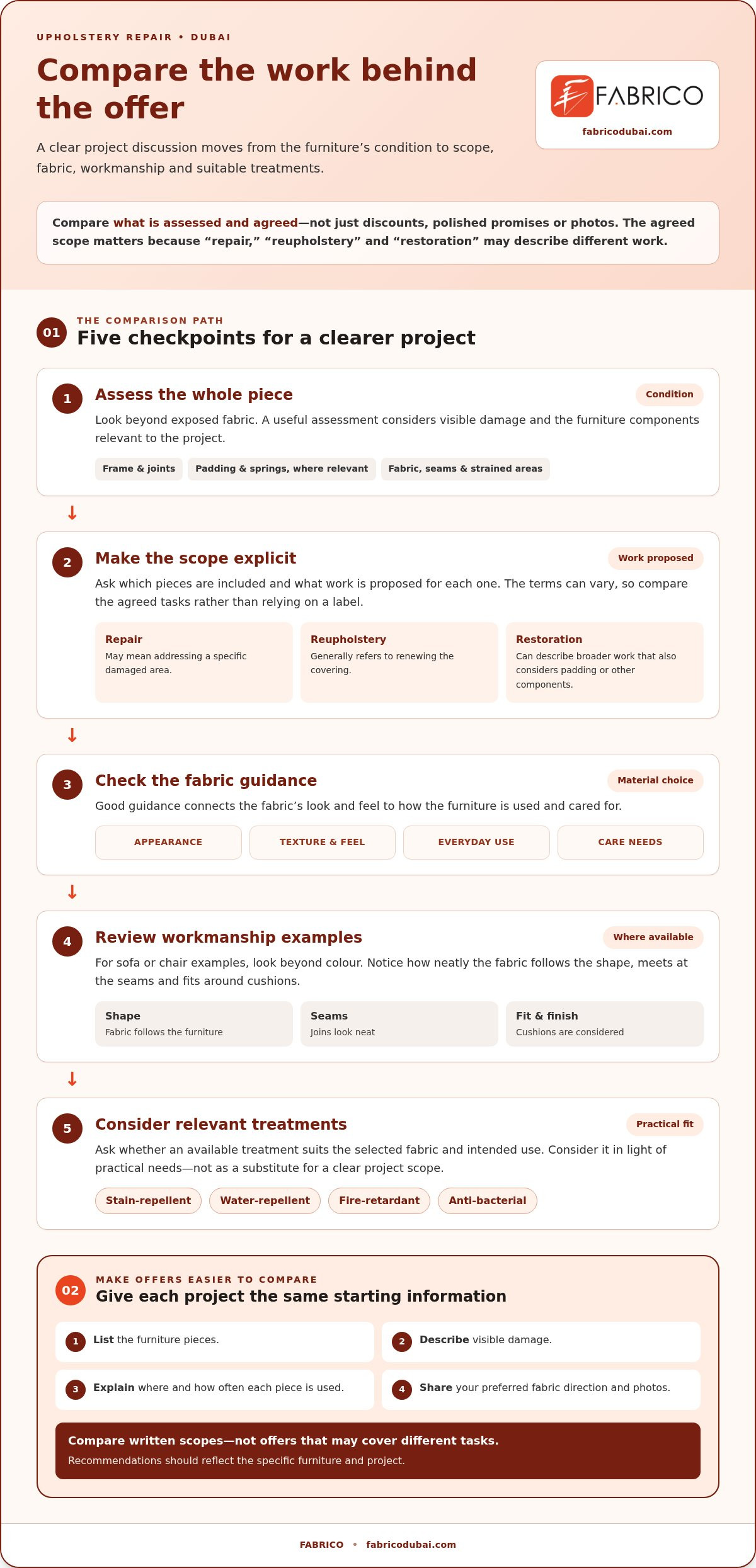
A thorough assessment considers the whole piece, not just the exposed fabric. The frame and joints affect stability, while padding and springs, where relevant, influence comfort and support. Existing fabric can also reveal wear, seam condition and areas under strain. Ask for the findings and proposed work to be explained clearly before settling on replacement fabric or a treatment.
Restoration priorities should reflect how the furniture is used. A frequently occupied family sofa may need different consideration from a chair in a lightly used room or seating in a commercial setting. Sunlight, dust, cleaning routines and daily use can all inform material and care choices. Fabrico provides sofa and chair upholstery in Dubai, with fabric treatments including stain- and water-repellent options. Begin by considering the furniture’s condition and setting.
How to Compare Upholstery Repair Shops in Dubai Beyond Their Offers
A discount or polished promise tells you little about how a sofa or chair will be assessed. Compare the clarity of the project explanation instead. “Repair” may mean addressing a specific damaged area, “reupholstery” generally refers to renewing the covering, and “restoration” can describe broader work that also considers padding or other components. Usage varies, so focus on the agreed scope.
A useful upholstery assessment identifies the furniture’s condition, proposed work, suitable fabric options, workmanship details and any relevant treatment. Use this framework to compare how a local upholstery repair shop Dubai approaches your project, not just how it promotes its services.
| What to compare | What a clear explanation covers |
|---|---|
| Assessment | Visible damage and the condition of furniture components relevant to the project. |
| Fabric guidance | How appearance, texture, everyday use and care inform material selection. |
| Project scope | Which pieces are included and what work is proposed for each one. |
| Workmanship | Relevant sofa or chair examples, where available, showing attention to seams, fit and finish. |
| Treatment options | Whether a treatment such as stain- and water-repellent protection suits the fabric and its intended use. |
Which details make an upholstery quote easier to compare?
Give each project the same useful starting information: list the furniture pieces, describe visible damage, explain how often and where they’re used, and share your preferred fabric direction. Photos can clarify both the condition and the look you have in mind. A written scope makes it easier to see whether the proposed work addresses your needs, rather than comparing offers that may cover different tasks. Recommendations should reflect the specific furniture and project.
How can you assess workmanship and fabric guidance?
Review examples of sofa and chair upholstery where available. Look beyond colour to how neatly the fabric follows the shape, meets at seams and fits around cushions. Fabric guidance should consider feel as well as appearance, and explain how the material relates to use and care. The National Council of Textile Organizations provides broader information about the textile industry, while fabric selection for your project depends on the furniture and setting.
Fabrico provides custom sofa and chair upholstery, with fire-retardant, anti-bacterial, and stain- and water-repellent treatments among its fabric-treatment options. Consider these in relation to the project’s practical needs, rather than treating them as automatic additions. Explore Fabrico’s upholstery services with details about the furniture, its condition and how you use it.
Which Upholstery Materials Suit Furniture Used in Dubai?
No single upholstery material is right for every Dubai home or commercial interior. A family sofa used throughout the day has different demands from a decorative chair in a quieter room. Air conditioning, occupancy, dust exposure and direct sunlight also vary by space, so assess materials in context rather than relying on a general claim that one option is best.
Compare each candidate across several considerations: how it feels, how it looks in the room, how the furniture is used, what care it requires and how much sunlight reaches it. A useful discussion with a local upholstery repair shop Dubai should connect these factors to the specific piece and setting.
How should you match upholstery fabric to furniture use?
Start with daily use. Frequently occupied family seating may call for a different balance of comfort and upkeep than occasional-use or decorative furniture. Texture affects feel and visual character; colour affects how the piece sits within the room; cleaning needs influence how practical the selection will be for your routine. Consider these separately rather than assuming a particular look will meet every need.
Room conditions matter, too. Note whether the furniture sits near a sunny window, whether the space is consistently air-conditioned, how many people use it and how dust enters or settles in the room. Commercial seating may have different occupancy and care patterns from a home lounge. Discuss those details when comparing fabrics, including options such as cotton, linen, polyester, velvet or leather. A material’s performance can vary with the specific fabric and setting.
When might fabric protection be relevant?
Stain- and water-repellent treatment may be worth considering where everyday spills or marks are a practical concern. It provides a protective treatment, but it doesn’t make upholstery waterproof or guarantee that fabric won’t be stained or damaged. It also doesn’t replace appropriate care. Consider the fabric, how the furniture is used and the care guidance provided when deciding whether treatment fits the project.
Fabrico offers stain- and water-repellent treatment alongside custom sofa and chair upholstery, allowing fabric choice and practical considerations to be discussed together. For a closer look at the treatment’s purpose, see our information on water-repellent upholstery treatment in Dubai.
How to Prepare for Upholstery Repair in Dubai: A Practical Checklist
A little preparation makes a project discussion more focused. Before speaking with a local upholstery repair shop Dubai, gather details about the furniture, what needs attention and how you want it to look and function. You don’t need to diagnose the repair yourself. Clear observations help shape a useful assessment.
What information should you gather before discussing a repair?
Use this checklist to organize the essentials:
- 1. Identify each piece. Note whether it’s a sofa, armchair or another upholstered item, and record approximate dimensions if available.
- 2. Photograph its condition. Take clear photos from several angles, including close-ups of tears, fraying, faded areas, loose fabric, flattened cushions or other visible damage.
- 3. Describe the location. Mention the room or setting, whether the furniture is indoors or outdoors, and whether it sits in direct sunlight or near a source of dust.
- 4. Explain how it’s used. Note how often people sit on it and who typically uses it. Frequent family seating, occasional-use furniture and commercial seating can have different priorities.
- 5. Separate needs from preferences. List essential functional concerns, such as loose upholstery or reduced cushion support, separately from optional changes to colour, texture or overall appearance.
Specific notes are more helpful than a general description such as “the sofa is worn.” Point out which cushion feels flat or where a seam has loosened. Photos and observations give the upholstery specialist a clearer starting point, while an assessment determines what work is appropriate for the piece.
How do you plan fabric and treatment priorities?
Think about the result you want and the conditions the furniture faces. Make notes on preferred colour and texture, how the fabric should feel, your cleaning routine and whether it’s regularly exposed to sunlight, spills or frequent contact. You can also note what you’d like to preserve, such as the furniture’s existing appearance, alongside practical changes you’re considering.
Keep priorities distinct: appearance, comfort and maintenance are related, but one preference may involve a different compromise from another. If you’re considering stain- and water-repellent treatment, include it as a discussion point based on the furniture’s use, not as a replacement for appropriate care. Fabrico’s custom sofa and chair upholstery can be discussed in relation to these project details. For a broader look at tailored restoration, explore bespoke upholstery services in Dubai.
With your photos, notes and preferences ready, you can discuss your upholstery project with Fabrico in a more informed, practical way.
Choosing Fabrico for Sofa and Chair Upholstery in Dubai
After assessing your furniture’s condition, intended use and preferred finish, look for an upholstery specialist whose services fit the project. Fabrico provides sofa and chair upholstery for residential and commercial customers in Dubai. With approximately 35 years of experience in the Dubai market, Fabrico offers upholstery services for projects that call for considered fabric choices and careful workmanship.
For anyone searching for a local upholstery repair shop Dubai, the key is finding a service that relates its recommendations to the furniture itself. A well-used family sofa, for example, may have different priorities from reception seating in a commercial space. Intended use, existing condition and the finish you want should inform the project discussion, rather than a one-size-fits-all recommendation.
How Fabrico supports tailored upholstery projects
Fabrico’s custom sofa and chair upholstery is planned around the piece and its setting. Fabric selection influences the furniture’s appearance and feel, while workmanship affects how the upholstery sits across the frame, cushions and seams. The right choices depend on your priorities, whether you’re refreshing a familiar piece at home or updating seating used by customers and staff.
Custom cushions can also complement an upholstery project when they suit the furniture and space. Fabrico offers fabric treatments, including stain- and water-repellent, anti-bacterial and fire-retardant options. These may be relevant to particular practical needs, but consider them in the context of the fabric and intended use, not as a substitute for appropriate care.
What to do next with your upholstery project
Bring together the details you’ve gathered: photos of the furniture, notes about wear or damage, where it’s used, and what you’d like to preserve or change. Be clear about the finish you prefer and any practical concerns, such as frequent use or exposure to spills. This gives the project discussion a helpful starting point and allows priorities to be considered together.
Fabric protection can be part of that conversation when it complements the upholstery choice and the furniture’s everyday role. The aim is to make a considered decision about the piece, not to add treatments without a clear reason. Fabrico can discuss sofa and chair upholstery, custom cushions and relevant fabric-treatment options in relation to your project. Share your furniture’s condition and the finish you have in mind to begin a thoughtful upholstery discussion.
Make Your Furniture’s Next Chapter a Considered One
Choosing a local upholstery repair shop Dubai residents can rely on starts with more than fabric samples or promotional offers. Assess the furniture’s condition, compare the proposed project scope and workmanship, then match materials and care needs to how the piece is used and where it sits.
Photos, notes about wear and a clear idea of your preferred finish can make the project discussion more focused. Fabrico brings approximately 35 years of experience in the Dubai market to sofa and chair upholstery, with custom cushions and specialist fabric treatments to consider where they suit the project.
Your furniture’s condition and everyday role are a practical place to begin. Discuss your sofa or chair upholstery project with Fabrico and share the finish you have in mind. With a thoughtful assessment and tailored choices, you can move forward with greater confidence.
Frequently Asked Questions
How do I know if my sofa is worth reupholstering?
A sofa may be a good candidate for reupholstery if its frame and structure remain suitable, or if it has comfort, sentimental or design value worth preserving. Torn or faded fabric may be a surface issue, while sagging cushions, loose joints or an unstable frame need a broader assessment. Consider how the sofa feels and functions, not just how it looks. A specialist can review its condition and discuss restoration priorities before you decide.
What should I look for in a local upholstery repair shop in Dubai?
Look for a clear assessment process, relevant sofa or chair upholstery experience, thoughtful fabric guidance and a defined project scope. A local upholstery repair shop Dubai residents consider should connect its recommendations to the furniture’s condition, daily use and setting, whether that’s a family living room or commercial space. Review relevant examples of workmanship where available, and compare the substance of the explanations rather than relying only on discounts or broad promotional claims.
How much does sofa upholstery repair cost in Dubai?
The cost depends on the sofa’s condition, the work involved, and the fabric and treatment choices for the project. A generic figure may not reflect what your furniture requires, so a meaningful estimate should be based on its specific scope. Prepare clear photos, the sofa’s approximate dimensions and notes about damage or comfort concerns. Sharing your intended use and finish preferences helps the specialist understand the project and discuss a tailored approach.
Can damaged upholstery be repaired without replacing the whole sofa?
Sometimes the appropriate work can focus on a specific area; in other cases, broader reupholstery may better suit the sofa’s condition. The decision depends on where and how extensively the fabric is damaged, the state of the existing upholstery and the underlying structure. For example, a localized tear differs from widespread wear or sagging support. An assessment helps clarify the suitable project scope without assuming every sofa can be restored.
Which upholstery fabric is best for Dubai homes?
No single fabric is best for every Dubai home. Consider how often the furniture is used, the room’s indoor conditions, direct sunlight, preferred texture and appearance, and the cleaning routine you can maintain. A fabric specialist can relate those priorities to suitable options for the individual piece. Stain- or water-repellent treatment may be worth discussing if relevant, but it doesn’t remove the need for appropriate care or prevent all damage.
How long does sofa reupholstery take in Dubai?
Project timing varies with the sofa’s condition, the work involved and material selection. A general timeframe shouldn’t be treated as a promise for a particular piece, since projects can have different requirements. When discussing upholstery in Dubai, share the sofa’s details, the scope you’re considering and any scheduling considerations. This gives the specialist useful context to discuss the project in relation to its actual needs, rather than relying on an estimate that may not apply.
Is upholstery repair suitable for chairs as well as sofas?
Yes, upholstery work can be suitable for both chairs and sofas, with the approach shaped by each piece’s construction, condition and use. A dining chair, an occasional chair and heavily used seating may call for different functional and aesthetic priorities. Describe the furniture, note visible wear and explain where it’s used. Fabrico provides sofa and chair upholstery in Dubai, with custom cushions and fabric treatments available to complement projects where relevant.