

More cleaning can do more harm than good to pleated curtains. In Dubai, dust can settle into the folds and sunlight can gradually affect how fabric looks. Washing or ironing without checking the care instructions may distort the pleats or damage delicate fibres. The key is to match each step to the fabric rather than clean more aggressively.
These pleated curtain maintenance tips will help you keep the folds orderly and your curtains presentable with care methods suited to the fabric and its label. Learn how to manage everyday dust, account for indoor conditions and sunlight, and avoid common mistakes that can affect the curtain’s shape. We’ll also cover when routine home care may not be enough and specialist attention may be a better next step. A simple, fabric-conscious routine can help you preserve the curtain’s appearance for longer.
Key Takeaways
- Choose pleated curtain maintenance tips that suit the fabric, starting with gentle care and checking the care label before cleaning.
- Compare dusting, spot care, washing, steaming and professional cleaning before choosing a method.
- Support the fabric while it dries, then check and arrange the folds so the curtains can settle neatly.
- Persistent marks, delicate fabric or unclear care instructions are reasons to consider specialist attention.
- Thoughtful routine care can help preserve custom pleated curtains, while fabric protection treatments can complement that care.
Pleated Curtain Maintenance Tips: What Regular Care Protects
Cleaning pleated curtains can affect more than their appearance. The wrong method may be harsh on the fabric or disturb the folds that give the curtain its tailored drape. A considered routine combines light, regular care with a deeper clean only when needed and when the fabric’s care instructions allow it.
Dust can collect along the inner surfaces of pleats, where it may be less noticeable than on a flat panel. Gently removing surface dust helps keep the folds fresh without repeatedly subjecting the whole curtain to washing or another intensive treatment. Materials and finishes respond differently to moisture, heat and cleaning. This general overview of curtain care and cleanability helps explain why one method won’t suit every fabric.
Let the fabric type and care label guide every cleaning method. The safest routine is the one suited to your curtain, not a one-size-fits-all rule.
Why pleats need different care from a flat curtain panel
Folds create sheltered surfaces where dust may settle out of view. They also need even handling: pulling one area, bunching the fabric or allowing it to dry unevenly can affect how the curtain hangs. Maintaining pleats means caring for the folds already present. Creating or retraining pleats is a different task, and shouldn’t be assumed to happen through routine cleaning or ironing.
How Dubai conditions can shape a curtain-care routine
In Dubai homes, airborne dust and strong sunlight are practical factors to consider when planning curtain care. They don’t call for the same fixed schedule in every room. A window that’s opened often, a frequently used living area and a quieter room may have different needs, while the care label still sets the limits for cleaning.
Use visible dust, room use and the care label to decide when light maintenance is due. Inspect the folds as well as the exposed face of the curtain, since dust may be easier to spot in some areas than others. If sunlight reaches the fabric for long periods, consider its effect on the curtain’s appearance and adjust your routine within the limits of the care instructions.
These pleated curtain maintenance tips start with observation, not aggressive cleaning. The aim is to keep the existing folds orderly and the fabric presentable, while reserving more intensive care for when it’s appropriate.
How to Dust Pleated Curtains Without Disturbing the Folds
A gentle dusting routine can lift surface dust without tugging at the curtain’s structure. Before choosing a tool, read the care label for cleaning instructions or warnings. Start with the least forceful method suitable for the fabric, and test it on a discreet area first.
A gentle step-by-step routine for removing surface dust
- Check the care label. Confirm which tools and cleaning methods are suitable before you begin.
- Support the fabric. Steady the curtain lightly so it doesn’t swing or pull against its pleats as you work. Avoid gripping, stretching or pressing the folds flat.
- Dust from top to bottom. Use a clean, soft cloth or suitable vacuum attachment, moving gently across the fabric. Follow the direction of the folds and take care around seams and heading details.
- Inspect the pleats. Look between the folds for remaining dust, snags or changes in the fabric. Stop if the material shifts, catches on the tool or shows signs of damage.
Work in small sections rather than sweeping quickly across the full panel. Use light strokes and avoid repeatedly rubbing one spot, which can put unnecessary strain on the fabric. If dust remains deep in a fold, don’t force the tool into the space. Reassess whether the method is suitable for that curtain.
When to use a vacuum, brush or damp cloth
Tool choice depends on the fabric’s construction and care instructions. A clean, soft vacuum attachment may suit a fabric that can tolerate gentle suction. Keep the nozzle close without pressing it into the folds. Delicate or loose fabrics may catch or shift, so avoid strong suction and abrasive brushes. Use a soft brush only if it moves smoothly without snagging the surface.
Use a damp cloth only if the care label permits moisture. Test it discreetly first, and avoid soaking or heavily rubbing the fabric. If the label advises against water, or you’re unsure how the material will respond, choose a suitable dry method rather than experimenting.
These pleated curtain maintenance tips focus on removing dust while preserving the fabric’s natural drape. For custom Pleated American curtains, careful routine handling complements their tailored construction. Fabrico creates custom Pleated American curtains and offers fabric treatments in Dubai. Explore custom pleated curtain expertise to learn more.
Pleated Curtain Cleaning Methods: Washing, Steaming or Professional Care?
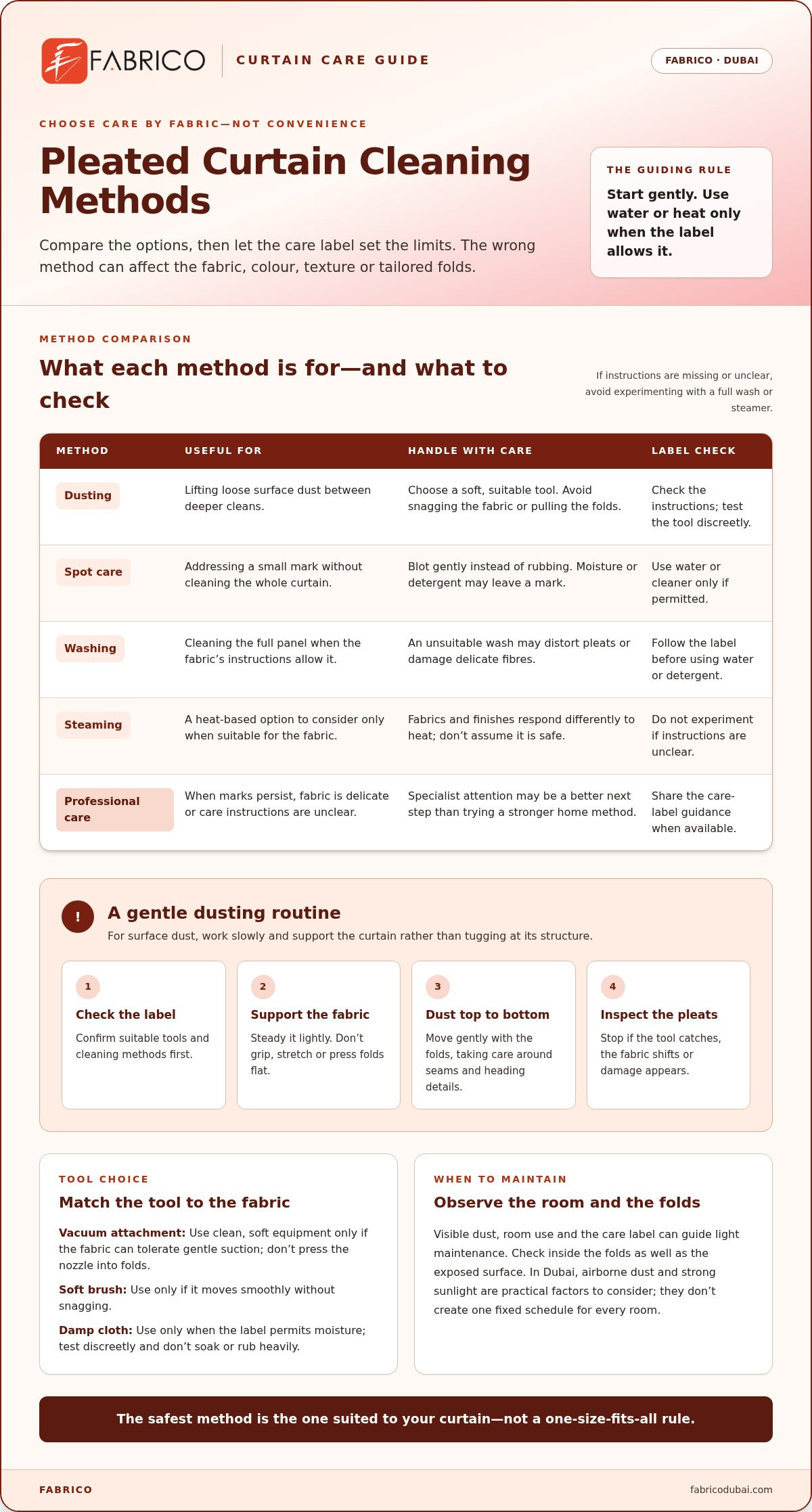
Choose a cleaning method based on the curtain’s fabric and construction, not simply on convenience. A method that works for one panel may affect another’s colour, texture, finish or pleats. Follow the care label before applying water, detergent or heat. If instructions are missing or unclear, avoid experimenting with a full wash or a steamer.
| Method | Suitable use | Key caution | Care-label dependency |
|---|---|---|---|
| Dusting | Removing loose surface dust between deeper cleans | Use a soft, suitable tool and avoid snagging or pulling folds | Check the label and test the tool discreetly |
| Spot care | Addressing a small mark without washing the whole curtain | Blot gently rather than rubbing; moisture or detergent may leave a mark | Use water or a cleaner only if the label permits it |
| Washing | Cleaning the full panel when the fabric is washable | Water and handling can affect fabric, lining or pleat shape | Follow instructions for hand or machine washing; don’t wash if prohibited |
| Steaming | Refreshing suitable fabric or easing creases | Heat and moisture may harm some materials; steaming doesn’t guarantee pleat restoration | Use only if the fabric guidance and steamer instructions allow it |
| Professional cleaning | Persistent marks, delicate materials or uncertain care needs | The method must suit the fabric and curtain construction | Share and follow available care instructions |
Can pleated curtains be washed at home?
Sometimes, but fabric composition and care instructions determine whether home washing is appropriate. Spot care is not the same as a full wash: treat only the affected area, and avoid soaking the fabric or applying detergent without guidance. Machine washing can be unsuitable for delicate curtains or panels with construction details that may be affected by agitation. If the label prohibits machine washing, don’t put the curtain in the washer. Hand washing also involves water and handling, so it isn’t automatically the safer choice.
When should pleated curtains be steamed or professionally cleaned?
Steaming may be an option for some fabrics, but it isn’t a universal way to clean curtains or restore pleats. Follow the equipment instructions, use heat only as permitted for the fabric, and stop if the material reacts unexpectedly. For persistent marks, delicate fabric or unclear cleaning guidance, professional care is a considered alternative to trial and error.
These pleated curtain maintenance tips come down to choosing the least risky suitable method. If the label doesn’t support washing or heat, don’t assume that a more intensive clean will improve the result.
How to Keep Pleated Curtains Hanging Neatly After Cleaning
Careful drying and rehanging help prevent freshly cleaned curtains from drying in a twisted or bunched position. The right approach depends on the fabric and its care instructions, so don’t assume that hanging a damp panel, using a dryer or applying heat is suitable for every curtain. Support the fabric evenly and avoid pulling on the heading, where the folds are formed and secured.
How to dry and rehang curtains while protecting their shape
Follow the label’s drying guidance before deciding whether to dry the curtain hanging or in another position. Once the fabric is ready to handle, use this sequence:
- Check the folds. Before rehanging, separate any folds that have become caught together and look for twists or creases.
- Rehang carefully. Secure the curtain as intended, making sure no fabric is trapped around the track, hooks or other heading components.
- Arrange the pleats. Guide each fold gently into an even line by hand. Don’t tug the fabric or pull hard at the heading to force a particular shape.
- Let the curtain settle. Check how it hangs and allow the fabric to fall naturally. Make small adjustments by hand if folds remain displaced.
If the care label gives specific drying instructions, follow those rather than relying on a general routine. Avoid tumble-drying, direct heat or leaving the curtain bunched unless the fabric guidance expressly allows that method.
What to do when pleats look uneven or lose their shape
First check whether the folds are simply displaced. Smooth them gently into their existing arrangement, then step back and see how the curtain hangs. This light reshaping by hand is different from heat-based pleat training, which uses an iron or steamer and may affect some fabrics. Don’t apply heat unless the care instructions permit it and you can follow the equipment guidance safely.
If the folds still look uneven, or the fabric or heading construction is delicate, avoid trying to reset the pleats yourself. Specialist assessment can help determine whether the issue is a temporary shift or needs more considered care. For context on how heading styles shape a curtain’s appearance, read about American pleated curtains in Dubai.
Good pleated curtain maintenance tips include patience: allow the fabric to settle before making further adjustments, and don’t use force to correct a fold. For custom curtain guidance, explore Fabrico’s pleated curtain services.
When Professional Pleated Curtain Care Is the Better Next Step
Routine care is useful for loose dust and minor surface upkeep, but it has limits. If a mark remains after gentle, fabric-approved care, or the folds begin to look distorted, stop before trying stronger products, more moisture or extra heat. Delicate fabric and unclear cleaning instructions are also reasons to pause and seek specialist guidance rather than risk changing the curtain’s appearance.
Signs routine maintenance is no longer enough
Consider professional attention if you notice:
- Persistent marks that remain after safe, limited surface care. Repeated rubbing or adding detergent may affect the fabric without resolving the mark.
- Distorted or uneven folds that don’t settle with gentle hand arranging after cleaning.
- Fragile or delicate fabric that shifts, catches or appears vulnerable during ordinary handling.
- Unclear care instructions that leave you unsure whether water, detergent or heat is suitable.
These signs don’t mean every curtain needs specialist care. They indicate that routine methods may no longer be the right approach. When the fabric’s response is uncertain, avoid escalating the cleaning attempt. A cautious pause can prevent further strain.
Protecting custom pleated curtains over the long term
Careful day-to-day handling complements the craftsmanship of custom Pleated American curtains. Gentle dust removal, attention to the care label and even handling after cleaning all help maintain the curtain’s existing folds without treating them as something to retrain through force. For lasting upkeep, match each method to the fabric rather than relying on a single routine for every panel.
Fabrico has more than 35 years of experience in the Dubai market, creating custom Pleated American curtains and providing fabric treatments. Stain- and water-repellent treatments can be part of a wider conversation about fabric care, but they don’t replace routine maintenance or change the care instructions.
These pleated curtain maintenance tips can help you recognise when a gentle home routine is enough and when specialist attention may be more appropriate. Explore Fabrico’s curtain and fabric-treatment services for custom curtains and fabric care in Dubai.
Keep Your Pleated Curtains Looking Their Best
The most reliable pleated curtain maintenance tips begin with a simple principle: let the fabric and its care instructions guide each step. Gentle dusting helps manage surface build-up, while washing, steaming or spot care should be used only when suitable. After cleaning, support the fabric and arrange the existing folds carefully so they can hang naturally.
If marks persist, folds remain distorted or care guidance is unclear, pause rather than trying a stronger method. Specialist attention can help you choose an appropriate next step for delicate or custom curtains. Fabrico creates custom Pleated American curtains in Dubai and provides specialist fabric treatments.
Explore Fabrico’s custom curtain and fabric-treatment services for considered support with your curtains. With fabric-conscious care and patience, you can keep your window dressing neat and presentable.
Frequently Asked Questions
How often should I clean pleated curtains?
Clean pleated curtains according to visible dust, room use and the fabric’s care guidance, rather than following a fixed schedule. In Dubai, dust may make light maintenance useful sooner in some rooms than others. Check the folds as well as the exposed surface, and remove loose dust gently when needed. Reserve washing or other intensive cleaning for when it’s appropriate for the curtain, as the care label directs.
Can I machine wash pleated curtains?
Machine wash pleated curtains only if the care label allows it. Fabric composition, lining and the curtain’s construction can all affect whether washing is suitable. If the label prohibits machine washing, or the instructions are unclear, don’t put the curtain in the washer. Hand washing isn’t automatically safe either, since water and handling may affect some fabrics. Avoid a full wash until you know which method the care guidance permits.
How do I remove dust from pleated curtains without damaging them?
Start by checking the care label, then use the gentlest suitable dry method. A clean, soft cloth or a suitable vacuum attachment may work if it doesn’t snag or pull the fabric. Support the curtain lightly and move from top to bottom, following the folds without rubbing hard. Test your tool discreetly first, and stop if the fabric shifts, catches or shows signs of damage.
Can I steam pleated curtains to restore their folds?
Steaming may suit some fabrics, but it isn’t a universal way to restore pleats. Check the care label and steamer instructions before applying heat or moisture, and stop if the fabric reacts unexpectedly. If folds are simply displaced, try arranging them gently by hand first. Heat-based pleat training is different from routine reshaping and may not suit the fabric, so don’t assume steaming will reset the curtain’s shape.
What is the safest way to dry pleated curtains after cleaning?
The safest drying method is the one specified on the curtain’s care label. Support the fabric so it doesn’t dry bunched or twisted, and avoid tumble-drying or added heat unless the instructions permit it. Rehang only when appropriate for the fabric, checking that no folds are caught or trapped. Once rehung, arrange the pleats gently by hand and let the curtain settle without pulling forcefully on the heading.
Why do my pleated curtains look uneven after washing?
Uneven pleats after washing may be displaced, twisted or affected by how the fabric was handled and dried. First check whether the folds are simply caught together, then guide them gently into their existing arrangement by hand. Don’t tug on the heading or apply an iron or steamer unless the care label allows heat. If the fabric looks distorted or fragile, pause further attempts and seek specialist guidance.
When should pleated curtains be professionally cleaned?
Consider professional care when marks remain after gentle, fabric-approved surface care, when the material is delicate, or when the care instructions are unclear. Distorted folds or fabric that catches and shifts during cleaning are also reasons to stop rather than try stronger products or heat. For Dubai homeowners, Fabrico brings more than 35 years of experience with custom Pleated American curtains and fabric treatments, supporting informed decisions about curtain and fabric care.