

A curtain that can be treated for fire retardancy isn’t automatically suitable for every project. For fire retardant curtain treatment Dubai, consider the fabric, treatment method and supporting evidence together, especially if the curtains are for a commercial or public space.
Before altering existing curtains, ask which standard or test evidence the treatment relates to, whether it applies to your specific fabric, and how cleaning or care may affect the treatment over time. A treatment claim alone doesn’t establish suitability or show that the curtains meet your project’s requirements. Requirements can vary, so confirm them with the responsible project contact or authority.
This guide explains what treatment can and cannot establish, what to verify before proceeding, and what information to gather for a fabric assessment. It also covers the documentation and care guidance to request from a provider. Fabrico offers fire-retardant treatment and custom curtain services in Dubai, with approximately 35 years of experience in the local market. A considered assessment can help you decide whether to treat existing curtains or explore another option.
Key Takeaways
- Fire-retardant treatment doesn’t guarantee that curtains meet every project requirement. Check fabric suitability and supporting evidence.
- Before requesting fire retardant curtain treatment Dubai, gather details about the fabric, its condition, intended use and project requirements.
- Ask the provider to explain the treatment process, relevant test evidence, documentation, care instructions and limitations.
- Compare treating existing curtains with choosing another fabric or commissioning custom curtains. Consider appearance, care and project fit.
- Confirm applicable requirements with the building owner, consultant or responsible authority. Dubai Civil Defence may be relevant to some projects.
Why consider fire retardant curtain treatment in Dubai?
Curtains shape the look and feel of a room, but their fire performance may also be part of a project’s safety requirements. A homeowner might ask about treatment while reviewing existing curtains. A hotel or commercial project may have specifications to check before curtains are installed or altered. The right questions depend on the building and how the space is used.
Fire-retardant treatment is applied to fabric to affect its response to fire. It does not make curtains fireproof or remove all fire risk. Suitability depends on the fabric and the requirements confirmed for the project. The term alone doesn’t identify the process, confirm that your fabric is suitable, or show that the result meets a particular specification. Ask the treatment provider and, where relevant, the project’s responsible party to clarify these points.
What does fire-retardant curtain treatment mean?
In general, treatment refers to a service applied to fabric. Before accepting the work, ask whether the particular curtain material can be treated and what the process involves. Products described as fire retardant may differ in performance and supporting evidence. Fire-retardant fabrics offers background on the distinction between fabrics with inherent resistance and those that receive treatment. Ask your provider which applies to the option being considered.
Treatment isn’t a fireproof guarantee and doesn’t, by itself, establish project compliance. Discuss the evidence, limitations and effect of future care for the specific fabric and intended use.
When might Dubai property owners ask about curtain treatment?
Homeowners may enquire while reviewing existing curtains or planning a room. Hospitality and commercial property owners may need to respond to a project specification, building-owner request or consultant’s guidance. These situations aren’t interchangeable. Don’t assume that one requirement applies to every property in Dubai.
Before arranging fire retardant curtain treatment Dubai, distinguish general interest in fire safety from a confirmed project requirement. Ask the building owner, project consultant or responsible authority what applies to your space. Dubai Civil Defence may be relevant to some projects, but confirm whether it is the appropriate authority for yours.
- Note where the curtains will be used and how the space is operated.
- Collect any written project specification or request you have received.
- Ask the provider to assess the actual fabric and explain what evidence and care guidance may be available.
Fabrico offers fire-retardant treatment and custom curtain services in Dubai, with approximately 35 years of experience in the local market. A discussion about the fabric and project requirements can help you decide whether to assess existing curtains or consider another fabric option.
How fire-retardant curtain treatment is assessed and applied
A useful assessment starts with the fabric, not an assumption that every curtain can be treated. The provider needs to understand the material, its current condition and the requirements it is expected to meet. This helps establish whether treatment may be suitable or whether further checks are needed.
A practical sequence is to identify the fabric, assess its condition, confirm the project requirements, and then discuss treatment if it appears suitable. Confirm the method and suitability with Fabrico for the particular curtains. Before handing over the fabric or agreeing to treatment, ask what will be done and what evidence, if any, relates to your project.
What information should you provide about existing curtains?
Share the fabric label or composition details if available, along with clear photos and an honest description of the curtains’ condition. Mention visible wear, previous cleaning or other treatments if you know about them. These details help start the discussion, but may not be enough to establish suitability. If fabric information is missing, ask Fabrico whether further assessment is possible and what it involves.
Also share where the curtains will be used and any written project specification, building-owner request or consultant guidance. A requirement for one setting may not apply to another. Providing the source of the requirement helps the provider address the specific request rather than treating a general statement as proof of compliance.
What should you confirm about treatment and aftercare?
Before proceeding, request written information about the proposed treatment scope, available test evidence or documentation, known limitations and care instructions. If the project refers to a particular standard, ask what the evidence demonstrates. The NFPA 701 standard describes testing for draperies and other hanging textiles. Mentioning the standard doesn’t establish that a specific curtain or treatment has been tested to it.
Ask whether the proposed process could affect colour, texture or drape, and whether it changes cleaning requirements. Don’t assume the finish will remain unchanged or that treatment will withstand washing unless the provider supplies supporting information. Clarify how future cleaning could affect the treatment and what care steps to follow.
Fabrico provides fire-retardant treatment and custom curtain services in Dubai. To make the discussion more useful, prepare the fabric details, condition, intended use and any project documents, then ask about curtain fabric assessment and which process details can be confirmed for your curtains.
Treated curtains, alternative fabrics, or replacement: how to compare
Once you have the project requirements, compare the options against the same criteria. Treating existing curtains may be worth assessing, but another fabric or replacement curtains may be more appropriate if the material or its supporting documentation can’t be confirmed.
When might treatment of existing curtains be worth assessing?
Consider the curtains’ condition, any available fabric label or composition details, their dimensions and the project’s stated requirements. These details help a provider assess whether the fabric is a candidate for treatment, but don’t establish suitability on their own. Ask for an assessment and an explanation of what can be confirmed for that specific material before deciding.
When should you consider alternative curtain fabric or replacement?
If the fabric’s suitability or the required evidence remains unclear, discuss alternatives before proceeding. Compare the proposed fabric’s appearance and care guidance with its supporting documentation and fit for the project. Fabrico offers custom curtain services, including Pleated American curtains. Its guide to American pleated curtains can be a useful reference when considering a replacement style.
The NFPA 701 fire-test standard is one reference for testing certain hanging textiles. Confirm that the standard is relevant and that any evidence required matches your project specifications. Don’t describe an option as compliant without verified, project-specific evidence.
| Comparison point | Treat existing curtains | Choose fabric or replacement curtains |
|---|---|---|
| Suitability | Depends on the existing fabric and its condition. Ask for an assessment. | Confirm the proposed fabric is appropriate for the intended use. |
| Evidence | Request documentation that relates to the treated fabric and stated requirements. | Check what evidence is available for the selected fabric or finished curtains. |
| Appearance | Ask whether treatment may affect colour, texture or drape. | Review the fabric’s look and feel before choosing a replacement. |
| Care | Obtain specific cleaning instructions and ask how care may affect treatment. | Check the fabric’s care guidance before making a selection. |
| Project fit | Verify that the assessment and evidence address the project requirements. | Confirm the proposed option and its documentation meet those requirements. |
For fire retardant curtain treatment Dubai, weigh the available evidence and care guidance as carefully as the fabric itself. If neither treating nor replacing the curtains provides clear answers, pause and ask the project’s responsible party what documentation is needed before committing.
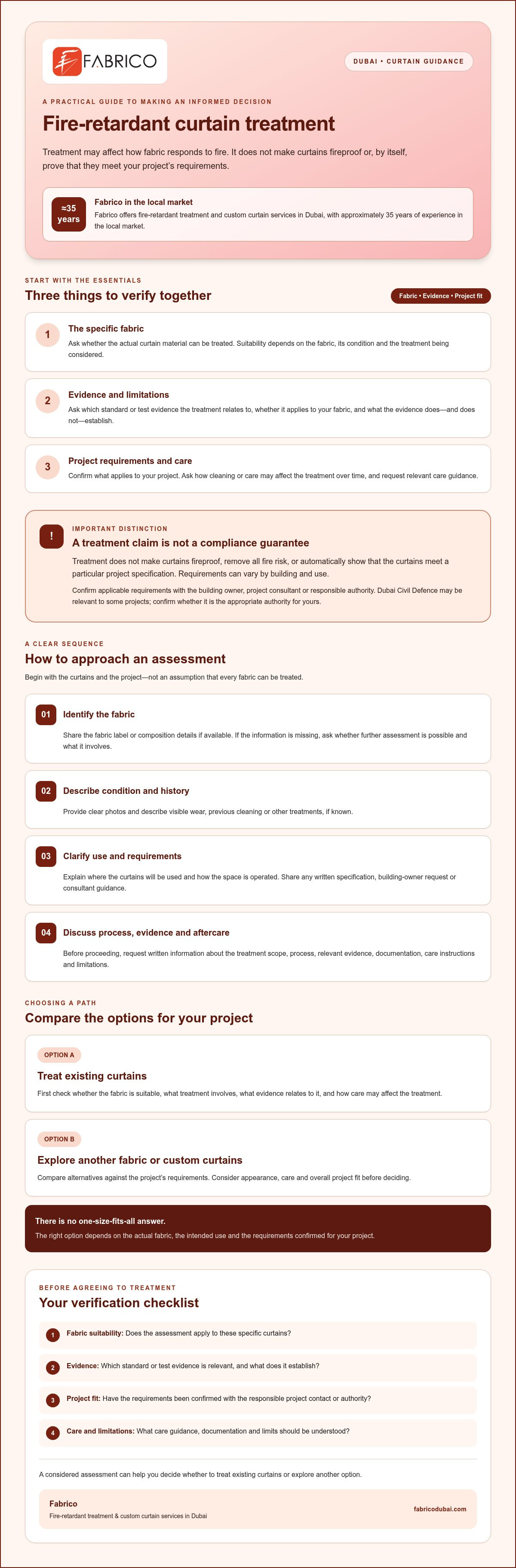
What to verify for fire-retardant curtains in Dubai
Before arranging treatment, establish what the project requires. A residential refurbishment, hotel room and commercial premises may each have different specifications. Don’t rely on a general statement that curtains are “fire retardant.” Ask the building owner, project consultant or other responsible party for the applicable requirements and how they’ll assess the finished work. Dubai Civil Defence may be an authority to consult for some projects, but confirm whether it applies to yours.
Provider documentation can describe a treatment or test result, but it isn’t automatically approval for a particular project. The reviewer responsible for your site determines whether the evidence is relevant and acceptable. Keep this distinction in mind when comparing providers and options for fire retardant curtain treatment Dubai.
Which project details should you confirm before ordering treatment?
Gather the building type and room use, any written project specification, and the evidence requested for the curtains. Ask who will review the documents, what information they need and whether they require a particular format. If directions are unclear or appear outdated, confirm current requirements with the responsible project professional or authority before proceeding.
- Identify the intended use of the room and the type of building.
- Request the project specification or written requirement, if one exists.
- Confirm who accepts or reviews treatment documents and the format they expect.
- Check whether Dubai Civil Defence or another authority is relevant to this project.
These checks help when a project has several decision-makers. A building owner may provide the brief, while a consultant or authority may clarify which evidence is needed. Record the answers so the treatment provider can respond to the actual request rather than make assumptions.
What evidence and service details should a provider explain?
Ask for written details about the treatment scope, available test documentation, fabric limitations and aftercare. Check that any evidence identifies the material or treatment it relates to and is relevant to the curtains’ intended use. If a provider shares a general product statement, ask what it establishes for your fabric and whether it addresses the project’s stated requirements.
Before agreeing to treatment, clarify what the documentation covers, what it doesn’t cover, and whether cleaning or care affects the treatment. Keep the project requirements and provider information together for the reviewer. If documents leave important questions unanswered, seek clarification before proceeding rather than interpreting a claim as site approval.
Fabrico offers fire-retardant treatment and custom curtain services in Dubai. To discuss what information may help assess your curtains, request a curtain treatment assessment.
Request a fire-retardant curtain assessment from Fabrico
A useful enquiry gives the provider enough context to discuss your curtains and their intended use. That experience provides context for a conversation, but it isn’t proof of a particular treatment outcome or project approval. Fabric suitability and available evidence still need to be confirmed for your case.
What to include in your enquiry to Fabrico
Prepare the information you have before getting in touch. Clear photos can help describe the curtains, while labels or composition details may help identify the fabric. Share the property location and intended room use, and include measurements if available. If a project team has provided a written specification or requested particular documentation, pass it along so the discussion can address the stated requirements.
- Photos of the curtains and any visible labels or fabric information.
- Known fabric composition, curtain dimensions and current condition.
- Property location and the curtains’ intended use.
- Written project specifications or documentation requests, if provided.
Ask whether Fabrico can assess the specific fabric and what information may be available about treatment scope, evidence, limitations and care guidance. If you don’t have a fabric label or composition details, say so rather than guessing. Confirm what further assessment may be needed before assuming the curtains are suitable for treatment.
How to make a considered decision after the assessment
Compare the provider’s written explanation with the requirements confirmed by your building owner, consultant or other responsible project contact. Check that any documentation relates to the actual fabric and intended use, and ask about cleaning instructions and stated limitations. Request clarification before proceeding if anything remains unclear. An assessment can inform your decision, but it isn’t project approval unless the appropriate reviewer confirms that the evidence is acceptable.
For fire retardant curtain treatment Dubai, a clear exchange of information helps you understand what can be assessed and what still needs confirmation. Discuss your curtain treatment requirements with Fabrico.
Make your next curtain decision with confidence
A treatment claim alone can’t confirm that curtains suit a project. Before proceeding, check the fabric and its condition, clarify requirements with the responsible project contact, and ask the provider for written details about treatment scope, evidence, limitations and care. If existing curtains can’t be assessed against those needs, compare them with alternative fabric or custom replacement options.
For fire retardant curtain treatment Dubai, an assessment is a practical starting point, not a substitute for project-specific review or approval. Fabrico offers fire-retardant treatment alongside custom curtain services and brings approximately 35 years of experience in the Dubai market. Fabric suitability and available documentation should still be confirmed for your curtains.
Prepare the details you have and discuss your curtain treatment requirements with Fabrico. Clear questions and verified project requirements can help you make an informed choice for your space.
Frequently Asked Questions
What is fire-retardant curtain treatment?
Fire-retardant curtain treatment is a service applied to fabric to affect how it responds to fire. Confirm the exact process, fabric suitability and available evidence with the provider for the curtains in question. Treatment doesn’t make fabric fireproof or remove all fire risk. For a Dubai project, check whether the treatment information addresses requirements confirmed by the building owner, consultant or responsible authority.
Can existing curtains be treated for fire retardancy in Dubai?
Existing curtains may be suitable for assessment, but a provider must confirm this for the specific fabric. Share any fabric label or composition details, photos, condition and intended use. If information is missing, ask whether further assessment is possible. Fabrico offers fire-retardant treatment in Dubai, but don’t assume every curtain can be treated or that treatment alone will satisfy your project’s requirements.
Does fire-retardant treatment make curtains fireproof?
No. Fire-retardant treatment isn’t a fireproof guarantee and doesn’t eliminate fire risk. It describes a treatment intended to affect fabric’s response to fire, while suitability and performance depend on the material, process and relevant evidence. Ask the provider to explain the treatment’s scope and limitations in writing, and verify whether the available information meets your project’s specific requirements.
How can I check whether treated curtains meet Dubai project requirements?
Get the applicable requirements from your building owner, project consultant or other responsible party. Then ask who reviews the treatment documents and what format they accept. Confirm whether Dubai Civil Defence is relevant to your project rather than assuming it applies. Ask the provider for evidence that relates to the actual fabric and intended use. A treatment document alone isn’t automatic approval for a particular site.
Can fire-retardant treatment change curtain colour or texture?
It may affect the fabric’s appearance or feel, but the outcome depends on the material and treatment process. Before proceeding, ask whether the proposed treatment could alter colour, texture or drape, and whether the fabric can be assessed for suitability. Request details specific to your fabric rather than relying on a general assurance that the curtains will look unchanged.
Can fire-retardant curtains be washed or dry-cleaned?
Care instructions depend on the treatment and fabric, so confirm them with the provider before washing or dry-cleaning treated curtains. Ask whether cleaning could affect the treatment, which methods are suitable and whether any re-treatment guidance applies. Request this information in writing and keep it with the treatment documents. Don’t assume ordinary curtain-care instructions remain appropriate after treatment unless the provider confirms this for your curtains.
What should I ask a curtain treatment provider before booking?
Ask whether your specific fabric can be assessed, what the treatment scope involves, and what test evidence or documentation is available. Confirm any limitations, possible effects on appearance and care instructions, including how cleaning may affect the treatment. For fire retardant curtain treatment Dubai, share the project requirements and ask whether the evidence relates to your intended use. Fabrico has approximately 35 years of experience in the local market, but that doesn’t guarantee a particular outcome.