
The lightest curtain is not always the best choice for a sun-facing window. Choosing curtain fabric for Dubai’s climate means balancing sunlight and heat control with airflow. Polyester or acrylic blends suit strong sun exposure, while breathable linen blends soften daylight, especially with a suitable lining. For bedrooms or rooms where blocking light matters, blackout or thermal options provide a more substantial barrier.
It is easy to focus first on colour and texture, but the fabric, weave, and lining all affect how a curtain performs in Dubai’s bright, hot conditions. A sheer panel keeps a room feeling light, while a heavier layer gives you more shade and privacy when needed.
This guide compares blackout and thermal curtains, explains how linen blends behave in humidity, and outlines practical fabric choices for different rooms and levels of sun exposure. Use it to weigh comfort, appearance, and upkeep before choosing curtains for your home.
Key Takeaways
- Match the curtain to the room: consider how much daylight, privacy, and insulation each space needs before choosing a fabric.
- Compare blackout and thermal options by their light-blocking and heat-control roles, then consider layering a sheer panel for daytime flexibility.
- For windows exposed to strong sun, weigh fade resistance, fabric density, colour, and lining together rather than relying on appearance alone.
- Linen blends can offer a breathable, softly filtered look; assess their lining and care needs for humid conditions.
- Explore polyester, acrylic, cotton blends, and other suitable weaves to find a balance of comfort, durability, and upkeep for each room.
1. BLACKOUT VS THERMAL CURTAINS: WHICH WORKS BETTER?
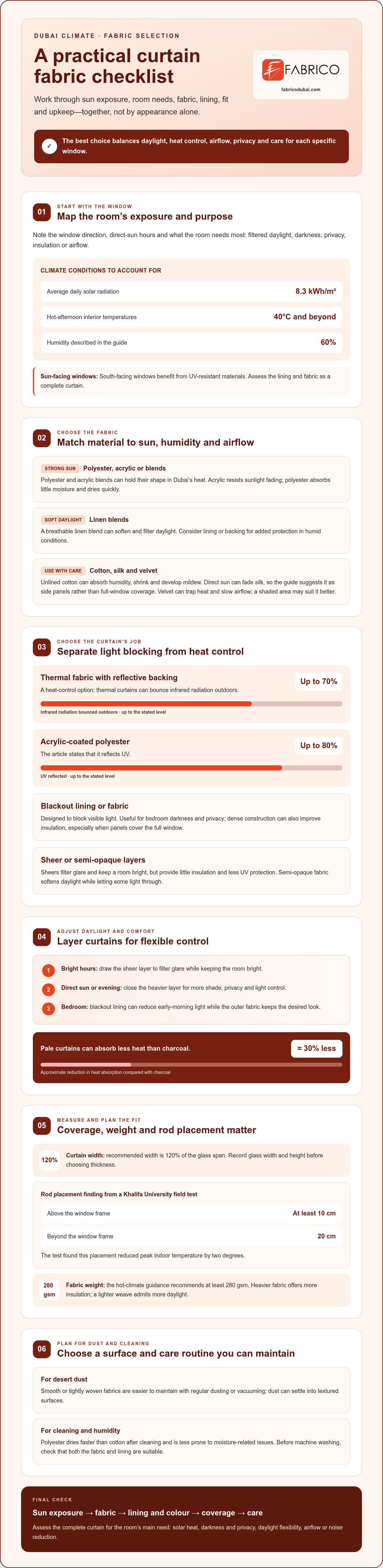
For strong sun exposure, thermal fabric with a reflective backing can help limit heat entering through windows. Thermal curtains can bounce up to 70 percent of infrared radiation outdoors, while acrylic-coated polyester reflects up to 80 percent of UV. Blackout curtains focus on blocking visible light; some fabrics combine blackout layers with thermal features. Compare the lining and fabric together, because both affect a curtain’s function.
Blackout curtains are designed to block light, making them useful in bedrooms where early sunrise disrupts sleep. Their dense, tightly woven construction can also improve insulation and privacy, especially when panels cover the full window. Semi-opaque fabric offers a middle ground: it softens daylight while allowing some light through. A sheer panel filters glare and keeps a room bright, but provides little insulation and less UV protection.
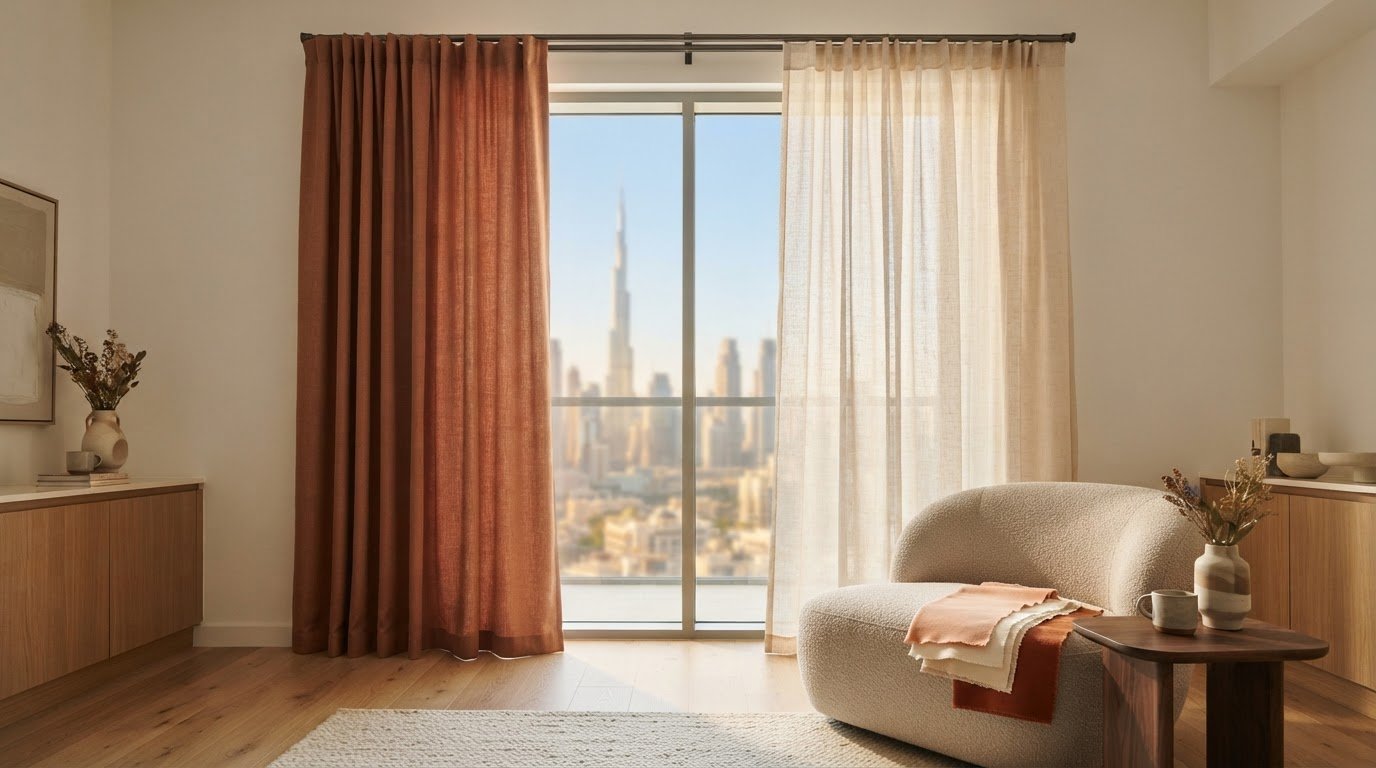
Layering gives you more control throughout the day. Pair a sheer daytime panel with heavier blackout drapes for evening privacy and stronger light control. In a Dubai living room, draw the sheer layer during bright hours, then close the heavier layer when direct sun reaches the glass. In a bedroom, blackout lining can reduce early-morning light while the outer fabric maintains the look you want.
Blackout lining quality matters as much as the face fabric, particularly on windows with prolonged sun exposure. Inspect samples in daylight: check whether the lining feels evenly attached and whether the fabric’s colour and texture remain consistent across the panel. Strong sunlight can gradually fade exposed fabric, so a lining or backing designed for heat and UV control adds another protective layer. Light-coloured curtains can also absorb roughly 30 percent less heat than charcoal.
Soundproof curtain fabrics serve a different purpose from blackout or thermal options. Their dense, layered construction absorbs and reduces noise, which can help in homes near busy roads. Velvet also blocks light and absorbs sound, but its thick pile can trap heat and slow airflow. In a sun-facing Dubai room, weigh that trade-off against the level of sound reduction you need.
Choose according to the room’s main concern: reflective thermal backing for solar heat, blackout lining for darkness and privacy, or dense layers for noise. If daylight and flexibility matter most, combine sheers with heavier curtains. To make choosing curtain fabric for Dubai’s climate more practical, match the fabric’s main function to the window’s exposure, then assess the lining as part of the complete curtain.
2. How To Choose The Perfect Curtains Fabric For Dubai Weather?
Dubai’s average daily solar radiation is 8.3 kWh per m², and sun-facing windows receive sustained exposure. On hot afternoons, interiors can reach 40 °C and beyond, while humidity is described as 60 percent. Start by noting each window’s direction and direct-sun hours, then match the fabric and lining to that exposure. South-facing windows benefit from UV-resistant materials, and pale tones absorb roughly 30 percent less heat than charcoal.
Typical curtain-fabric prices per metre in Dubai depend on the case and are given after a quote request; fabric type, lining, width, and construction affect the amount.
For humidity and fade resistance, polyester generally absorbs little moisture and dries quickly, making it among the more mildew-resistant curtain materials. Acrylic resists sunlight fading, while polyester and acrylic blends can hold their shape in Dubai’s heat. Unlined cotton can absorb humidity, shrink, and develop mildew within one humid season in Dubai Marina apartments. For natural fabrics such as cotton or linen, consider lining or backing for added protection.
Silk adds sheen to an interior, but direct sunlight can fade it and UV exposure can yellow the fabric. Use silk as side panels rather than full-window coverage on bright Dubai windows. Velvet’s thick pile can insulate a room, but it can also trap heat and slow airflow, making it better suited to a shaded area than a sun-baked window. For high exposure, compare acrylic or polyester with UV-resistant lining.
Measure each window before selecting curtain thickness. Record the glass width and height, then plan rod placement and panel coverage; the recommended curtain width is 120 percent of the glass span. In 2024, a Khalifa University field test found that rods mounted at least 10 centimetres above and 20 centimetres beyond window frames reduced peak indoor temperature by two degrees. For hot climates, the guidance recommends fabric weighing at least 280 gsm. Match the weight to the room: heavier fabric offers more insulation, while a lighter weave admits more daylight.
Desert dust also affects fabric choice and upkeep. Dust can settle into textured surfaces, so smooth or tightly woven fabrics are easier to maintain with regular dusting or vacuuming. Polyester dries faster than cotton after cleaning and is less prone to moisture-related issues. Before choosing machine-washable curtains, check that both the fabric and lining are suitable for machine washing.
Use a simple sequence: map the sunlight exposure, select a suitable fabric, then choose the lining and colour. For a bright bedroom, UV-resistant polyester with a light-blocking lining can address sunlight and privacy. For a living room where daylight matters, a breathable linen blend with backing offers a softer filter. These choices balance heat control, humidity, fading, and the care your Dubai home requires.
3. Linen and linen blends in Dubai humidity
Linen suits rooms where filtered daylight and a breathable feel matter more than complete light blockage. Its lightweight weave allows airflow while softening direct brightness, making it a considered choice for living-room windows. In Dubai, however, prolonged sunlight can gradually weaken linen, and an unlined panel is more vulnerable to fading and wear. Assess the window’s sun exposure before choosing linen for full coverage.
Linen blends offer another option when you want a linen-like texture in everyday drapes. The blend affects the fabric’s feel, appearance, and drape, so compare samples in the room instead of relying on a small colour card. Hold each sample against the window in daylight, then view it away from the glass. This shows how the weave filters light and how the colour looks indoors.
Cotton and linen both create a relaxed, breathable look, but neither automatically provides strong thermal insulation. A lightweight cotton panel can soften daylight in a kitchen or living area, while a heavier drape or separate lining adds a more substantial layer. For a bedroom that needs darkness, use linen as the decorative face fabric and pair it with suitable lining. This preserves the natural texture while addressing the room’s light-control needs.
Humidity and care deserve equal attention. Unlined cotton curtains in Dubai Marina apartments can absorb humidity, shrink, and develop mildew within one humid season. Linen’s natural texture can also trap dust, and some linen curtains may require professional cleaning. Before selecting a fabric, review its care guidance and consider how dust collects in the weave. Smooth, less textured blends may be easier to maintain than pronounced slubbed linen.
For longer-lasting linen drapes, follow a practical selection sequence. First, identify whether the window receives prolonged direct sunlight. Next, choose a lining or backing if light exposure, fading, or additional insulation is a concern. Then consider how often the curtains will need cleaning and whether their texture suits that routine. Unlined linen may suit a shaded study where filtered light is welcome; a bright living-room window may benefit from a lined linen blend. This approach preserves a breathable look while adapting the complete curtain to Dubai’s humidity, sunlight, and daily use.
4. Curtain fabric selection for Dubai’s climate
Choose fabric according to the room’s function, window exposure, and the comfort you want to preserve. A bedroom facing strong sunlight needs different coverage from a shaded living room. List each room’s priorities, such as darkness, privacy, filtered daylight, easier cleaning, or a refined finish. Then compare the fabric, weave, colour, and lining as one complete curtain rather than judging appearance alone.
For bedrooms, blackout polyester blends can help limit light and support privacy. A lined fabric also provides more insulation than a sheer panel, which suits windows exposed to direct sun. In a child’s room, prioritise straightforward upkeep and a stable lining, then select a surface that complements the room. If the bedroom needs daytime light, layering a sheer with a heavier drape gives you more control.
A living room often benefits from breathable linen-look or cotton-blend fabrics, especially when filtered daylight matters. Open-weave options keep spaces visually light, while backing adds coverage where the sun reaches the glass. For a south-facing living room, consider UV-resistant material and lighter colours. In a shaded family space, a lighter weave can better preserve natural brightness and everyday comfort.
Kitchens and humid areas call for practical care. Cotton is breathable and easy to clean, making it a suitable kitchen option. Polyester generally absorbs little moisture and dries quickly, so it can work well in humid spaces. In bathrooms, polyester with anti-bacterial treatment is an option. Match the fabric to your cleaning needs, and choose machine-washable curtains only when both fabric and lining are suitable for machine washing.
For rooms near busy roads, dense, layered fabric can absorb and reduce noise. Velvet can insulate and soften sound, but its thickness may hold heat and restrict airflow. Consider it for a shaded room where sound reduction matters more than a cool, airy feel. Wool-blend curtains can also help reduce heat loss through windows during UAE winter evenings.
In Dubai, compare curtain fabrics and lining samples together before choosing a custom window treatment. View samples in the room, against the window, and under daylight and indoor lighting. If you want curtains to retain their appearance for five years without fuss, performance fabric is a practical selection. Ask for UV-resistance details when sunlight exposure is a primary concern, then choose a finish and colour suited to the room’s use.
5. Fabric options for Dubai’s hot climate
Dubai’s hot climate makes it important to match fabric choices to each window’s temperature, sunlight, and use. Polyester and acrylic blends hold their shape in heat, while natural linen or cotton may need lining or backing. For a sunlit apartment, compare fabric weight, weave, and texture together. A heavier curtain can provide more insulation, while a breathable weave keeps the room visually light.
Linen and cotton suit rooms where airflow and filtered daylight matter. Linen’s open, breathable character works well in living spaces, while cotton softens incoming light and pairs readily with linings. Neither is the strongest option for blocking sunlight on its own. For a bedroom that needs darkness, use blackout fabric or add blackout lining rather than expecting an unlined natural weave to provide full coverage.
Polyester offers a practical balance for rooms used every day. It resists moisture and fading, dries quickly, and may be machine-washable when the lining allows it. Polyester sheers suit windows where daylight should remain, while lined polyester can provide blackout performance. Acrylic is another option for high-sun windows because it resists fading. Check the fabric’s care instructions before choosing a finish for a frequently used room.
Solution-dyed polyester and acrylic are worth comparing for strong sunlight. Their colour is added to the fibres before they are formed, helping the colour remain integrated with the material. This can be useful for curtains exposed to bright light over long periods. View a full sample beside the window, then compare its colour and texture in daylight and evening lighting.
Weight changes how a curtain hangs and how much coverage it provides. The guidance recommends curtains weighing at least 280 gsm for hot climates. Consider that weight alongside the lining, not as a standalone measure of heat control. A heavy open-weave curtain may still admit more light than a tightly woven, lined option. For a bright living room, a medium-weight linen-look fabric with backing can balance filtered daylight and coverage.
For Dubai homes, linen and cotton are breathable choices, polyester offers practical moisture and care benefits, and blackout fabrics prioritise darkness and privacy. Choose according to the room’s main need, then compare the complete fabric-and-lining combination. If a balcony’s outdoor furnishings also face direct sun, explore outdoor protection covers as a separate protective option.
Fabrico: Pleated American curtains
Fabrico offers pleated American curtains for readers ready to turn their fabric choices into a window treatment. If you want measured coverage, a considered drape, or layering for light control, discuss how the treatment could suit your room and window. Roman blinds offer another option when a different profile better fits the space.
Bring your preferred fabric qualities into the conversation, such as a breathable texture, lining, or stronger light control. Fabrico also provides Sofa and Chair Upholstery and Outdoor Protection Covers for related furnishing needs.
For details about Pleated American curtains, visit fabricodubai.com.
Choose a fabric that feels right in your room
Before settling on a fabric, consider how the room should feel during its brightest hours and after sunset. View a sample beside the window, against the wall colour, and near your existing furnishings. This helps you judge the texture and tone in the setting where the curtains will be used, rather than relying on a showroom impression alone.
Choosing curtain fabric for Dubai’s climate ultimately means balancing light, privacy, comfort, and style. If your curtain updates are part of a wider interior design and fit out dubai project, coordinating fabric selection with wall treatments and spatial layouts ensures a polished, unified aesthetic. Write down your main priority for each room, then use it to guide the fabric, lining, and finish. A clear brief makes it easier to shape a window treatment around your home instead of choosing by appearance alone.
For a considered next step, discuss your fabric preferences and window-treatment needs with Fabrico. Contact Fabrico to discuss fabrics and move towards a choice that feels composed, comfortable, and suited to your space.
Frequently Asked Questions
How To Choose The Perfect Curtains Fabric For Dubai Weather?
Choose fabric according to the window’s exposure and the room’s daily use. For a bright home office, a lined, light-filtering curtain can reduce glare while preserving useful daylight. For a bedroom used during daytime rest, prioritise stronger light control. Choosing curtain fabric for Dubai’s climate also means considering how the fabric will look beside your furnishings and how easily you can care for it.
Are sheer curtains suitable for Dubai?
Yes, sheer curtains suit rooms where you want daylight and a softer view of the outdoors. In a Dubai apartment living area, they can filter glare without making the interior feel closed off. They offer limited privacy after dark when interior lights are on, so consider a second layer for evenings. Sheers also provide less coverage from direct sun than heavier drapes.
Are silk curtains a bad investment for Dubai villas?
Not necessarily, but silk needs thoughtful placement in a Dubai villa. Direct sunlight can fade silk, while UV exposure may yellow it; humidity fluctuations can also weaken the fabric. Consider silk for decorative side panels or shaded windows rather than full coverage across a sun-facing glass wall. This preserves its sheen as an interior accent while limiting exposure to conditions that can affect it.
Are thermal curtains effective in warm weather?
Thermal curtains can help limit solar heat entering through windows in warm weather. Their performance depends on the fabric, backing, lining, and how well the curtain covers the window. For a Dubai room with intense afternoon sun, choose a thermal layer suited to that exposure and close it during the sunniest hours. Pairing it with a sheer layer keeps daylight available when the heavier curtain is open.
BLACKOUT VS THERMAL CURTAINS: WHICH WORKS BETTER?
Choose blackout curtains when darkness and privacy are the main priorities; choose thermal curtains when reducing heat transfer matters most. Some curtains combine both functions, so compare the lining and backing rather than relying on the label alone. A bedroom facing early-morning sun, for example, may benefit from blackout coverage, while a bright family room may prioritise a thermal layer that works with daytime sheers.
Can I use cotton curtains in Dubai Marina apartments?
Yes, cotton can work in Dubai Marina apartments, particularly in rooms where a breathable, easy-to-clean fabric is useful. Humidity can affect unlined cotton: curtains may absorb moisture, shrink, or develop mildew within one humid season. A lining or backing adds a layer between the fabric and the window, while regular care helps manage dust. Review the cleaning instructions before choosing cotton curtains for a frequently used room.
Can outdoor-rated curtain fabrics be used inside Dubai homes?
Outdoor-rated fabric can be used indoors, but its texture and weight should suit the room. A durable fabric, for example, may fit a sunroom or a window beside an indoor-outdoor seating area, while feeling too firm for a soft bedroom scheme. Compare a sample in the room and consider how it hangs, filters light, and complements nearby furnishings before choosing.
Do blackout curtains help in the heat?
Yes, blackout curtains can help reduce solar heat entering through a window because their dense construction limits sunlight and can improve insulation. They also provide privacy and protect furnishings from UV exposure. Their effect depends on the curtain’s coverage and lining, so gaps around the edges can let light and heat pass. In a Dubai bedroom, close the curtains during direct sun and open them when you want daylight.