

American pleat curtain design ideas start with one useful distinction: American curtains are commonly made with pinch pleats of two or three folds each. The room’s shape and purpose matter just as much, so the most structured option is not automatically the best fit.
American curtains, ripple folds and pinch pleats are sometimes grouped together, but their headers create different effects. Pinch pleats gather fabric into defined folds, while ripple folds create a smooth, flowing wave and use a dedicated track. Understanding the differences helps you choose a style that suits your windows and how you use the room.
This guide shares room-by-room ideas for choosing curtain colours and fabric weights, and explains how window proportions affect the result. From an airy living room with sheer layers to a bedroom where light control matters, these practical tips can help you bring the design together with a considered finish.
Key Takeaways
- Distinguish structured pleats from the softer wave of ripple folds to choose a style that suits your window and preferred look.
- Use neutral shades for a calm foundation, then consider geometric patterns to introduce definition without overwhelming the room.
- Match fabric weight to the finish you want: medium-weight cloth helps pleats hold their shape, while lighter fabric hangs more softly.
- Adapt each choice to the room, balancing daytime privacy in living areas with stronger light control in bedrooms.
- When you’re ready for a tailored window treatment, Fabrico offers Pleated American curtains to bring your colour, fabric and room-shape choices together.
1. American pleats compared with ripple folds
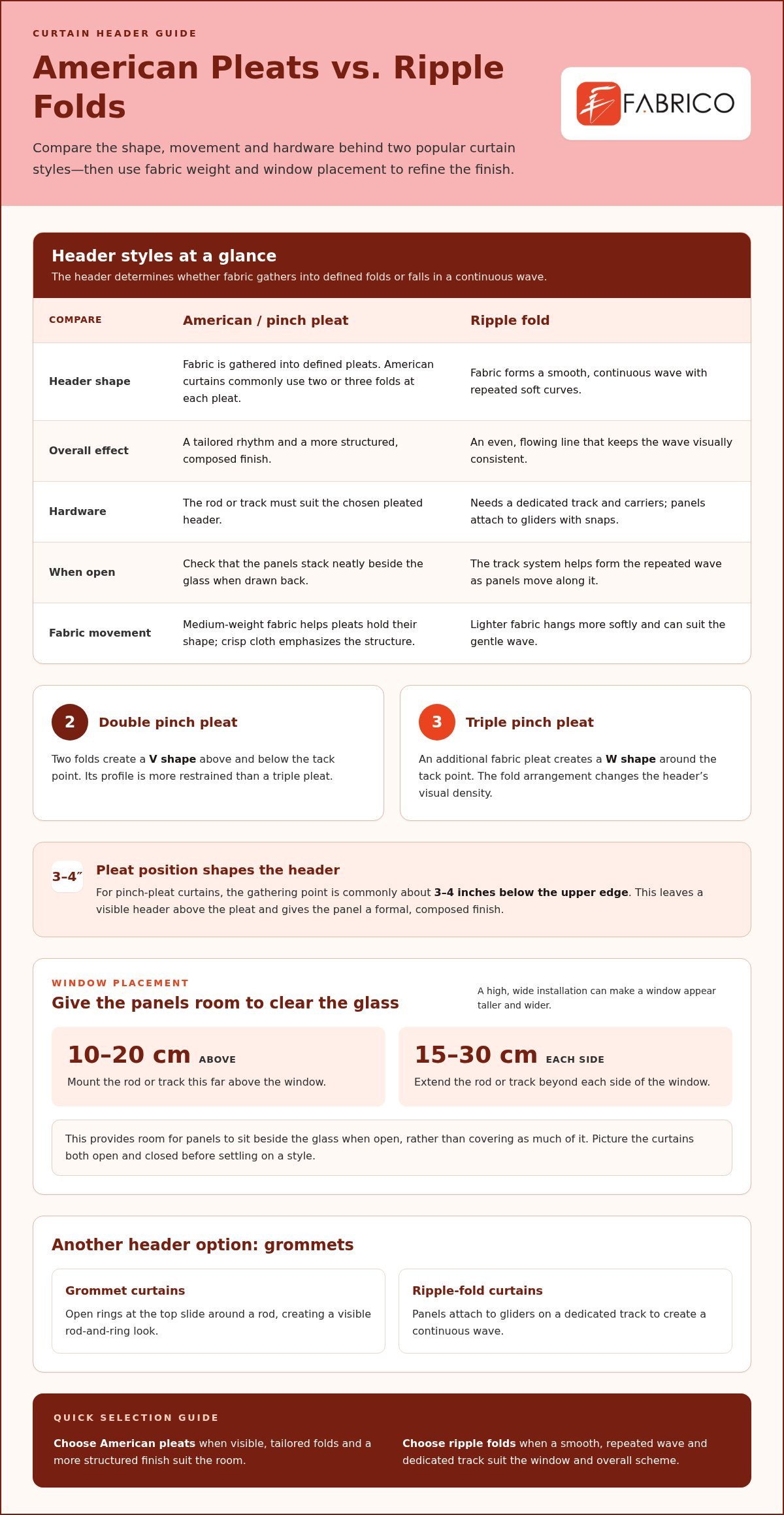
Popular American curtain designs include structured pinch pleats with two or three folds, alongside modern Ripple Fold Drapery and Tailored Pleat styles. Pinch pleats gather fabric into defined groups for a tailored rhythm, while ripple folds create a continuous wave. Compare the room’s character, the fabric’s movement and how you use the window before choosing.
Look closely at the header to understand the difference. Box pleat curtains have deep, consistent folds running down each panel, creating a more formal, orderly line than the soft curves of a ripple fold. Tailored Pleat Drapery is another structured option, while Ripple Fold Drapery suits a window where you want an even wave.
Flat-top panels are also called flat-pleat or ripple-fold curtains. When drawn, they form pleats; when fully open, the fabric flattens. The window therefore has two distinct looks, depending on whether the curtains are closed or stacked aside. Ripple-fold curtains need dedicated tracks and carriers, so the track system is part of the design, not just a finishing detail.
Grommet and ripple-fold headers also differ in how they move. Grommet curtains have open rings at the top that slide around a rod, making them convenient to open and close. Ripple-fold panels attach to gliders on a dedicated track, with snaps fixed to the gliders. Choose grommets for a visible rod-and-ring look, or a ripple-fold track for a continuous wave.
Before choosing, consider the window’s width and height, then picture the curtain both open and closed. A high, wide installation can make a window appear taller and wider: mount the rod or track 10–20 cm above the window and extend it 15–30 cm beyond each side. These measurements also provide room for panels to sit beside the glass when open, rather than covering as much of it.
For a composed finish, coordinate the header with the fabric’s weight and the room’s lines. Medium-weight fabric supports defined pleats, while lighter fabric hangs more softly. Choose American pleats for visible, tailored folds, or ripple folds when a smooth, repeated wave better suits the window and overall scheme.
2. Are American curtains the same as pinch pleat curtains?
In common usage, American curtains are a pinch-pleat style, rather than a wholly separate header construction. The name describes a tailored look created by gathering fabric into defined folds at the top. In the UAE, American-style curtains commonly use two or three folds at each pleat. The arrangement changes the header’s profile and how each panel hangs.
Pinch-pleat curtains have pleats sewn into the top, so fabric falls in controlled folds below. The gathering point is commonly about 3–4 inches below the upper edge. That spacing creates a visible header above the pleat and gives the panel a formal, composed finish. A double pinch pleat uses two folds and forms a V shape above and below its tack point.
Construction terms describe specific differences. A double pinch pleat has two-finger pleats pinched at the bottom of the buckram. A triple pinch pleat adds another fabric pleat, creating a W shape around the tack point. These shapes affect the header’s visual density, so compare them with the window width and the room’s lines before choosing.
Header tape offers another way to create a pleated appearance. Pleated panel curtains can create a gathered look when drawn. Sewn pleats, by contrast, are built directly into the top. In minimalist interiors, a restrained fold profile and plain fabric keep the header understated. In a traditional room, deeper folds make the top edge more prominent.
Compare styles by looking at the panels from the front and side. Check whether the folds remain distinct when the curtains are closed and whether the open panels stack neatly beside the glass. Then match the header to the fabric: crisp cloth emphasizes a structured pleat, while softer fabric creates a more relaxed fall. The track or rod must suit the chosen header.
In the UAE, custom American pleat curtains can be purchased from a curtain maker that tailors panels to the window and chosen fabric. Before selecting a style, compare the pleat construction, fabric weight and desired fullness. These details shape the finished drape and how it frames the room. Explore custom curtain options as you consider the right header for your space.
3. Neutral colors and geometric patterns
For a composed interior, start with a neutral curtain colour that relates to a fixed feature. Warm ivory can echo pale stone flooring, while sand or taupe can connect with a beige sofa. These colours keep American pleats visible without making the window the room’s only focal point. In a living room with patterned cushions, plain curtains offer a quieter surface.
Geometric patterns add definition when the surrounding furnishings are restrained. A subtle grid can complement straight-lined furniture, while a small repeating diamond pattern can add detail beside a plain upholstered chair. Match the pattern’s scale to the window and nearby furnishings: a large motif needs room to read clearly, while a fine repeat can suit a narrower panel.
Treat colour as a coordinated palette, not an isolated fabric decision. Start with the walls, then compare curtain samples with the sofa, rug and floor. For example, a cream wall, charcoal sofa and pale rug can work with soft grey curtains in a restrained geometric weave. If the rug already has a pattern, plain fabric may create a more balanced finish.
Hardware can blend into the scheme or provide a deliberate accent. A track that matches the ceiling keeps attention on the fabric and pleats. A visible brushed-metal rod can echo a nearby lamp or cabinet handle. Warm-toned hardware may suit a palette of tan and ivory, while a cooler grey scheme can pair with a more understated metal finish.
Consider how the fabric’s surface affects its colour. Linen-look fabric gives ivory or sand a relaxed texture, while a smoother cloth makes the same shade feel more polished. Hold the fabric beside the wall and window frame instead of judging it alone. This helps reveal whether a neutral reads as warm, cool or noticeably different from the surrounding interior.
In an open-plan living and dining area, repeat one curtain colour across both windows, then vary the pattern through cushions or a rug. In a separate room, geometric curtains can become the main pattern if the bedding and walls stay simple. This keeps each space distinct while maintaining a connection between adjoining interiors.
Before finalizing the design, review the fabric alongside the pleat construction and hardware. A bold geometric print may compete with tightly defined folds, while a small motif or solid neutral can let the header stand out. Compare the full combination with the room’s fixed colours, then check that it feels cohesive from the entrance and beside the window.
4. Fabric weight and pleat shape
Fabric weight affects how American pleats form, how curtains fall and how the treatment looks in the room. Medium-weight fabric is commonly used because it helps pleats hold their shape down the panel. Lightweight fabric hangs more softly, creating a gentler outline rather than a firm, continuous fold. Match the cloth to the finish you want and the room’s practical needs.
For fullness, India Home Furnishings recommends 2.5 times fullness for main curtains and 3 times fullness for sheer curtains. In practical terms, calculate fabric width by multiplying the covered track width by the relevant fullness ratio. The finished width must also account for how the panels divide across the window and gather into pleats.
Fabric width is not the same as the visible width of a closed curtain. Pleats use material to create depth, so the flat fabric must be wider than the track span. First establish the track width the curtains need to cover. Then apply the fullness ratio and plan how to divide the fabric between panels. This gives the maker a clear basis for shaping the header.
Pleat construction also affects how fabric hangs. Euro pleats are pinched at the top and open at the bottom, creating a clean, tapered profile. Inverted pleats are sewn at the back, keeping the front comparatively smooth. They need suitable fabrication to hang properly; incorrect construction can make curtains heavy and awkward to use.
Consider the fabric’s function as well as its appearance. American curtains can be made with blackout fabric or light-filtering materials such as linen. Blackout cloth creates a more substantial drape, while linen lets filtered daylight contribute to a softer atmosphere. Choose based on whether the window’s main purpose is light control, privacy or a decorative frame.
In a bedroom, heavier blackout fabric can support a more substantial pleat profile. In a living area where daylight matters, light-filtering fabric can keep the curtains from looking visually dense. The fabric and pleat need to work together: deep folds in pliable cloth can lose definition, while medium-weight material can help maintain a consistent line.
Before finalizing the fabric, compare a sample with the window and consider how it will look both open and closed. Check that the pattern, lining and weight suit the chosen pleat shape. This simple review connects the desired appearance with the curtain’s function, helping the finished panels feel deliberate rather than overbuilt or too soft.
5. Room-by-room curtain design ideas
Choose curtain colours and patterns by starting with each room’s function, then relating the fabric to fixed finishes such as walls, flooring and upholstery. A calm neutral can complement a living room with a patterned rug, while a deeper shade can give a bedroom a more restful look. The best American pleat curtain design ideas begin with what the room needs, not just a trend.
In a living room, pair curtain panels with a sheer layer behind them. The sheer softens daylight and provides daytime privacy, while the outer panels add colour and structure. In a smaller living area, sheers can keep the window feeling open and help the room feel larger. Choose a restrained geometric pattern if the sofa and cushions are mostly plain.
A dining room can take a more decorative finish. A goblet pleat with brushed-metal hanger rings adds an elegant detail above the table, especially when the fabric complements nearby lighting or furniture finishes. If the dining space is open-plan with the living room, repeat one colour across both windows, then vary the pattern or pleat detail to distinguish each area.
For a bedroom, make light control a priority. For a bedroom, consider curtains that limit incoming light if you prefer a darker sleeping environment. Run the track wider than the window to reduce light leaking around the edges. Layering drapery with shades provides more flexible control of light and privacy. Muted solid fabric can also complement patterned bedding without crowding the room.
A window facing an unattractive view calls for a different balance. A traditional tab top with an ornate finial can dress the window, while the fabric draws less attention to the view. Where daylight should remain prominent, choose sheers to soften sunlight and preserve an airy feel. Match the pattern scale to the window: a subtle repeat is easier to read on a narrow panel.
Finish by considering the curtain’s bottom edge and the room’s proportions. Floor-length curtains can frame a window even when the glass stops higher on the wall. A clean, floor-kissing length keeps the line composed, while a high-and-wide installation can make the window appear taller and wider. Compare the fabric with the room in daylight before deciding on its final colour.
Use American pleat curtain design ideas as a starting point, then tailor each room’s fabric, pattern and proportions to its use. For a tailored design that brings those choices together, plan your curtain design around the window and the way you use the space.
Fabrico: Pleated American curtains
Fabrico offers Pleated American curtains for those ready to turn room measurements, fabric preferences and pleat choices into a window treatment. Defined folds suit spaces where a structured look complements the interior, while colour and fabric weight help shape the final result.
For a different treatment on another window, Fabrico also offers Roman blinds. You can consider them alongside curtains for a coordinated home update. Fabrico’s Sofa and Chair Upholstery service can also refresh existing seating with new fabric choices.
Share your curtain requirements with Fabrico to discuss Pleated American curtains for your space in Dubai.
Make your window treatment feel like part of the room
The most effective American pleat curtain design ideas start with a clear sense of how you want the room to feel each day. Whether you are settling into a new residence with Choose and Move or simply refreshing your current space, note the details you want to keep, such as a favourite sofa fabric, a distinctive wall colour or the amount of daylight you enjoy. This gives your curtain choice a purpose beyond simply picking a pattern.
Fabrico offers Pleated American curtains, Roman blinds and Sofa and Chair Upholstery, so you can consider window treatments alongside existing furnishings. A conversation about your room can help you move from inspiration to a clearer direction for its fabrics and finishes.
Contact Fabrico about your curtains and take the next step toward a window treatment that feels considered, comfortable and distinctly yours.
Frequently Asked Questions
Are American curtains the same as pinch pleat curtains?
In common curtain terminology, American curtains are a pinch-pleat style. The label typically describes curtains with structured folds gathered at the top, rather than a completely separate heading method. An American-style panel may have two or three folds per pleat. When comparing descriptions in the UAE, focus on the fold arrangement and finished header, not the label alone.
Double Pleat VS Triple Pleat: What’s the Difference?
A double pinch pleat has two folds and forms a V around its tack point; a triple pleat adds one fabric pleat and forms a W. The extra fold gives the header a fuller, more pronounced appearance. On a narrow window or in a restrained scheme, a double pleat may feel less visually dense. A triple pleat can provide a stronger decorative line on a broad panel.
How Should You Choose?
Choose by comparing the curtain’s purpose, the window’s proportions and the room’s furnishings. For a bedroom where limiting light matters, consider blackout fabric and a track that extends beyond the window edges. In a living room, a sheer layer can retain a bright feel while adding daytime privacy. Compare fabric samples beside the wall and upholstery to see how the colour works in the room’s actual light.
What is an American pleat curtain and how does it differ from pinch pleat?
An American pleat curtain is generally made with a pinch-pleat header, so the terms often describe the same style. The useful distinction is in the construction: specify whether the design uses two folds or three, and whether the pleats are sewn into the header. Those details communicate the intended shape more clearly than a style name alone.
Which fabrics work best for American pleat curtains?
Medium-weight fabrics are commonly used because they help pleats retain a defined shape, while lightweight fabrics create a softer fall. Blackout material suits a room where light control is central; light-filtering options such as linen suit spaces where daylight should remain part of the scheme. Consider how the fabric’s weight and surface will look both gathered and hanging, rather than choosing by colour alone.
What curtain rod and track styles suit American pleat curtains?
Choose the support system to match the curtain’s header and how you want the panels to move. A rod with open grommet rings is designed for grommet curtains, while ripple-fold panels need a dedicated track and carriers. For sewn pinch pleats, choose a system that accommodates the pleat attachment and lets the panels move smoothly. Consider the header and hardware together.