

The pleat is more than a finishing detail: it sets a curtain’s visual rhythm. American box pleat curtains create crisp, squared folds at the heading for a tailored look that suits both formal and contemporary rooms. In Dubai, choosing a custom curtain design means considering fabric, lining, heading style and the finished fit together.
Colour may catch your eye first, but fabric weight and drape also affect how neatly American box pleat curtains hold their shape. Consider how the material will sit with the room’s furnishings and how the folds will frame the window.
This guide covers material and design choices, compares American box pleat curtains with other heading styles, and explains what to consider when planning custom curtains in Dubai. You’ll also learn how measurements and fabric selection shape the finished result, so you can make a more informed choice.
Key Takeaways
- Compare fabric weight, texture, and lining to choose a finish that suits the room and the way you use it.
- Recognize the squared folds of a box pleat and how they shape the curtain’s overall appearance.
- Use the differences between box, French, and pinch pleats to narrow down the style that fits your windows.
- Understand how a made-to-measure supplier can help turn your preferred fabric and heading into a considered window treatment.
Box-pleated curtain materials and designs
Fabric, fold depth and heading construction all shape a box-pleat curtain’s appearance. American box pleat curtains look most considered when these details suit the room and window.
Fabric and Design Options
Start with texture and drape. Linen gives American box pleat curtains a relaxed finish, while velvet creates a weightier, more formal effect. Cotton offers another versatile option. Plain fabric keeps the squared folds clear; stripes make pattern alignment more noticeable. Before choosing, consider the room’s palette, natural light and the fabric’s care requirements.
Choosing Curtain Fullness
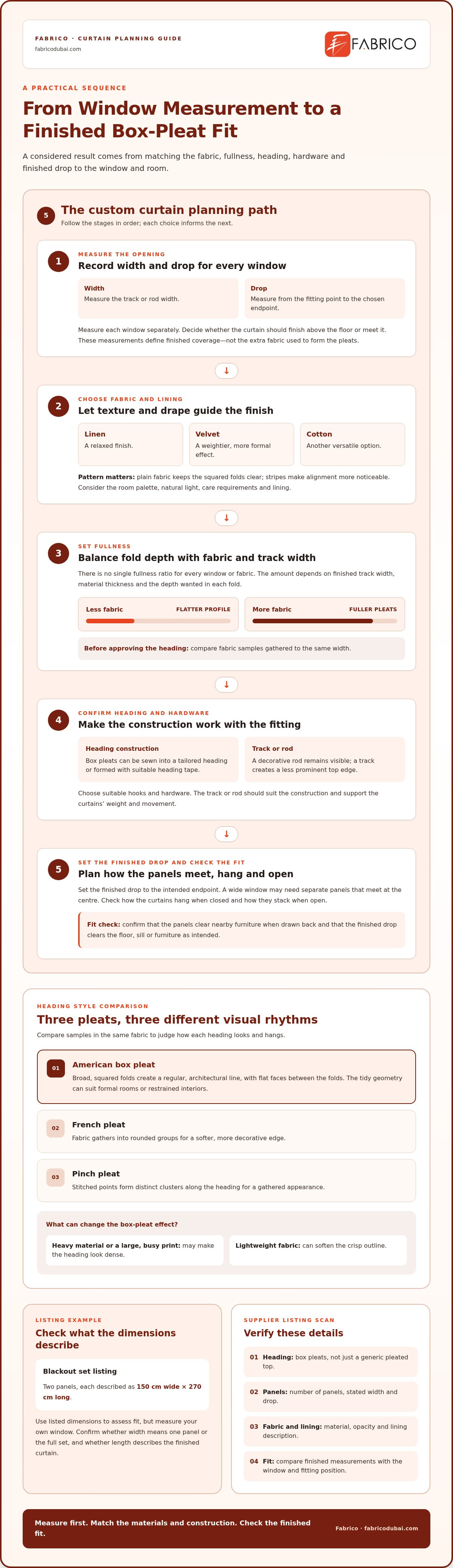
No single fullness ratio suits every window or fabric. The right amount depends on the finished track width, material thickness and the depth you want in each fold. More fabric creates fuller pleats; less gives a flatter profile. Compare fabric samples gathered to the same width before approving the heading for American box pleat curtains.
To measure, record the track or rod width and the drop from the fitting point to your chosen endpoint. Measure each window separately, and note whether the curtains should finish above the floor or meet it. These measurements define the finished coverage, not the extra fabric needed to form the pleats.
Box pleats can be sewn into a tailored heading or formed with suitable heading tape. Choose hooks and a track or rod that suit the construction, then consider how the curtains should hang and open. A decorative rod remains visible, while a track creates a less prominent top edge. The hardware should support the curtains’ weight and movement.
A custom curtain plan follows a practical sequence: measure the opening, choose fabric and lining, confirm the heading and hardware, then set the finished drop. For example, a wide window may need separate panels that meet at the centre. Accurate measurements help align the folds and position the finished curtains as intended.
American pleat curtains
American box pleat curtains have a defined heading, but the fold is only one part of the decision. Compare how each style shapes the room, suits the window and works with your chosen fabric before settling on a finish.
Pleat Style Differences
Box pleats create broad, squared folds for a regular, architectural line. French pleats gather fabric into rounded groups for a softer, more decorative edge. Pinch pleats also gather fabric, but stitched points create distinct clusters along the heading. The differences are easiest to judge by comparing samples in the same fabric.
UAE pinch-pleat listings may describe fully lined panels, with blackout, thermal or classic napped lining options. Some are sold as sets of two panels. A box-pleat heading emphasizes the flat faces between folds instead. Compare how a sample hangs when open as well as when closed, since the folds stack differently.
Advantages and Drawbacks
A box-pleat heading gives a tidy, consistent finish that can complement formal rooms or restrained interiors. Its clear geometry can define a broad window. The structured effect depends on the fabric and construction: a heavy material or large, busy print may make the heading look dense, while a lightweight fabric can soften its crisp outline.
Choose a style that matches the room’s character. French or pinch pleats may suit you better if you prefer a rounded, gathered appearance. Consider the window’s proportions, the surrounding furniture and how much curtain will stack beside the opening when drawn back.
Some catalogues offer “Box Pleat” as a top-style filter. Use it to compare heading types separately from fabric choices, then assess colour, texture and lining. For example, a plain weave keeps attention on the folds, while a patterned cloth makes motif placement part of the design.
Also consider how the curtains will move. Before ordering, confirm that the heading suits the track or rod and that the panels can clear nearby furniture when open. This practical check helps preserve the intended look of American box pleat curtains in everyday use.
To explore how fabric and heading choices can work together, visit custom pleated curtain options.
Box-pleated curtain supplier listings
Supplier listings can describe ready-sized panels or curtains made for a particular window. In Dubai, compare the heading, finished dimensions, fabric, lining, and installation details before judging whether an option suits your room.
Some catalogues provide “Box Pleat” as a top-style filter. Use it to narrow the heading first, then compare fabric and panel measurements. For example, a listed blackout set has two panels, each described for a 150 cm width and 270 cm length. Those dimensions help you assess fit, but they don’t replace measuring your own window.
Read measurements carefully. Check whether the width refers to one panel or the full set, and whether the length describes the finished curtain. A two-panel set may cover a window differently depending on the track width and the fabric gathered into its pleats. Compare the stated dimensions with your measured opening before selecting a size.
- Heading: Confirm that the listing specifies box pleats, not just a generic pleated top.
- Panel details: Check the number of panels and the stated width and drop.
- Fabric and lining: Look for the material, opacity, and lining description.
- Fit: Compare finished measurements with the window and fitting position.
For custom curtains, begin by recording the track or rod width and the desired drop. Then decide on the fabric, lining and whether the panels should meet centrally or draw to one side. These choices affect the finished appearance and the coverage the curtains provide.
Installation details matter as much as the stated dimensions. The heading must suit its track or rod, and the finished drop should clear the floor, sill or furniture as intended. For example, a full-length curtain above a low sofa needs a different endpoint from a curtain ending at a bedroom sill. Consider these practical details when planning your selection.
How are American box pleat curtains different from French pleat and pinch pleat curtains?
The difference is clearest at the curtain heading. American box pleat curtains have broad, squared folds, while French pleats gather fabric into rounded groups. Pinch pleats also gather fabric, with stitching creating distinct pinched points along the heading.
These shapes create different visual rhythms. Box pleats give a window a regular, architectural line that pairs well with straight-edged furniture or a restrained interior. French pleats add a softer, more ornate finish. Pinch pleats offer a defined gathered look that can suit both traditional rooms and tailored contemporary spaces.
Fabric affects how each heading looks. A smooth, plain textile makes the squared faces of box pleats easy to see. A fine pattern can emphasize the smaller gathers of French or pinch pleats. With a large print, consider how motifs fall across the folds, since gathering can interrupt the pattern.
- Box pleat: Choose it for a crisp, repeated square profile.
- French pleat: Choose it for rounded, decorative gathers.
- Pinch pleat: Choose it for stitched, gathered points and a formal finish.
To decide, compare heading samples beside the room’s furniture and consider the window’s proportions. For example, box pleats can give a broad living-room window a composed horizontal line. A bedroom with softer furnishings may feel more balanced with gathered pleats. Also consider how much fabric each style uses and how the curtains stack when drawn open.
All three styles can be tailored to a room, but their headings aren’t interchangeable. Confirm the selected heading before the fabric is cut, then match its hooks or carriers to the track. This helps preserve the intended fold shape after installation and during everyday use.
If you’re choosing a squared, tailored finish, explore custom pleated curtain options for your window.
Fabrico: Pleated American curtains
Fabrico creates Pleated American curtains for Dubai homes seeking a tailored window finish. Choose this service when you’ve settled on the box-pleat style and want the fabric, heading and window proportions considered together. Sharing your measurements and preferred look is a practical starting point for shaping a design suited to the room.
For other window treatments, Fabrico also offers Roman blinds. Related furnishings include sofa and chair upholstery, outdoor protection covers, and indoor and outdoor cushions. These services and products can help coordinate soft furnishings across indoor and outdoor spaces while keeping your chosen curtain style.
To discuss Pleated American curtains for your space, contact Fabrico through its website.
Shape a window finish that feels considered
Let the room guide your final decision. Before selecting fabric, consider how the curtains will relate to the furniture, wall colour and the way you use the space. A composed scheme doesn’t require every textile to match; repeating a texture or tone can connect the window thoughtfully with the rest of the room.
For a tailored window treatment, Fabrico offers Pleated American curtains alongside Roman blinds. Fabrico also provides sofa and chair upholstery to help coordinate your furnishings. If you’ve settled on American box pleat curtains, share your preferred look and window measurements with Fabrico to discuss a design suited to your room.
Take the next step at a pace that suits your project. Contact Fabrico about curtain options and begin planning a finish that feels right for your home.
Frequently Asked Questions
How much fabric is needed for American box pleat curtains?
Fabric quantity depends on the finished curtain width, desired fullness and material width. For American box pleat curtains, the curtain maker also accounts for the depth and spacing of each fold. Patterned fabrics may need extra allowance to align motifs across panels. Provide the track measurement and finished drop, then confirm the fabric repeat and heading design before cutting.
What fabrics work best for American box pleat curtains?
Medium-weight fabrics can be a practical starting point because they can hold a defined fold without overwhelming the heading. Consider the room’s use: a textured weave adds depth to a living room, while a smoother fabric can create a more formal look. With a bold print, check how the pattern falls within each pleat. The fabric should also suit your preferred cleaning method.
How do you hang and care for American box pleat curtains?
Attach the curtain hooks to compatible track gliders or rod rings, then spread the folds evenly across the window. Before arranging the heading, check that both panels reach the intended endpoint and move without catching. Follow the fabric’s cleaning instructions and remove surface dust gently. Don’t assume every textile can be machine washed, as fibre and lining affect care.
What curtain heading tape or hardware is needed for American box pleats?
Choose a tailored sewn heading or suitable heading tape. Select hooks and a track or rod that suit the construction and support the curtains’ weight and movement.
How do you make American box pleat curtains step by step?
Measure the track or rod width and drop for each window. Choose the fabric and lining, confirm a sewn box-pleat heading or suitable heading tape and compatible hardware, then set the finished drop and install the curtains.