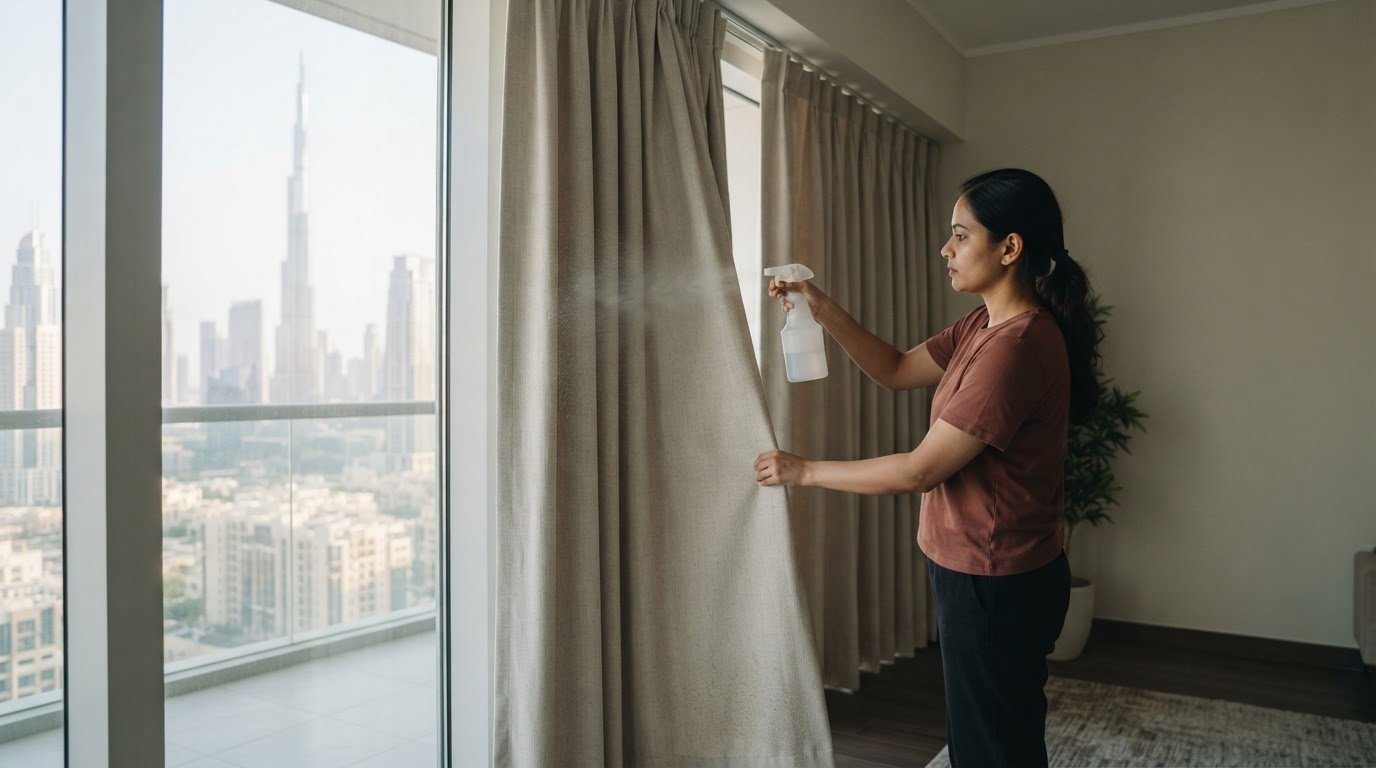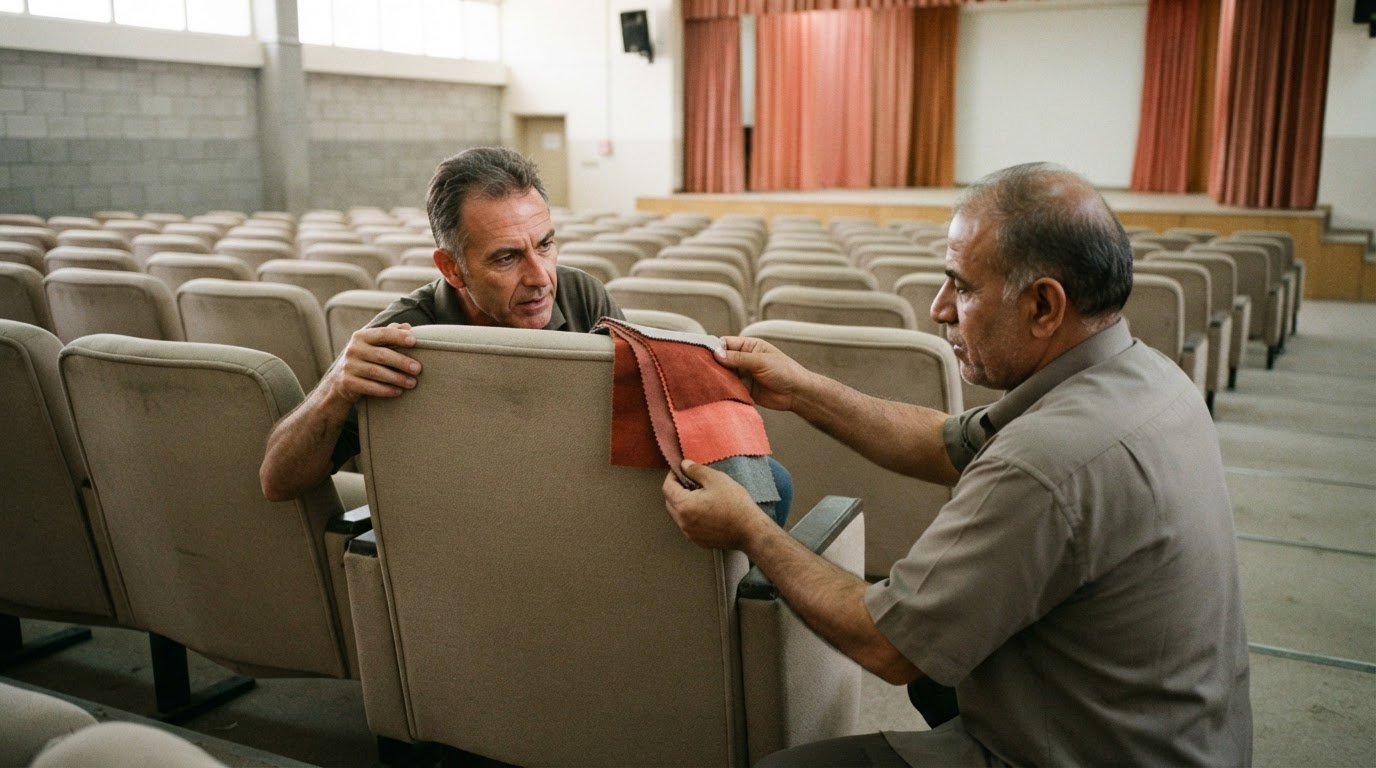

Could flame-resistant fabric alone prove that a school sofa is fire-safe? No. A fabric test result by itself does not show that a finished chair or sofa meets furniture-specific performance criteria. Choosing a fire retardant treatment for school furnishings starts with the item’s use and materials, then considers evidence for the complete furnishing.
It’s understandable to focus on the fabric: curtains, blinds and upholstery all contribute to a room’s fire performance. But the right choice depends on the furnishing, where it will be used and how it is constructed. Treatment can support fire performance, but it does not replace evidence appropriate to the finished item.
This guide explains the difference between treated and inherently flame-resistant fabrics, which school furnishings may need performance evidence, and why upholstered furniture calls for furniture-specific testing. It also explains how requirements can vary by project location and use, helping you make an informed choice for classrooms, auditoriums, gyms and sleeping areas in the UAE.
Key Takeaways
- Distinguish flame resistance built into a fibre from a chemical treatment applied after manufacture, and consider how cleaning and wear may affect treated fabrics.
- Separate domestic furniture rules from requirements for school and other contract settings; the applicable evidence depends on the project’s location and use.
- Match curtains, blinds, upholstery and sleeping-area furnishings to the performance criteria relevant to their specific application.
- For upholstered seating, look beyond fabric test results to evidence that addresses how the finished furniture’s materials work together.
What Are Flame Retardant Fabrics?
School textiles can resist ignition through their fibres or applied finishes, and each option has different cleaning and maintenance considerations. Chemical application can involve inhalation or skin contact. Ventilation needs and environmental residue depend on the formulation and how it is handled.
Inherent and Chemical Flame Resistance
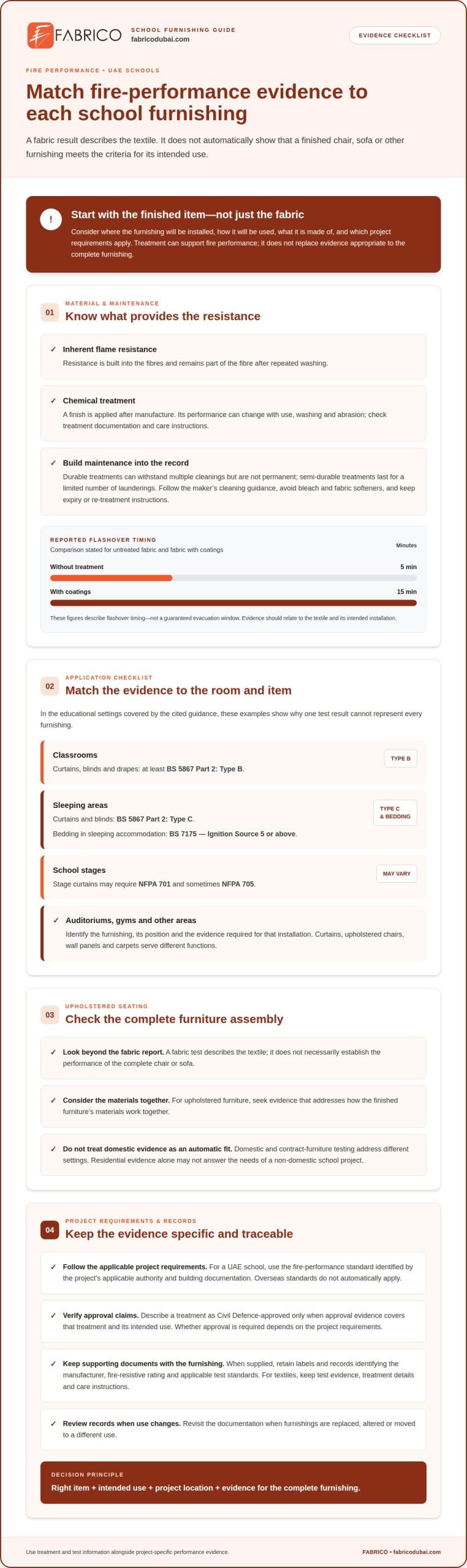
Inherently flame-retardant fabric has resistance built into its fibres, while chemically treated fabric receives a finish after manufacture. The distinction matters because inherent properties remain part of the fibre, including after repeated washing, while chemical finishes can change with use. For classroom curtains or upholstered seating, compare the fibre-based claim with treatment documentation and evidence for the intended application. Phosphorus and nitrogen are among elements used in some flame-retardant chemicals. That difference helps determine whether re-treatment belongs in the care plan. A certified fabric result describes the fabric, not automatically the finished seating.
Treatment Durability and Detergent Resistance
Treatment durability describes how well a chemical finish retains its flame-retardant performance through cleaning and everyday wear. Durable treatments can withstand multiple cleanings, but they are not permanent; semi-durable treatments last for a limited number of launderings. Washing and abrasion can reduce performance, so the cleaning method matters. Follow the fabric maker’s cleaning guidance and avoid bleach or fabric softeners, which can break down coatings. Keep expiry and re-treatment instructions with the furnishing’s maintenance records.
Coatings and Escape Time
A flame-retardant coating changes a fabric’s response to ignition, helping slow flame spread and limit further ignition. A reported comparison places time to flashover at 5 minutes without treatment and 15 minutes with coatings. Those figures describe flashover timing, not a guaranteed evacuation window. For wall-mounted textiles, such as curtains and display fabric, treatment should preserve function and match the material. A phosphoric-acid char layer can slow heat transfer to unburned material. Performance evidence should relate to the textile and its intended installation.
Which school furniture needs fire-performance evidence?
For a UAE school, follow the fire-performance standard identified by the project’s applicable authority and building documentation. Don’t assume that a standard used overseas automatically applies to a school in the UAE.
Describe a treatment as Civil Defence-approved only when approval evidence covers that treatment and its intended use. Whether approval is required depends on the project’s applicable requirements.
Evidence matters most for items that can contribute to fire spread, including upholstered chairs, sofas, curtains, blinds and decorative textiles. Consider where each item will be installed, how it will be used and whether it forms part of a larger furnishing assembly. A fabric test report may describe the textile, but it does not necessarily establish the performance of the complete item.
Domestic safety regulations and contract-furniture testing address different settings. In England and Wales, the Furniture and Furnishings (Fire Safety) Regulations 1988 principally concern domestic upholstered furniture, and were amended in 2025. A school is a non-domestic setting, so residential evidence alone may not answer the project’s requirements. Standards for contract furniture should reflect the item’s use and the project’s geography.
For schools and other public buildings, fire safety planning considers the building and its contents together. In England and Wales, the Regulatory Reform (Fire Safety) Order 2005 is a relevant framework; a competent person should conduct the fire risk assessment. These references provide context, not a substitute for the UAE project’s applicable requirements.
Keep furniture labels and supporting documents together. Useful records identify the manufacturer, fire-resistive rating and applicable test standards, when these details are supplied. For textiles, retain relevant test evidence, treatment details and care instructions. Review the records when furnishings are replaced, altered or moved to a different use. This creates a clearer record for purchasing decisions and future fire-safety reviews.
For treated textiles, fabric treatment information can help frame the material discussion alongside project-specific performance evidence.
For a UAE school, follow the applicable fire-performance requirements identified by the project authority and building documentation. Do not assume overseas standards apply automatically. Any claimed Civil Defence approval should be backed by evidence covering the specific treatment and its intended use.
Applications in classrooms, auditoriums, gyms, and dormitories
Fire-performance evidence should match each furnishing’s application and the project’s location. A curtain, upholstered chair, wall panel and carpet serve different functions, so one test result cannot represent them all.
In educational settings covered by the cited guidance, classroom curtains, blinds and drapes meet at least BS 5867 Part 2: Type B. Sleeping-area curtains and blinds use BS 5867 Part 2: Type C, while bedding in sleeping accommodation meets BS 7175 – Ignition Source 5 or above. These examples show why dormitory textiles need evidence suited to their use, rather than classroom evidence by default. School stage curtains may require NFPA 701 and sometimes NFPA 705. In auditoriums and gyms, identify the item, its position and the performance evidence required for that installation.
Upholstered furniture in general areas in those settings meets Crib 5 ignition resistance, equivalent to BS 7176 Medium Hazard classification. This is relevant to seating in classrooms, auditoriums and shared areas. New furniture purchased for school or classroom buildings must maintain a fire-resistive rating that meets the applicable policy’s test standards. A school’s selected project criteria should specify the evidence required for each finished furnishing.
Panels and linings need a different classification from seating. BS EN 13501-1 may apply to wall or ceiling linings and some fixed acoustic products, but it doesn’t replace BS 7176 evidence for upholstered seats. For floor coverings, the United States uses 16 CFR Part 1630 for carpet and rug surface flammability. That national test isn’t automatically the right requirement for a UAE project.
National methods differ: EN 13773 is listed for public buildings, including schools, in Europe, while AS 3837 is listed for Australian schools and community centres. Confirm the project’s governing criteria before selecting materials. Matching curtains, panels and carpets to their own evidence helps address flame spread without confusing one product’s resistance with another’s escape-related role.
For curtains, select products with evidence meeting BS 5867 Part 2 Type B in classrooms or Type C in sleeping areas. Upholstered furniture and carpets should have fire-performance evidence appropriate to their use and the project’s governing criteria. The section provides no treatment specification for foam.
Why upholstered and contract furniture needs furniture-specific fire testing
Upholstered furniture combines fabric, foam and structure, so testing must reflect the complete assembly. Treatment choices and supporting evidence should match each material and its intended use in the school.
Fire Testing for Upholstered Furniture
Furniture-specific testing assesses how a finished seat responds to ignition, rather than judging cover fabric alone. A fabric result doesn’t automatically demonstrate that a completed chair or sofa meets BS 7176. Upholstery, foam and construction can affect the assembly’s fire behaviour. For school seating, evidence should therefore relate to the finished product and the applicable contract-furniture criteria, not simply a flame-resistance claim for one textile.
Treatment for Upholstery and Textiles
Fire-retardant chemicals can be applied to suitable textiles, including curtains, upholstery, cushions, carpets and blinds. Foam upholstery and mattresses may also need consideration. No single treatment suits every material: it must match the furnishing and the required performance evidence. In an occupied school, start by identifying the items and materials, then coordinate access and treatment instructions with the school. Follow the treatment’s handling guidance and retain its documentation.
Evidence for Finished Furniture
Finished-product evidence documents the tested combination of cover fabric, filling and other relevant components. Changing the fabric or foam can make earlier evidence a poor match for the altered seat. Keep test records linked to the specific furnishing and its construction. When purchasing or refurbishing school seating, this makes it easier to distinguish a tested composite from claims about separate materials and to identify items that may need replacement.
Upholstered-Furniture Test Approaches
British methods include BS 5852, which informs BS 7176 testing for non-domestic upholstered seating; BS 5852 Crib 5 is a contract-furniture benchmark. Italy uses UNI 9175 / class 1.IM for small-burner testing of upholstered structures. California’s TB 117-2013 focuses on smolder resistance; its modified regulation took effect in 2014. These methods address different test conditions, so a standard used in one market doesn’t automatically establish suitability in another.
For classroom curtains, seating or other compatible textiles, arrange fire-retardant treatment as part of a material-specific plan.
Fabrico: Fire retardant treatment
Fabrico provides fire retardant treatment for furnishings, alongside Pleated American curtains, Roman blinds and Sofa and Chair Upholstery. For school projects, this service can be relevant when textile furnishings need treatment as part of a wider fire-performance plan.
The appropriate approach depends on the furnishing material and its intended use. Treatment supports the fire performance of suitable textiles, but it does not replace evidence for a finished upholstered chair or sofa when furniture-specific testing is required. Keeping these roles distinct helps schools plan treatment alongside the relevant product documentation.
Plan the next step for your school furnishings
Use the next procurement or refurbishment decision to create a clear record for each furnishing: its material, intended use, treatment needs and relevant performance evidence. This helps coordinate fabric choices with the school’s safety planning and grounds future maintenance decisions in the item’s actual requirements.
Fabrico provides Pleated American curtains, Roman blinds and Sofa and Chair Upholstery in Dubai. If you’re considering fire retardant treatment for school furnishings, start by identifying the textiles or upholstered items involved and how they’re used. Treatment is one part of a considered plan, alongside the evidence required for the finished product.
Start a conversation with Fabrico about your school furnishings and take the next step toward a more carefully planned project.
Frequently Asked Questions
How to choose the most suited FR fabrics for your workplace?
Choose fabric according to its location, function, cleaning routine and required performance evidence. A classroom curtain and a frequently used upholstered seat face different conditions, so one fabric may not suit both. Consider whether the fabric’s appearance and handling suit the room, then align its cleaning instructions with school maintenance practices. Keep product and treatment records together for each item so future replacements can be matched appropriately.
How can schools verify that treated furnishings meet fire resistance standards?
Match the evidence to the exact furnishing and its intended use. Keep the manufacturer details, product identification, test documentation and treatment records together, and make sure they describe the supplied item rather than a similar material. For upholstered seating, retain evidence for the finished assembly, not only its cover fabric. If components change during refurbishment, update the record to reflect the furniture currently in the room.
How long does fire retardant treatment last, and how often must it be reapplied?
There is no fixed reapplication interval for every treatment. Performance depends on the treatment type, cleaning, wear and the product’s stated maintenance instructions. Keep any expiry or re-treatment guidance with the furnishing’s records, and log cleaning or refurbishment that could affect the finish. This helps facilities teams plan reviews without assuming the treatment remains effective indefinitely or setting an arbitrary schedule.
Is replacing furnishings with inherently fire-resistant materials better than applying a fire retardant treatment?
Neither option is automatically better; the right choice depends on the furnishing and the evidence required for its use. Inherent resistance is part of the fibre, while an applied treatment may suit compatible existing textiles. For a chair or sofa, assess the complete construction rather than relying on the cover material alone. Replacement may make sense when a furnishing is damaged or cannot meet the project’s required performance criteria.