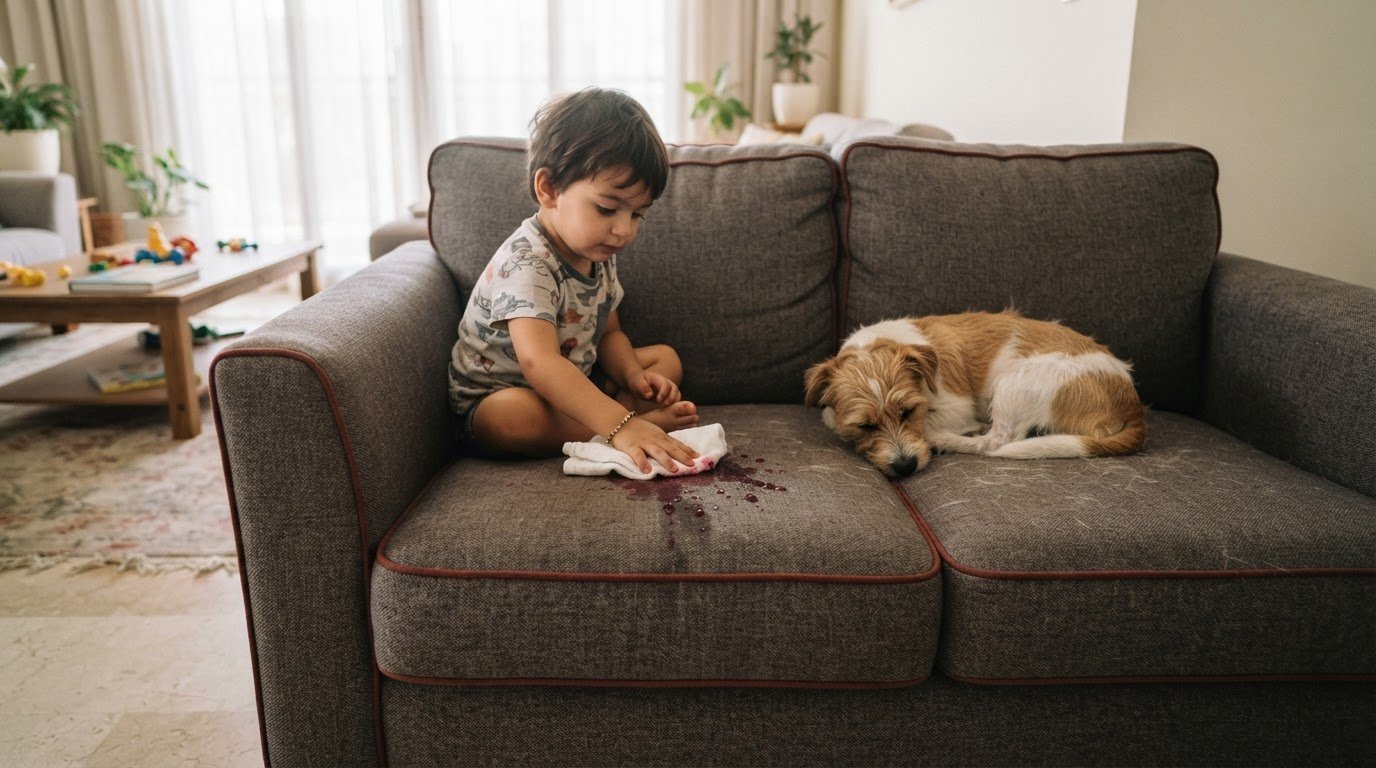

The toughest-looking upholstery isn’t always the easiest to live with. Choosing the best upholstery fabric for pets and kids means balancing a durable, tightly woven surface with practical cleaning needs, since spills, fur and claws all put sofa fabric to the test.
Performance fabric is a category, not one specific material. Many options use tightly woven synthetic fibres designed for frequent use, and some receive treatments to help resist stains. Microfiber and other close-weave fabrics are worth considering for busy homes, while colour and pattern can make fur and everyday marks less noticeable. The best fit depends on how your household uses the sofa, including whether pets shed, scratch or curl up on the cushions. This guide compares common materials, explains what to look for and shares practical care tips, so you can choose upholstery that suits family life.
Key Takeaways
- Choose colours and patterns with your pet’s coat in mind to make loose fur and everyday marks less noticeable.
- Compare fabrics by weave, cleanability and how they stand up to your household’s daily use.
- Use abrasion resistance as one clue to durability, while weighing comfort and your budget alongside it.
- Follow the fabric’s care instructions, tackle spills promptly and consider whether protective treatment suits your upholstery.
1. Upholstery colours that help conceal fur and stains
The best upholstery fabric for pets and kids should fit the room and your daily routine. Dark colours and small patterns can make fur and stains less noticeable between cleanings. Matching the fabric colour to your pet’s coat can disguise loose hair, while a multi-tonal weave can break up the appearance of crumbs and marks. For example, patterned charcoal fabric may hide dark fur better than a plain pale surface. Consider the hair you see most often, not just the sofa or wall colour.
Texture matters, too. Tweeds and other multi-tonal fabrics can camouflage small marks, but their woven surfaces may trap hair or catch claws. Smooth, tightly woven microfiber is often easier to clear of pet hair, although light-coloured microfiber can still show dirt. A dark colour does not make fabric stain-resistant: colour can conceal a mark, while construction and care instructions determine how to clean it. Consider both before choosing upholstery for frequently used furniture.
Test fabric samples before deciding. Press a clean piece of your pet’s hair against each sample, then lift it away to see how much remains caught in the texture. Gently rub the surface with a clean cloth to check for pilling or visible scratches. To compare water repellency, place a small drop of water on the sample and observe whether it beads or absorbs. Follow the fabric’s care instructions rather than trying an unapproved cleaner. A sample offers a useful comparison, not a guarantee of how a finished sofa will perform.
For spills, blot promptly with a clean cloth instead of rubbing, which can push liquid deeper into the weave. Performance fabrics can be cleaned with soap and water, but use the care instructions for the specific upholstery. Remove loose pet hair with a vacuum attachment suitable for furniture, or a lint roller on microfiber. If a fabric has a stain/water-repellent treatment, follow its care guidance to preserve the finish. Regular attention to spills, fur and scratches helps keep the colour and texture looking considered.
2. What is performance fabric?
Performance fabric is a category, not a single fibre or weave. It often uses tightly woven synthetic fibres designed for frequent use. Some versions have treatments intended to improve durability or stain resistance. On selected fabrics, liquids bead on the surface, giving you time to blot a spill. For homes with children and pets, the practical appeal is a fabric suited to regular contact and manageable cleaning.
Microfiber has a fine, tight weave that can withstand wear from pet claws and small hands. It’s also easy to clean, though cleaning methods depend on the fabric’s care instructions. Chenille feels soft, but its loops can snag on claws and fray. Linen and cotton offer a natural texture, yet pure-cotton canvas and denim can wear sooner than synthetic options. Velvet, including performance velvet, varies by construction; conventional velvet can attract fur and prove difficult to clean. Leather wipes clean readily and doesn’t trap hair, but scratches from children or pets remain a concern.
Sunbrella is a fabric brand, not a guarantee that every fabric performs the same way. Compare the specific fabric’s composition, texture and care instructions rather than choosing by brand name alone. Consider how it handles spills and whether its cleaning guidance suits your routine. Removable covers add a layer, but their care instructions matter too. A sample helps you judge feel and appearance, while the product’s care guidance explains how to maintain it.
For a busy home, weigh the weave, cleanability and likely contact with claws, spills and food. No fabric removes the need for care, and a stain-resistant finish doesn’t make upholstery stain-proof. If you’re re-covering a sofa or chair, Sofa and Chair Upholstery offers a route to select upholstery suited to your household’s use. A considered choice balances comfort and appearance with the cleaning routine you can maintain.
3. Which Sofa Fabric Lasts the Longest?
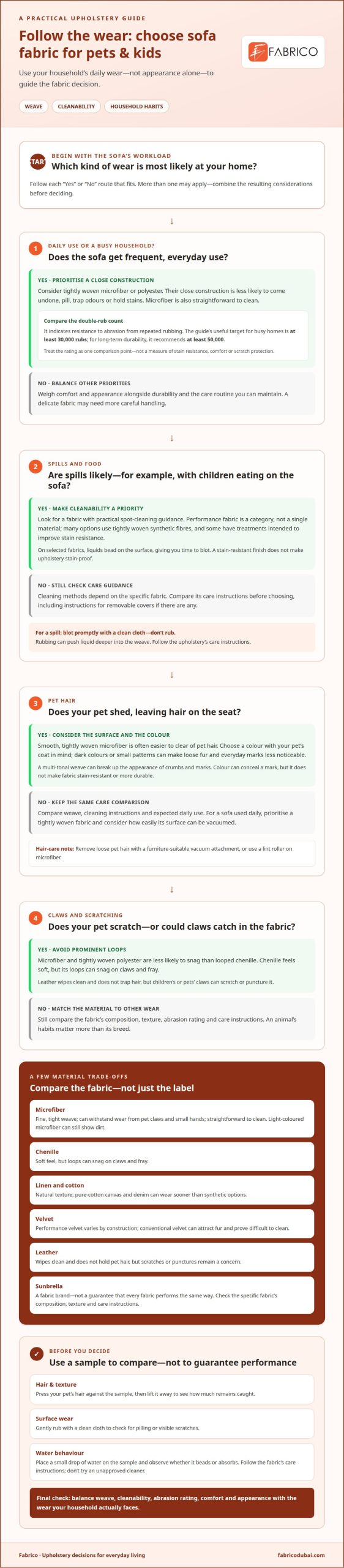
For busy homes, tightly woven microfiber and polyester are practical durable choices. Their close construction is less likely to come undone, pill, trap odours or hold stains. Microfiber also suits homes with children because its surface is straightforward to clean. Leather wipes clean and doesn’t hold pet hair, but claws can puncture or scratch it. Choose based on the wear your sofa actually faces.
A double-rub count indicates how well upholstery resists abrasion from repeated rubbing. For busy homes, a useful target is at least 30,000 rubs; for long-term durability, the guide recommends at least 50,000. Treat the rating as one comparison point, not a measure of stain resistance, comfort or scratch protection. Follow the fabric’s care guidance as well.
Match the material to your household routine. Children eating on the sofa make food spills more likely, so straightforward spot cleaning matters. For a sofa used daily, prioritise a tightly woven fabric and compare its abrasion rating. If you vacuum regularly, consider whether the surface releases pet hair easily. Colour can help conceal hair, but it does not make fabric more durable.
Pet owners should consider both coat and behaviour. A shedding dog may leave hair across the seat, while a cat that scratches can snag delicate weaves or damage leather. Microfiber and tightly woven polyester are less likely to snag than looped chenille. For cats, avoid prominent loops; for pets that shed, choose a surface that is easy to vacuum. An animal’s habits matter more than its breed.
A practical fabric choice involves more than appearance. A hard-wearing option with manageable care requirements may make routine cleaning easier, while a delicate fabric can need more careful handling. Compare composition, abrasion rating, cleaning instructions and suitability for your household. If children and pets share the sofa, prioritise durability and practical cleaning over appearance alone. Regular vacuuming and prompt spill care also help limit everyday wear.
4. Fabric protectors and upholstery care
A fabric protector can help manage spills, but it doesn’t make upholstery stain-proof. Some performance fabrics allow liquid to bead, giving you time to blot it before it sets. Before applying a separate protector, test it on a hidden area and follow its instructions. This matters for every texture, from a patterned weave to velvet, where an unsuitable product may affect the finish.
Are stain-resistant upholstery treatments safe for children and pets? Safety depends on the product and how it is applied, so do not assume every treatment is suitable for every household. Follow the product’s directions and precautions before allowing children or pets near treated furniture.
For everyday maintenance, blot spills promptly with a clean cloth and follow the upholstery’s care instructions. Avoid rubbing, which can push a stain into the fibres. Microfiber may show water marks if cleaned improperly, while leather usually needs a different approach. Regular vacuuming with an upholstery attachment helps remove hair and dust. Rotate and flip cushions regularly to spread wear across the seating surface.
Removable covers offer another layer of protection. Wash them according to their care labels; the recommended interval depends on the fabric and household use. Professional upholstery cleaning every 12–18 months can help keep furniture looking its best. For leather around pets, a washable cover or blanket can reduce direct contact with claws. A durable finish supports comfort and easier care, but no treatment makes a sofa perfect or eliminates routine cleaning.
For added spill protection, choose stain/water-repellent treatment for upholstery. The treatment is most useful when paired with prompt blotting and the fabric’s own care guidance.
Fabrico: Sofa and Chair Upholstery
Fabrico provides Sofa and Chair Upholstery for households ready to refresh worn seating or choose a fabric better suited to family life. It is a natural next step once you have considered durability, cleaning, colour and comfort, and want those priorities reflected in your sofa or chairs.
When discussing your upholstery project with Fabrico, share how the furniture is used, whether pets shed or scratch, and which care requirements matter most. These details help guide fabric selection. Fabrico also makes Outdoor Protection Covers, while this advice focuses on indoor sofa upholstery.
To choose upholstery that better suits your household’s everyday needs, contact Fabrico to discuss your sofa or chair project.
Make your next sofa choice work for real life
Your next upholstery decision should consider more than a fabric swatch. Think about what your sofa needs to handle: a child’s snack, a pet settling beside you, or regular cleaning after a busy day. The best upholstery fabric for pets and kids is the one that suits those routines while feeling and looking right in your Dubai home. Keep comfort, maintenance and the care instructions in mind as you decide.
If you’re ready to apply those priorities to a sofa or chair, Fabrico can help with upholstery tailored to your project. Contact Fabrico for fabric advice and discuss the feel, appearance and practical needs you want your furniture to meet.
A considered choice can make everyday living easier while keeping your home welcoming for everyone.
Frequently Asked Questions
What is performance fabric?
Performance fabric is upholstery designed for frequent use, often made with tightly woven synthetic fibres and sometimes enhanced with treatments. The label describes a category, not a standard construction, so performance fabrics can feel and clean differently. For a child’s playroom sofa, compare each fabric’s care guidance and feel, then choose an option that fits your household’s cleaning routine.
Which Fabric Is Best for a Sofa Used Often or by Pets/Kids?
Microfiber or tightly woven polyester is a practical choice for a sofa used daily by children and pets. The close weave helps resist wear, and these materials are less likely to snag than looped chenille. Consider the pet’s habits, too: a shedding dog calls for a surface that releases hair during vacuuming, while a scratching cat may damage even durable upholstery.
What couch material is easiest to clean?
Leather and microfiber are among the easier upholstery materials to clean, but they need different care. Leather can be wiped with a damp cloth and does not hold fur, while microfiber can be cleaned with a furniture-safe vacuum attachment or lint roller. Follow the fabric’s cleaning instructions before treating a mark, since improper cleaning can leave water stains on microfiber.
Which Sofa Fabric Lasts the Longest?
Tightly woven microfiber and polyester are practical choices for frequent use because their construction is less likely to snag than looped fabric. Leather can also be durable, but claws may puncture or scratch it. Longevity depends on how the sofa is used and maintained, so weigh abrasion resistance against cleaning requirements and the contact the furniture faces each day.
Is performance fabric, microfiber, or leather best for pet hair and spills?
For pet hair, leather is useful because fur does not cling to its surface, while microfiber is easy to vacuum or lint-roll. Performance fabrics vary when it comes to spills: some allow liquid to bead so it can be blotted, while microfiber needs careful cleaning to prevent water marks. Choose according to your main concern, then follow the specific fabric’s care instructions.
Which upholstery fabrics are scratch-resistant and snag-resistant for cats?
Tightly woven microfiber or polyester is less likely to snag than looped chenille, making it a practical option for homes with cats. No upholstery is immune to claw damage. Avoid prominent loops if snagging is a concern, and consider your cat’s scratching behaviour when selecting sofa fabric. A smooth, close weave is easier to maintain.