

A bay window isn’t one wide window. Treating it like one can leave fabric bunching at the angles or block a view you want to enjoy. Choosing American curtains for bay windows means balancing the shape of each section with how you use the room, whether you want to soften daylight, add privacy or give the space a more finished look.
A continuous track, separate sections or a curtain that frames the whole bay can each work, depending on the window and room. Pleat style, fabric weight and lining affect how the curtains hang, how much light passes through and whether you can still reach a window seat or opening pane.
This guide compares practical layouts and explains how to match Pleated American curtains, fabrics and linings to rooms in Dubai’s bright climate. You’ll also learn which measurements and details to prepare for a bespoke project. Fabrico creates custom curtains shaped around a bay’s individual angles and dimensions, bringing a considered finish to a distinctive feature of your home.
Key Takeaways
- Match the curtain layout to your bay’s angles, then decide whether a continuous treatment or separate sections suit the room better.
- Compare American curtains for bay windows by how their pleats, fabric and lining affect daylight, privacy and visual weight.
- Consider the room’s sun exposure and how much natural light and window access you want to preserve before choosing coverage.
- Prepare separate measurements for each window face, angle and fixing area to support a more precise bespoke design.
- Bring your preferred layout, fabric and lining together in custom Pleated American curtains made for your bay’s dimensions.
Why American Curtains Need a Bay-Window-Specific Design
A bay window brings several panes, angled returns and distinct sightlines together in one architectural feature. A curtain treatment needs to account for those changes in direction rather than treating the window as a single flat opening. A well-planned design can provide privacy where it’s needed, preserve daylight and views elsewhere, and give the whole arrangement a composed appearance.
American curtains are fabric curtains with a gathered, pleated heading that creates regular folds and a tailored look. Their structured finish can suit classic and contemporary rooms, but how they sit across a bay depends on its dimensions and the way you use the space. A reading nook may need curtains that clear a seat, while a bedroom may benefit from fuller coverage.
Bay windows vary in projection and form. For an overview of their architectural types and features, see Understanding Bay Windows. That variety is why American curtains for bay windows should be planned around the individual bay, not selected by appearance alone.
What makes a bay window different to dress?
Each angled return changes the relationship between the fabric, glass and wall. In a shallow bay, a treatment that follows the window may preserve a compact profile. A deeper projection may have room for fuller folds. Neither shape dictates one universal solution. Consider whether a sofa, desk or window seat sits nearby, which panes open, and whether you want to keep the view unobstructed.
These details affect where the curtains sit and how much space they need when drawn. If furniture is close to the glass, fabric gathered at the sides can limit access or make the area feel crowded. If the bay is a focal point, a continuous visual line may better suit the room. Start by noting how people move through the space and use each part of the window.
What do American curtains bring to a bay window?
Their pleated heading gives the fabric a consistent rhythm, adding definition to a window with several faces. Full-length curtains can frame the bay and draw the eye upward, while a considered fabric choice can connect the window treatment with the room’s furnishings. A cohesive look doesn’t require every pane to be treated identically. What matters is how the finished arrangement reads as a whole.
Precision matters in bespoke work. Fabrico’s custom Pleated American curtains can be planned around a bay’s actual angles and dimensions, so the design responds to the architecture rather than forcing it into a standard shape. For a closer look at pleat details and how they influence a curtain’s appearance, explore the American pleated curtains guide.
Before settling on a layout, consider three things together: the bay’s geometry, the room’s daily use and the effect you want the fabric to create. This keeps appearance and function in balance and gives the next design decisions a clear starting point.
Compare Curtain Layouts for Different Bay-Window Shapes
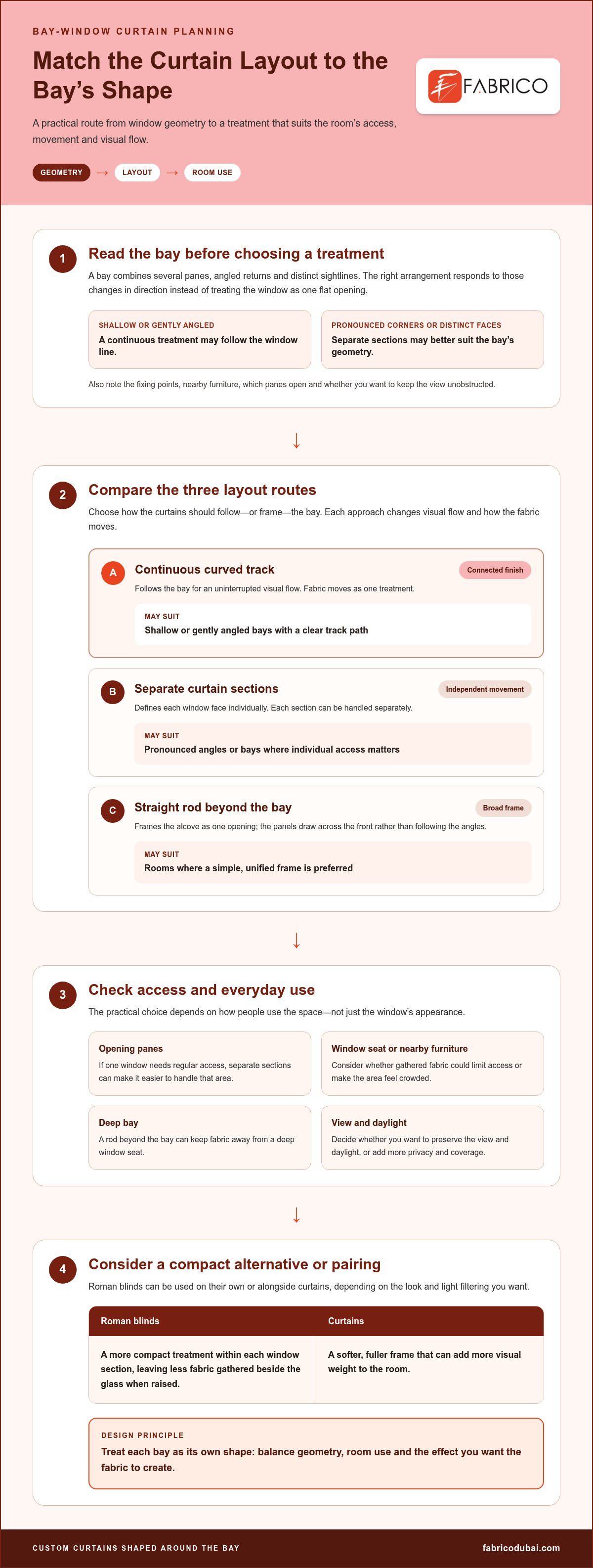
The right arrangement depends on how the bay turns, where the fixing points sit and whether you want to open each window area independently. A shallow bay with gentle angles may suit a continuous treatment that follows the window line. A bay with pronounced corners or several distinct faces may call for separate sections. The aim is a layout that works with the geometry, not a standard configuration applied to every home.
Compare the main approaches against the way you use the space. A continuous curved track can create a connected line within the bay, while separate rods or sections give each face its own movement. A straight rod mounted beyond the bay can frame the whole alcove, although the curtains sit in front of its angles rather than follow them.
One continuous curtain treatment or separate sections?
A continuous treatment can make the bay feel unified and keep the fabric’s visual flow uninterrupted. Separate sections can be easier to handle around individual panes, especially if you need regular access to one window. Corners, available fixing points and nearby furniture all affect what’s practical. Compare the options against the actual bay before settling on a layout.
| Layout | Appearance and visual flow | Access | May suit |
|---|---|---|---|
| Continuous curved track | Follows the bay for a connected finish | Fabric moves as one treatment | Shallow or gently angled bays with a clear track path |
| Separate curtain sections | Defines each window face individually | Each section can be handled separately | Pronounced angles or bays where individual access matters |
| Straight rod beyond the bay | Frames the alcove as one broad opening | Panels draw across the front of the bay | Rooms where a simple, unified frame is preferred |
These layouts are starting points, not fixed rules. Separate sections may preserve access to an opening pane, while a rod beyond the bay can keep fabric away from a deep window seat. With bespoke American curtains for bay windows, the layout can be planned around the bay’s angles and the room’s furnishings rather than forcing a uniform solution.
When should you consider blinds alongside curtains?
Roman blinds offer a more compact treatment within each window section, leaving less fabric gathered beside the glass when raised. Curtains create a softer, fuller frame and can add more visual weight to the room. Depending on the look you want, Roman blinds may work on their own or alongside curtains. Fabric choice affects their appearance and light filtering, so the Roman blinds fabric guide can help you compare options.
For a bespoke layout shaped to your window, explore Fabrico’s curtain options as you consider the next design decisions.
Choose Curtain Fabric and Lining for Dubai Light and Privacy
Start with the room, not a fabric sample. Notice when direct sunlight reaches the bay, which window faces feel brightest, and whether the room needs daytime privacy or a clearer view. In Dubai, strong sunlight makes light control a practical part of choosing curtains, but exposure and daily use differ from room to room. A living area may benefit from softer, filtered light, while a bedroom may call for fuller coverage.
Fabric and lining work together to shape how much light enters, how private the room feels and how the curtains suit everyday use. For American curtains for bay windows, consider those needs alongside the weight and visual presence of fabric gathered across several window faces.
How should sunlight and privacy shape your fabric choice?
Observe the bay at different times of day before deciding. One angled pane may receive direct sun while another stays more shaded, and the view or privacy needs can differ from face to face. A lighter, more open fabric generally gives an airier impression and allows more daylight through. A denser fabric offers more visual coverage and a fuller appearance, though it can make the bay feel more enclosed.
Opacity also affects how much of the view remains visible. If keeping the view matters, consider how much fabric will cover the glass when the curtains are closed, not only how they look when drawn back. Check samples in the room’s natural light, since colour and texture can look different as the light changes. In a multipurpose room, decide what matters most at different times of day: daylight, privacy or a balance between the two.
What should you consider when comparing curtain linings?
A lining adds another layer behind the face fabric, influencing the curtain’s appearance, coverage and light-filtering effect. An unlined treatment can preserve a lighter look and keep the fabric’s own texture prominent. A lined curtain may appear fuller and provide more coverage, depending on the fabrics selected. Neither option is automatically right for every room or fabric.
Compare the full combination rather than judging the face fabric alone. A delicate-looking material may hang differently with added lining, while a heavier fabric may already provide the visual weight you want. Consider how the back of the curtains will look from inside the room, how much daylight you want to retain when they’re closed, and whether the treatment should feel relaxed or more substantial.
- For a bright sitting area: Consider a lighter fabric treatment if filtered daylight and a less substantial look are priorities.
- For a room needing more coverage: Compare denser fabrics and lining combinations for the fuller finish and screening you prefer.
- For changing needs: Decide whether one curtain treatment suits the room’s routine or whether separate window sections would offer more flexibility.
These are design comparisons, not fixed performance promises. The result depends on the fabric, lining and way the curtains are made. Reviewing those choices together helps create a treatment that complements the bay and works comfortably in the room.
Plan Bay-Window Measurements and Curtain Details Before Ordering
A clear project brief makes it easier to plan bespoke curtains around a bay’s proportions. Before discussing American curtains for bay windows, note how the window is divided, where its angles turn and what the curtains need to do in the room. These observations help distinguish a design preference from a measurement assumption. Use your notes to prepare for the project, not as a substitute for precise measurements.
- Map the bay. Record the number of window faces, the direction of each return and the overall arrangement. Note differences in width or height between sections rather than describing the bay as one flat opening.
- Identify fixing areas. Note where a curtain treatment could sit, including the space above or beside the window and the positions where the bay changes direction. Each face and angle may affect the design.
- Describe the intended coverage. Decide whether the curtains should follow the bay, frame it from the room or cover a broader area. Record which panes need regular access and whether you want sections to open independently.
- Consider the room around it. Include nearby furniture, a window seat, walkways and anything that could limit how curtains hang or move. Add a room overview and clear photographs to show the bay in context.
What details should you record about the bay?
A sketch can make angled sections easier to explain. Mark each face, indicate which panes open and note where furniture sits relative to the glass. Include an overall room view as well as closer views of the window and fixing area. Together, these details show the bay’s shape and how you use the space, without relying on a single estimated width.
Which design choices are useful to settle early?
Consider the pleated appearance you prefer, the character of the fabric and whether you want a lined or unlined finish. Decide if the curtains should frame the bay or provide broader coverage, and how much access to the windows matters in daily use. You don’t need to resolve every detail alone. A clear sense of your priorities gives the bespoke design process a practical starting point.
For a made-to-measure treatment, dimensions need to reflect each window face, angle and fixing area. A single measurement across the front can miss changes in depth or direction, and estimates may not capture the bay’s geometry. Keep your observations and design preferences together, then explore Fabrico’s custom window treatments as you prepare a curtain plan for the space.
Create Bespoke American Curtains for Your Dubai Bay Window
A bespoke treatment brings together the choices explored in this guide: the bay’s shape, the room’s routine, and your preferred fabric and coverage. Fabrico creates custom Pleated American curtains planned around a window’s individual faces and angles. Instead of treating a bay as a standard opening, the design can respond to its geometry and create a considered finish for the room.
How does a bespoke approach address an unusual bay?
Each face and turn in a bay affects how curtains sit and move. A tailored plan can account for those changes while balancing pleat appearance, fabric character, lining and coverage. You might favour a continuous look across the bay or want the treatment to relate to separate window sections. These decisions work together to shape the finished appearance and everyday use.
The aim is coherence, not simply fitting fabric to glass. Fuller fabric and lining can create a more substantial presence, while a lighter choice can keep the look relaxed. Pleats bring structure, and the chosen coverage determines how much of the window remains exposed when the curtains are drawn. Considering these elements as one design helps bespoke American curtains for bay windows complement both the architecture and the way you use the room.
What can you prepare for a Fabrico curtain enquiry?
A few clear details can make a project discussion more useful. Bring a simple bay layout, photographs showing the window and wider room, and notes on your preferred coverage. Include fabric preferences if you have them, along with how much daylight and privacy you want. These details give the design conversation a practical foundation while leaving room to refine the final choices.
- Bay layout: Note the number of window faces and where each angle turns.
- Room photographs: Show the window up close and how it relates to furniture and circulation space.
- Coverage preference: Describe whether curtains should frame the bay or cover more of the window.
- Room priorities: Summarise your preferred balance of daylight, privacy and view.
- Style direction: Share fabric, lining and pleated appearance preferences, even if they’re still open to discussion.
Fabrico brings more than 35 years of experience in the Dubai market to custom soft furnishings, including Pleated American curtains. That experience supports a measured approach to shaping the design around each home’s window and preferences.
Ready to develop your bay-window treatment? Discuss bespoke curtains with Fabrico and share the details that will help shape a tailored project.
Bring Your Bay Window Design into Focus
Before settling on a final design, picture the bay in its everyday setting: viewed from the room entrance, from nearby seating, and with the curtains both open and drawn. This helps you assess whether the treatment feels balanced throughout the day, not only when the fabric is arranged for display. Even a detail such as how curtain edges sit beside the window can shape the overall impression.
Use that perspective to turn your preferences into a clear project brief. American curtains for bay windows can be tailored to the architecture while reflecting the mood and practical needs you want the room to support. The right choice should feel considered in the space and comfortable to live with.
Fabrico creates custom Pleated American curtains and Roman blinds in Dubai. Share your bay’s proportions and the look you have in mind to start planning a treatment around your home. Discuss bespoke American curtains for your bay window with Fabrico and take the next step toward a window treatment made for your space.
Frequently Asked Questions
Can American curtains be made to follow the angles of a bay window?
Yes. Custom Pleated American curtains can be planned for a bay’s angled sections. The layout and fixing arrangement need to reflect the window’s shape so the fabric can sit and move as intended. A bay with a sharp central turn, for example, may need a different arrangement from one with gentle returns. Share the bay’s layout and photographs when discussing a bespoke curtain project in Dubai.
Should bay-window curtains be one continuous treatment or separate panels?
Either arrangement can work, depending on the window and how you use it. A continuous treatment can give the bay a unified look, while separate panels may be more convenient if you regularly open one section or want to manage light differently across the panes. Consider which windows need access and where the curtains will gather. The best choice suits both the fixing points and your routine.
Are American curtains suitable for a bay window with limited space?
They can be, provided the design accounts for the available room around the window. Full curtains need space to gather when open, so check for nearby furniture, narrow walkways or window handles that could be obstructed. A simpler arrangement or lighter fabric may help the treatment feel less dominant. If space is especially tight, Roman blinds are another window-treatment option to consider.
Do bay-window curtains need a lining?
No, lining isn’t essential for every bay window. An unlined curtain may suit a room where you prefer a lighter appearance, while lining can add coverage and change how the fabric hangs. Think about the room’s privacy needs and how the curtain looks from inside when closed. Follow the care guidance for the selected fabric and lining, since cleaning requirements can differ between combinations.
How high should curtains hang above a bay window?
There isn’t one standard height for every bay. The position depends on the available wall space, the window frame, ceiling details and the look you want. A higher fixing point can create a taller visual impression, while placing the treatment closer to the frame can keep attention on the window itself. Note obstructions such as vents or moulding so the chosen position works neatly with the room.
Can I combine American curtains with Roman blinds on a bay window?
Yes, curtains and Roman blinds can be combined to create a layered treatment. Blinds can provide compact coverage at each pane, while curtains add a softer frame around the bay. Consider how the two layers look together when both are in use and whether either might interfere with window handles or access. Keep fabric, colour and fullness in proportion to the room.
How should I clean American curtains in a Dubai home?
Follow the care label for the specific curtain fabric and any lining, as cleaning methods vary. For routine upkeep, gently remove surface dust using an appropriate attachment on a low setting, and avoid vigorous rubbing that could disturb the pleats. If the curtains need a deeper clean, use the method recommended for that fabric rather than assuming machine washing is suitable. Dubai’s dust can make regular light maintenance useful.