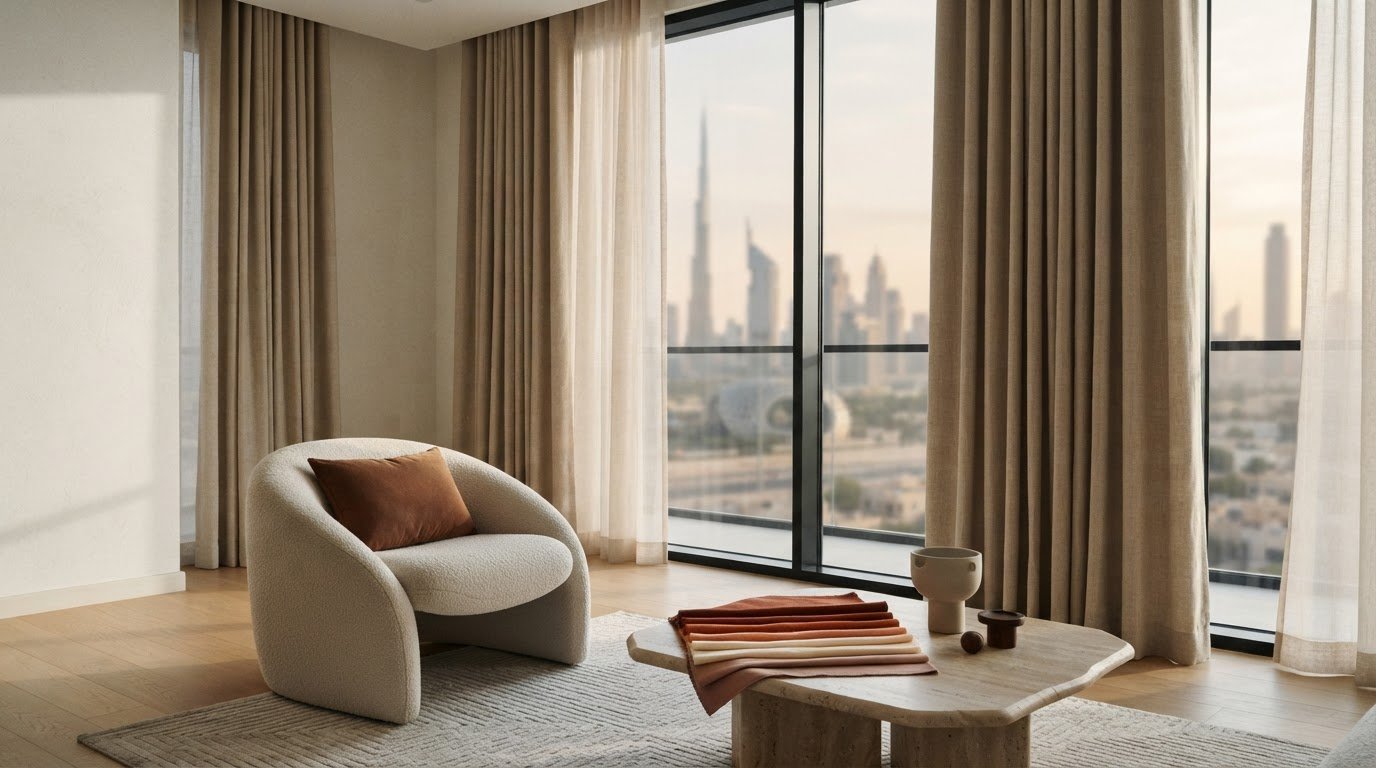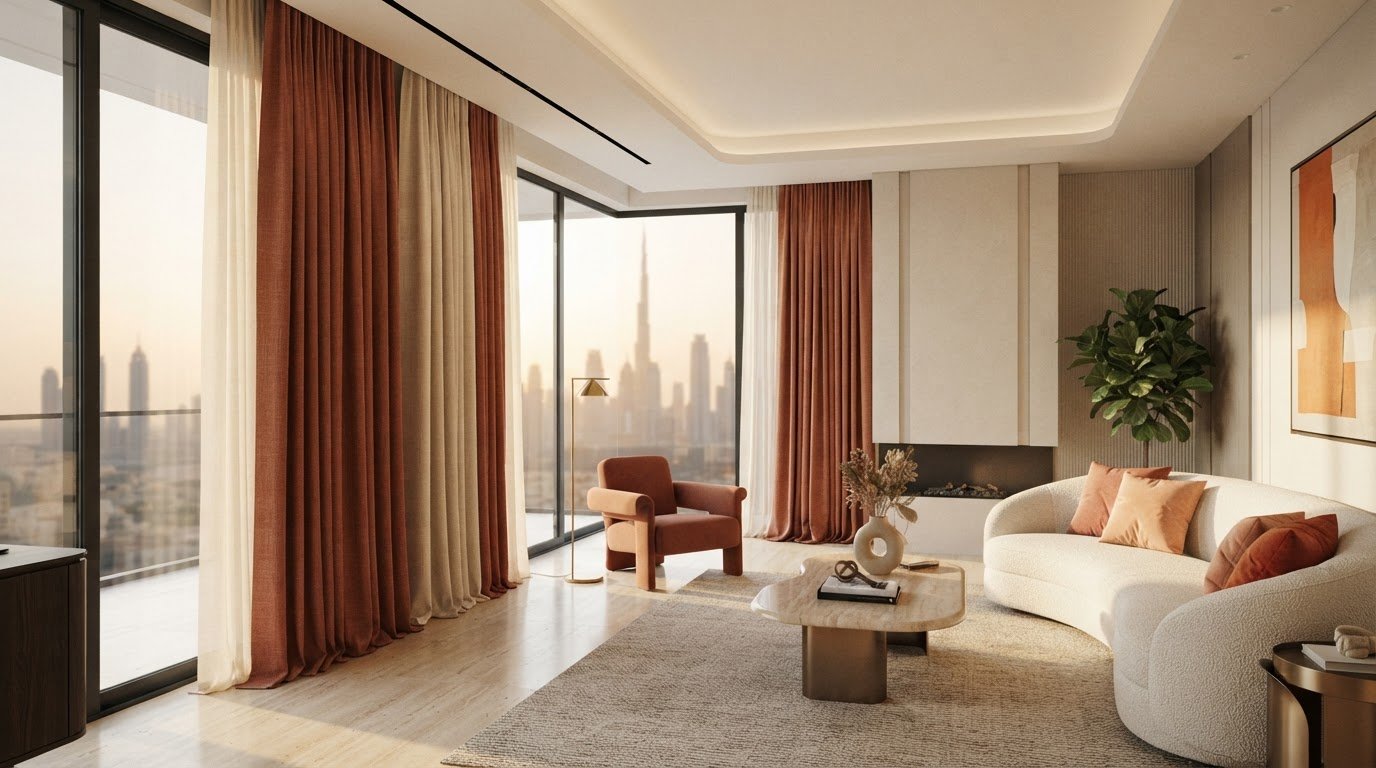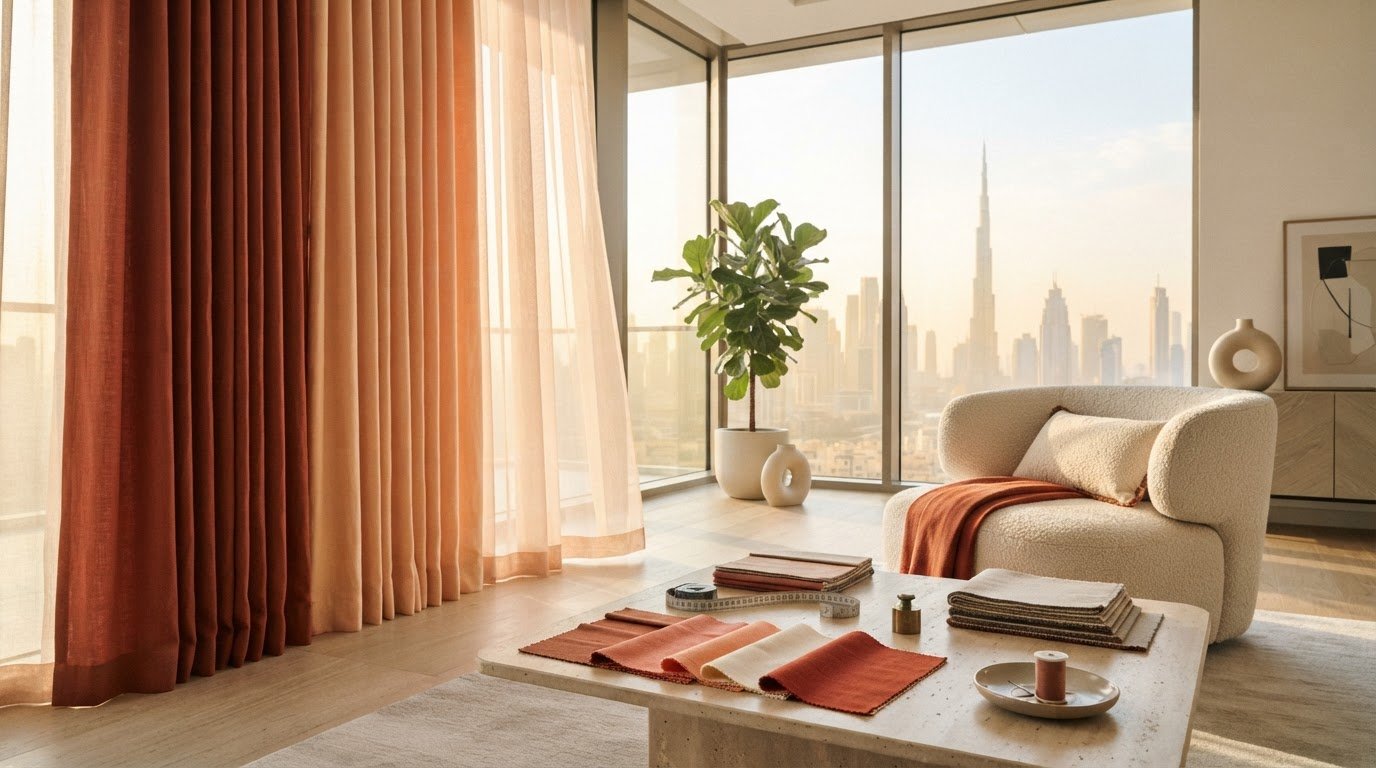

In Dubai, curtains are part of how a room manages sunlight as well as a decorative feature. When comparing a curtain shop Dubai homeowners can rely on, look beyond fabric samples to consider the room, window dimensions and how much direct sun the curtains will face. Unsuitable fabrics may fade with prolonged exposure, while a poor fit can leave large windows uncovered and affect indoor comfort.
It’s possible to achieve an elegant finish without overlooking durability or function. Start by considering the fabric, taking accurate measurements and asking about protective treatments suited to the intended use. For villas with expansive windows, bespoke curtains can offer a more tailored fit than ready-made options.
This guide covers practical ways to compare curtain specialists in Dubai, from fabric choices and fit to construction and services. It also introduces Fabrico’s experience of more than 35 years in the UAE market, including Pleated American curtains, Roman blinds and fabric treatments such as water-repellent and fire-retardant options. Use these criteria to find window treatments that suit your home and its everyday needs.
Key Takeaways
- Assess how a fabric may perform in strong sunlight, and ask about lining and care as well as appearance.
- When comparing a curtain shop Dubai, find out how measurements and tailoring are handled for large or floor-to-ceiling windows.
- Compare Pleated American curtains with Roman blinds based on the look and light control you want in each room.
- Ask which fabric treatments are available for needs such as fire retardancy, stain resistance and water repellency.
- Consider whether a specialist’s curtain and upholstery services can help create a coordinated finish across your home.
Beyond Aesthetics: Why Dubai Windows Require Specialized Curtain Solutions
In Dubai, window treatments do more than complete a room. Strong sunlight can gradually fade some fabrics, and heat entering through expansive glazing can make indoor spaces harder to keep comfortable. The history and styles of curtains also reflects their practical roles in managing light and insulation, not just their decorative appeal. If you’re comparing a curtain shop Dubai, discuss local conditions and room requirements before choosing a fabric or construction.
The UV Challenge for Dubai Textiles
Ultraviolet exposure can gradually fade or weaken some fabrics, making sun exposure an important consideration for window furnishings in Dubai. Delicate natural fibres such as silk can be particularly vulnerable to prolonged exposure, so placement, lining and care all matter. A suitable lining can help shield the face fabric from direct light, but it cannot prevent every textile from fading.
Ask how a proposed fabric and lining may suit the specific room. A sun-facing floor-to-ceiling window has different needs from a shaded bedroom, so consider both exposure and the look you want. Bespoke curtains make it possible to select the fabric and lining together rather than treating the lining as an afterthought.
Thermal Efficiency and Cooling Costs
Well-fitted window treatments can create a barrier between warm glazing and the interior, helping limit heat transfer. The result depends on the window, fit, fabric and room conditions, and curtains are not a substitute for other building insulation. For floor-to-ceiling windows, check that the proposed coverage reaches across the glazed area and leaves as few gaps at the sides as practical.
Blackout and thermal-lined fabrics serve related but distinct purposes. Blackout construction is intended to limit incoming light, which may be useful in a bedroom or media room. A thermal lining is selected to help slow heat transfer, and blackout fabric is not automatically thermal-lined. If you need both light control and insulation, ask the specialist to explain the available constructions.
Dust is another practical consideration in a desert climate. A denser fabric may let less dust pass through than a loose weave, but settled dust can still collect on it. Consider the room’s exposure, the fabric’s care requirements and whether a stain- or water-repellent treatment is suitable for its use.
Off-the-shelf curtains can be difficult to adapt to the height and width of large villa windows. Standard sizes may leave gaps, hang unevenly or fall short of the proportions you want. Accurate measurements and made-to-fit construction help create a cleaner finish and cover the intended area.
The Artisan Difference: Custom Tailoring vs. Ready-Made Retail
Standard sizes work best for standard windows. In Dubai villas, double-height glazing, broad openings and curved features can make ready-made curtains sit unevenly, leave light gaps or miss the intended proportions. Bespoke work starts with the window and its surroundings. Accurate measurements help determine the finished length, width and placement, so the fabric frames the opening as intended. When comparing a curtain shop Dubai, ask how measurements are taken and how the final fit is checked.
Bespoke Fit for Unique Architecture
Custom window treatments let you consider coverage and proportions alongside unusual window shapes and ceiling heights. Explore custom window treatments in Dubai as an approach to achieving greater architectural harmony. For heavier fabrics, ask how the track or support system will suit the fabric’s weight and the window, and clarify who handles installation. A well-made curtain can still hang poorly if its support system is unsuitable or incorrectly positioned.
Ready-made and bespoke curtains also differ in how much control you have over materials and finish. Ask to see the available fabric options, then compare composition, texture, lining choices and care requirements. The right selection should suit the room’s use and light exposure, not just look appealing as a small sample.
Quality of Craftsmanship
Look for details such as consistent seams, neat hems, secure pleats and a header that creates the drape you want. Hand-finishing and machine stitching can both be appropriate; what matters is the quality and suitability of the construction. Ask how the header affects fullness and movement, and how the finished curtain will be supported. There is no universal lifespan for bespoke or mass-produced curtains. Durability also depends on the fabric, sunlight, use and care. Careful tailoring can help prevent fit problems that detract from the finished look.
Fabric treatments deserve the same attention as appearance. Ask whether fire-retardant, anti-bacterial or stain- and water-repellent treatments suit your intended use, and request clear information about what each treatment covers. OSHA’s US resource on textile safety and quality standards offers background on workplace standards, but it should not be treated as confirmation of UAE residential requirements.
Curtain fabrics and finishes can also be considered alongside sofa and chair upholstery. See Fabrico’s upholstery services in Dubai to explore how those offerings can complement one another. If you’re comparing options, review Fabrico’s curtain and upholstery work as one reference point, then ask other specialists the same questions about fit, construction and treatments.
Comparing Luxury Styles: American Pleated Curtains vs. Roman Blinds
American pleated curtains and Roman blinds create different effects. The right choice depends on the room’s proportions, the atmosphere you want and how you use the window. Pleated curtains add softness and formality, while Roman blinds sit closer to the window for a cleaner profile. A knowledgeable curtain shop Dubai can help match the style to the opening and explain how the chosen fabric will drape or fold.
The Elegance of Pleated American Styles
For formal living areas and spacious villas, American pleated curtains in Dubai offer a structured, tailored look. A triple-pleated header creates repeated folds for a full, considered appearance. The result depends on accurate measurements, suitable fabric fullness and enough room at the sides for the curtains to stack when open. Heavier or more textured fabrics can create a substantial frame, but they also need suitable support and careful tailoring.
This style can complement tall windows and formal interiors, where vertical lines reinforce the room’s scale. It is a strong option when you want softness, visual presence and a classic finish, though it will not suit every room. Layering sheer panels with heavier drapes can give you more control over daylight and privacy, provided the window layout and track arrangement allow both layers to move comfortably.
The Modern Versatility of Roman Blinds
Roman blinds suit rooms where you prefer a neat, space-conscious finish, such as apartments, studies and kitchens. They gather into horizontal folds when raised rather than drawing across the wall, which can leave more space around the window. For general guidance on Roman blinds in Dubai, consider how the fabric’s weight and texture may affect the folds and movement.
Flat Roman styles create a smoother appearance when lowered, while hobbled styles retain soft folds. These are design options to discuss with a specialist, not features to assume are available in every fabric. A fabric that holds its shape and suits the blind’s construction can help achieve a crisp finish. Ask to see how a sample behaves, and consider whether dust, cooking activity or frequent handling will affect your choice.
Compare both styles against the room’s function, window dimensions and preferred level of softness. For a design-focused reference point, the American Society of Interior Designers shares information about professional interior design standards. It is not a product-selection guide, but it can help frame questions about design expertise. You can also review Fabrico’s curtain and Roman blind offerings as you decide which look best suits your home.
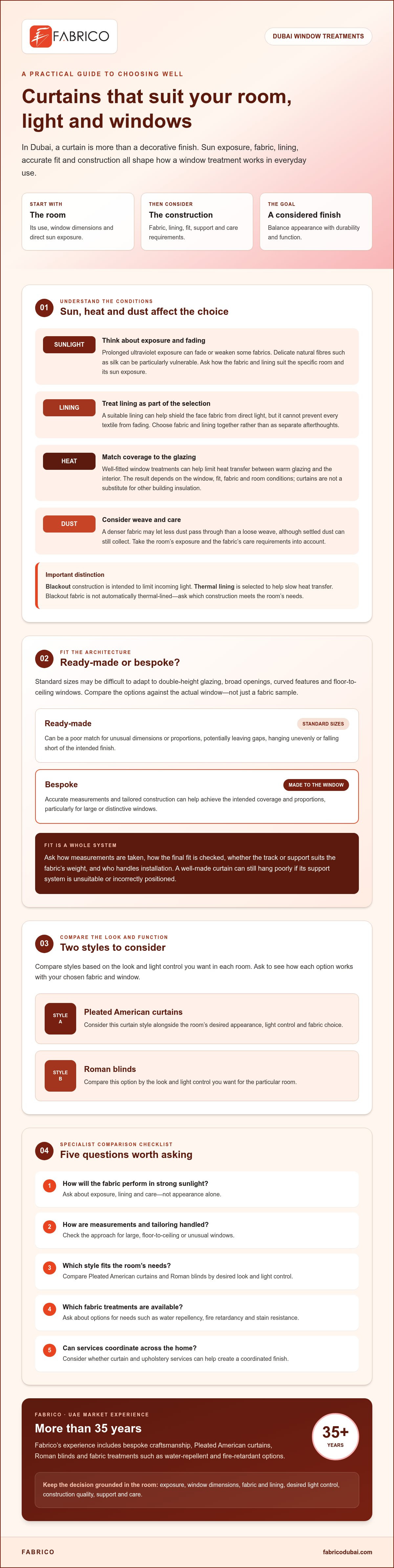
Checklist: 5 Non-Negotiables for Evaluating a Curtain Shop in Dubai
A polished showroom display is only one part of choosing a specialist. Use these five checks to assess whether a curtain shop Dubai customers are considering can clearly explain its materials, process and project responsibilities.
- Relevant local experience. Ask how long the business has worked with homes in the UAE and whether it can show examples relevant to your property. Fabrico has more than 35 years of experience in the UAE market, but you should still review the workmanship and ask specific questions about your windows.
- Clear fabric-treatment information. Ask whether fire-retardant, anti-bacterial or stain- and water-repellent treatments suit your intended use. For fire-retardant treatment in Dubai, ask what the treatment covers and whether supporting test or compliance documentation is available. Do not assume that a treatment is certified simply because it is offered. Request information about its application, care guidance and any limitations.
- Measurement and consultation process. Confirm whether measurements are taken at the property, which details are recorded and how high ceilings or wide openings are handled. Ask who checks the measurements before fabrication and how the proposed coverage will suit the room.
- A relevant local portfolio. Request examples of completed work for properties like yours. A villa with tall windows and an apartment with compact openings present different fitting challenges. Look for consistent hems, balanced pleats and proportions that suit the space.
- Defined project responsibilities. Clarify who handles fabrication, installation and any aftercare or maintenance guidance. Ask whether installation is done by the business or an external provider, and how questions or adjustments are managed. Do not assume every supplier includes the same stages.
Check the Details Before You Decide
A physical showroom can help you compare fabric texture, weight and colour in person. Ask whether you can also view samples in your home’s lighting. If you need outdoor furnishings, check whether the business offers a relevant solution, such as outdoor protection covers in the UAE. Fabrico offers outdoor protection covers and fabric treatments. Confirm the specifications and process for your project rather than assuming a particular certification or installation arrangement.
For a considered starting point, review Fabrico’s curtain and fabric-treatment offerings, then use this checklist to ask informed questions and compare providers on the same criteria.
Fabrico: 35 Years of Bespoke Craftsmanship and Fabric Protection
Choosing a curtain shop Dubai homeowners can trust involves more than picking a style. Fabrico brings more than 35 years of experience in the UAE market to bespoke curtains, Roman blinds and upholstery, alongside practical fabric-treatment options. For villas with distinctive windows or rooms with specific functional needs, discuss how fit, finish and fabric use can shape your choices.
The One-Stop Destination for Soft Furnishings
Fabrico offers sofa and chair upholstery, outdoor protection covers, and indoor and outdoor cushions alongside window treatments. Considering these elements together can help create a more coordinated look, from curtain fabric to upholstered seating and accent cushions. For a tailored seating detail, explore custom bench cushions in Dubai. Discuss the setting and intended use so fabric choices suit the furnishings, especially where they may be exposed to sunlight or regular handling.
This range can help when you want window treatments and upholstery to feel connected without making every piece identical. A shared colour direction or complementary texture can bring cohesion while allowing each furnishing to suit its purpose.
Commitment to Quality and Safety
Fabric protection is a technical decision, not just a finishing detail. Fabrico offers fire-retardant, anti-bacterial and stain- and water-repellent treatments. Ask which treatment suits the fabric and its intended use, how it is applied, and what documentation or care guidance is available. Fire-safety requirements can depend on the application, so confirm the relevant standards for your project rather than assuming a treatment meets every requirement.
Precision matters throughout the bespoke process, from discussing the room and measuring its windows to selecting a finish that suits the desired look. Clear explanations help you understand the options and their limitations before proceeding. No fabric or treatment is immune to wear, sunlight or staining, so consider the care requirements as part of your decision.
To get started, prepare the window dimensions, room use and any concerns about sunlight, privacy or fabric care. Then ask Fabrico about curtain, upholstery or protective-cover options that suit your needs. Enquire about a bespoke consultation with Fabrico to discuss your project and the details that will shape its finish.
Choose Window Treatments with Confidence
The right curtain shop Dubai homeowners choose should understand that an elegant finish depends on more than style. Precise tailoring helps window treatments fit properly, while considered fabric selection and appropriate protection address practical needs such as sunlight, privacy and everyday use. Matching the treatment to the room, whether Pleated American curtains or Roman blinds, brings function and refinement together.
Fabrico offers bespoke curtains, upholstery, protective covers and specialized fabric treatments, with more than 35 years of experience in the UAE market. Ask about fit, fabric and treatment suitability to make a considered choice for your home.
Request a bespoke consultation with Fabrico to discuss your windows and furnishing needs. Share your priorities for fit, light and fabric care to start planning a finish suited to your space.
Frequently Asked Questions
How long does it typically take to get custom curtains made in Dubai?
There is no standard turnaround time for custom curtains in Dubai. Timing can depend on the fabric, measurements, design details and the provider’s production schedule. Before proceeding, ask the curtain shop Dubai how long each stage is expected to take, from measurement and fabric approval through fabrication and fitting. Confirm when the timeline begins and whether changes to your selections could affect the expected completion date.
What is the best fabric for curtains in the Dubai climate?
The best fabric depends on the window’s sun exposure, the room’s use and the finish you prefer. For a sun-facing room, discuss colourfastness, lining and care requirements with the specialist. Delicate fabrics may need more protection from direct sunlight. Consider how often the curtains will be handled and cleaned, too. Request fabric samples and care guidance, then compare them in the room’s lighting before deciding.
Do I need fire retardant treatment for my home curtains?
Whether fire-retardant treatment is needed depends on the property, how the room is used and any requirements set by relevant authorities, building management or your insurer. Do not assume it is mandatory for every home, or that treated fabric automatically meets every applicable standard. Ask the provider what the treatment covers and request supporting documentation. For specific compliance advice, check with the appropriate authority or a qualified fire-safety professional.
Can a curtain shop in Dubai also help with sofa upholstery?
Yes, some Dubai soft-furnishing specialists provide both curtains and sofa upholstery. Fabrico offers sofa and chair upholstery alongside Pleated American curtains and Roman blinds, so homeowners can explore coordinated fabric choices across windows and seating. Ask whether the upholstery work suits your furniture’s condition and intended use, and discuss fabric care and any relevant treatments. This can help you plan a cohesive room without assuming the services are identical.
How do I clean bespoke curtains without damaging the fabric?
Start with the care instructions for the specific fabric and lining, because a cleaning method that suits one curtain may damage another. For routine upkeep, remove dust gently with a suitable vacuum attachment on low suction, if the care guidance permits. Test any spot-cleaning method on an inconspicuous area first, and avoid soaking or applying strong chemicals without approval. For delicate or lined curtains, ask the supplier to recommend appropriate professional care.
Is there a difference between “made-to-measure” and “bespoke” curtains?
The terms can overlap, and suppliers may use them differently. Made-to-measure usually describes curtains produced to fit specified window dimensions, while bespoke can suggest more choice over details such as fabric, lining, heading and finish. These labels alone do not guarantee a particular level of craftsmanship. Ask what is customized, how measurements are taken and which design decisions are included, then review a sample or written specification before approving the order.
What are the benefits of motorized curtains for high windows?
Motorized curtains can make high or hard-to-reach windows easier to operate, and scheduled or remote control may be useful where available. Before choosing them, check what power and control options the system needs, whether it suits the curtain’s size and weight, and who handles installation and support. Ask Fabrico or any other provider directly whether it supplies the system you have in mind.
How much do custom curtains cost in Dubai compared to ready-made?
Custom curtains generally involve more tailored work than ready-made options, so compare the complete specifications rather than fabric alone. Cost can vary with window dimensions, fabric, lining, heading and any installation requirements. Ask for an itemized quote that explains what is included, and compare it with ready-made curtains of similar coverage and material. Fabrico specializes in bespoke soft furnishings, so contact the provider for project-specific pricing rather than relying on a general estimate.