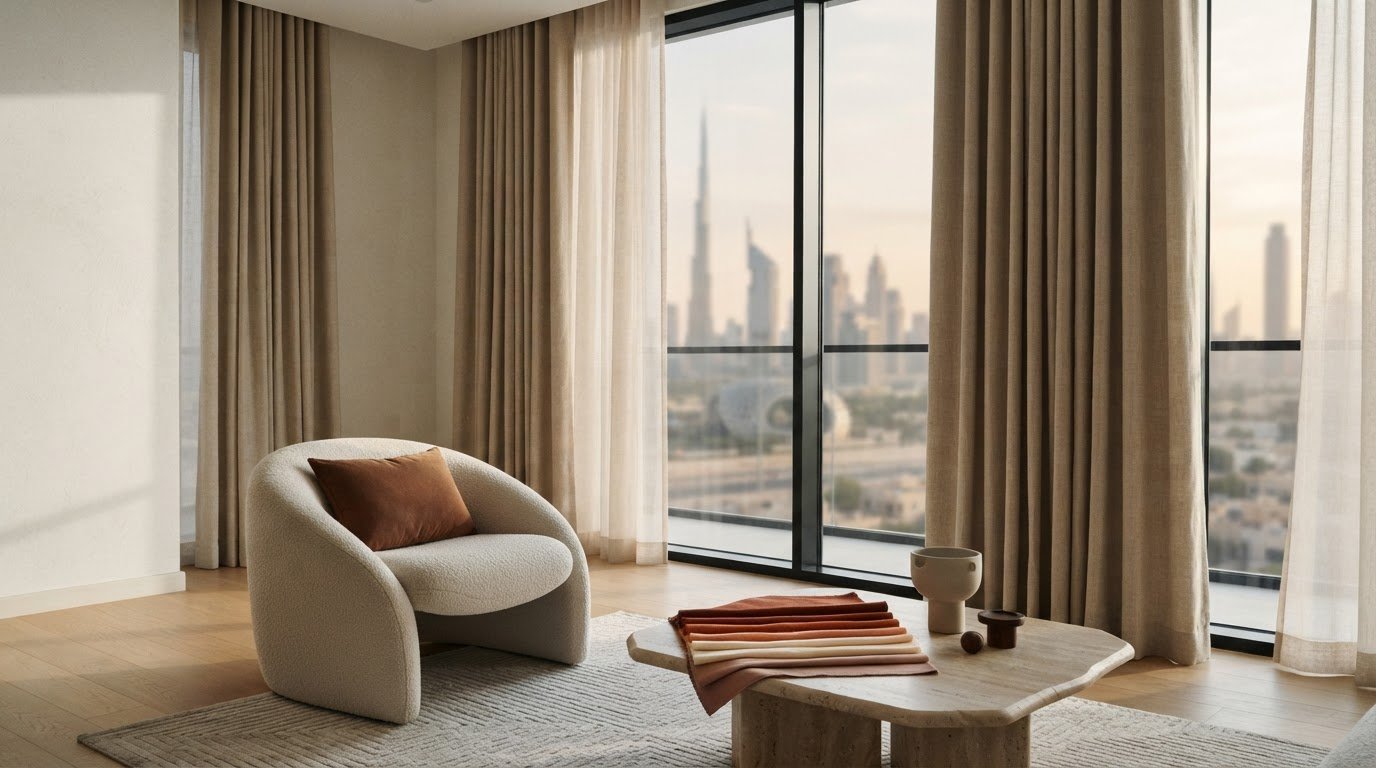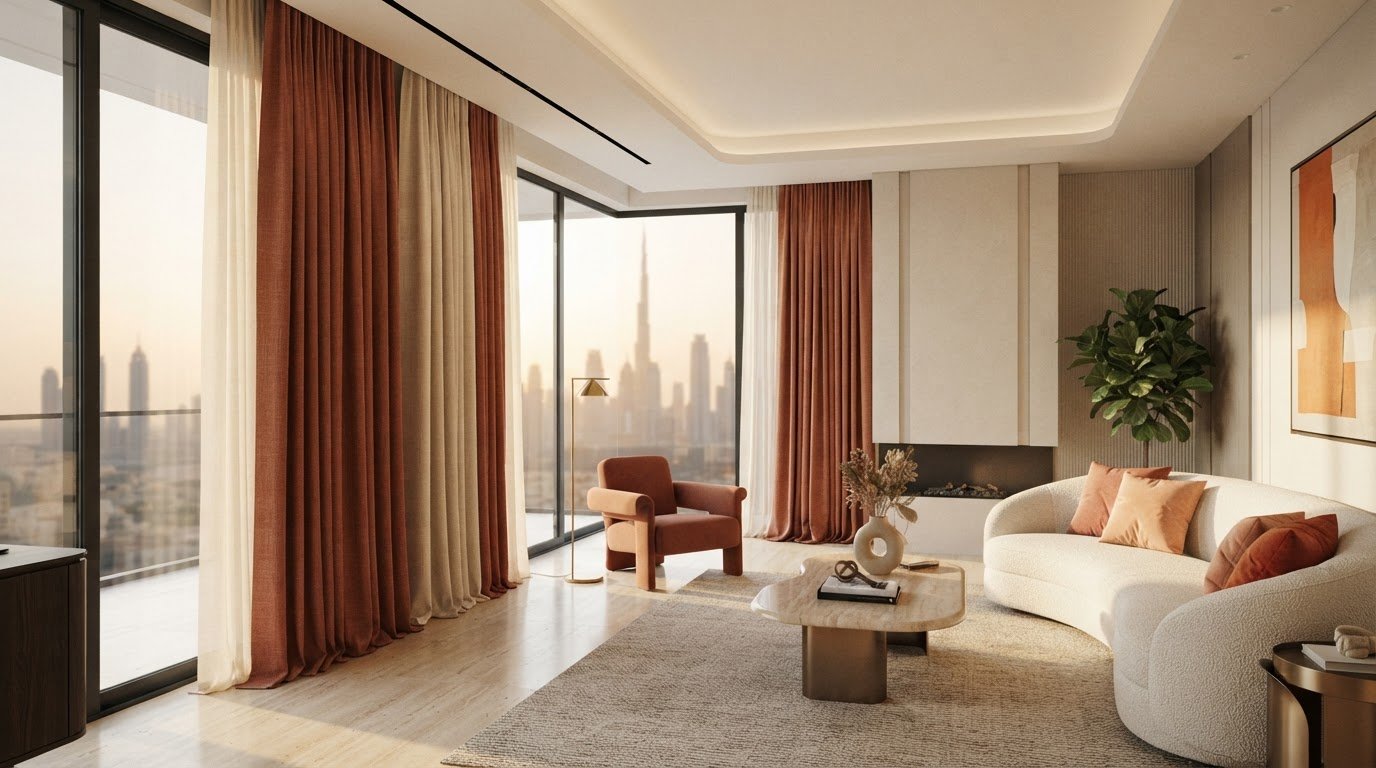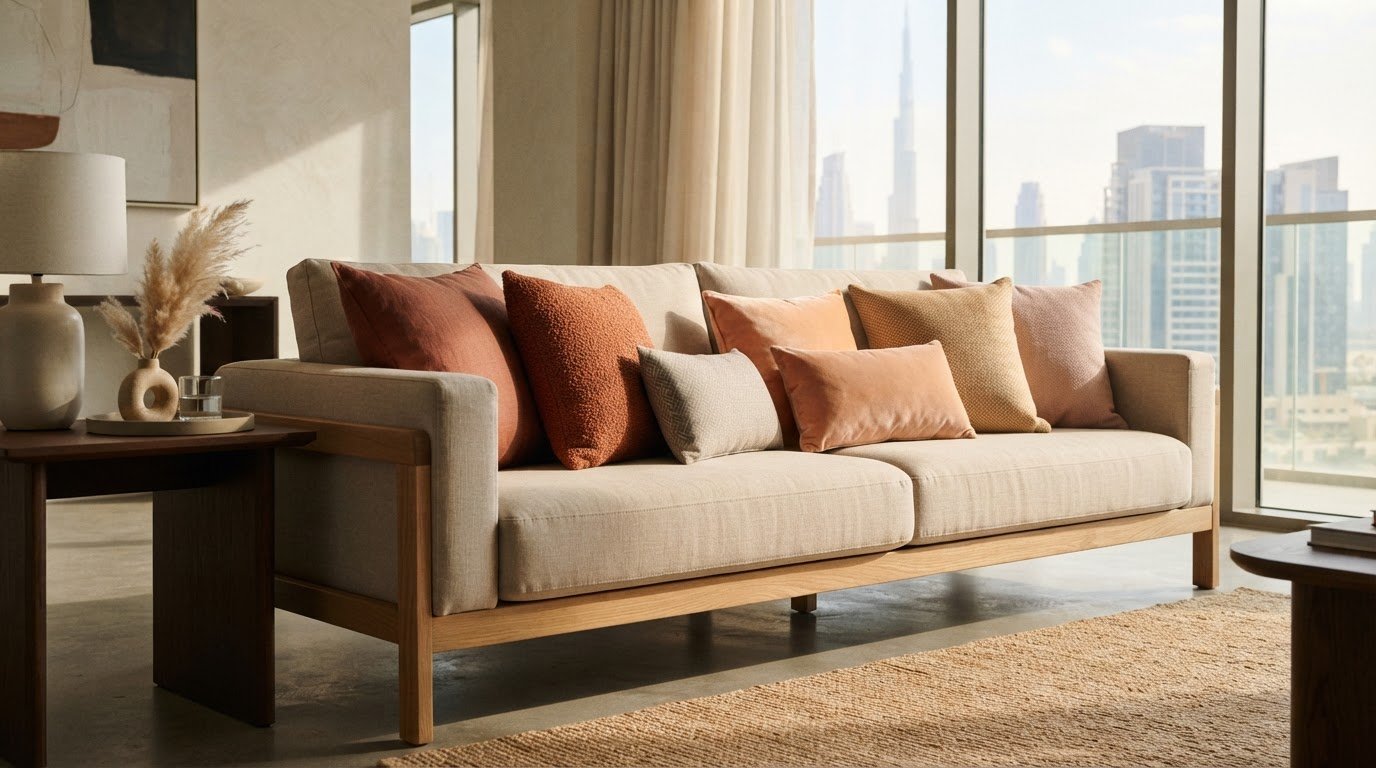

The most attractive cushions aren’t always the most comfortable or practical choice for your sofa. When choosing indoor cushions in Dubai for everyday living, consider the seating, how the room is used and how colours and textures work together, not just what catches your eye.
It can be hard to know which size or shape will suit existing furniture, or how to add visual interest without making a room feel busy. Sunlight, dust and regular use also matter when you want cushions to keep their appeal. This guide explains how to assess your seating, choose shapes and sizes, and build a cohesive palette of colours and textures. You’ll also learn when custom indoor cushions can be a practical option for an exact fit. Fabrico brings more than 35 years of experience in Dubai to cushions and soft furnishings for the home.
Key Takeaways
- Identify how each seat is used, then choose cushions to suit that purpose.
- Measure the usable seating area and consider cushion placement before choosing a shape or size.
- Compare ready-made and custom indoor cushions in Dubai to see which better suits your furniture.
- Follow a simple sequence: define the seat, measure it, decide on the cushion’s role, then coordinate its appearance.
- Consider custom cushions for seating with fixed or unusual dimensions. Fabrico brings more than 35 years of experience in Dubai.
Indoor Cushions in Dubai: Start with the Room and the Furniture
Indoor cushions are chosen for interior seating, comfort and visual coordination. They can make a sofa feel more inviting, add support to a chair or bring colour and texture to a room. The key is finding options that suit the furniture’s dimensions, the way people use the room and the decor already in place.
Start with the seat, not a colour swatch. A cushion may look appealing on its own but be too large for a narrow chair, too small for a broad sofa or uncomfortable for a seat used for long periods. Considering upholstery alongside the furniture’s function can help; the art of upholstery offers context on the materials and techniques involved.
Check fit, comfort and room use first. Then choose a look that supports all three.
What should you decide before choosing indoor cushions?
Identify the furniture and the precise position for each cushion. A sofa back cushion serves a different purpose from a seat cushion, while a dining chair cushion needs to fit the usable sitting area. Consider how many people typically use the seating at once. This helps you decide how many cushions are useful and where they need to sit.
Next, decide what each cushion should do. Back support, added seat comfort and a decorative accent are different purposes, even when one cushion serves more than one. Measure the relevant seat or back area, noting its width and depth as well as any fixed edges or arms that limit placement. These measurements, along with the cushion’s intended role, help narrow down suitable shapes and sizes before you compare colours or patterns.
How does Dubai’s indoor setting affect cushion choices?
Consider the room’s exposure and daily routine. In a Dubai apartment or villa, a sofa beside a bright window may receive strong sunlight, which can affect exposed textiles over time. Notice which cushions sit in direct light for much of the day and consider how their colour and placement suit that setting. This is a planning consideration, not a reason to assume fading will occur.
Dust and frequent use are also worth considering. A cushion in a busy family living room may need more routine attention than one on occasional seating. Keep fabric care instructions in mind and choose an arrangement that’s straightforward to maintain. For example, you might use fewer cushions on a well-used sofa or reserve delicate-looking accents for seating that sees lighter use.
In an indoor majlis, consider the seating layout and how guests gather rather than treating each cushion as an isolated accent. On a dining chair, a secure, proportionate fit may matter more than decoration. Across Dubai homes, the principle is the same: match the cushion to the furniture, the people using it and the room’s conditions before settling on the visual details.
Cushion Fit, Shape, and Comfort: The Details That Matter
A cushion can look well-proportioned but still shift, crowd a seat or leave part of it unsupported. When planning indoor cushions in Dubai around existing furniture, precise measurements help prevent these mismatches. Measure the space where the cushion will actually sit, rather than relying on the furniture’s overall dimensions, and decide whether the cushion is for a seat, back or both.
Accurate measurements help custom indoor cushions fit the usable seating area without crowding its edges.
How do you measure seating for indoor cushions?
Measure the usable width and depth of the seating surface, within the boundaries where a cushion can rest. Account for arms, backrests and fixed edges: a sofa arm may reduce the available width, while a sloped or projecting backrest can affect usable depth. Record each measurement clearly, label the furniture and position, and note any irregular corners or curves.
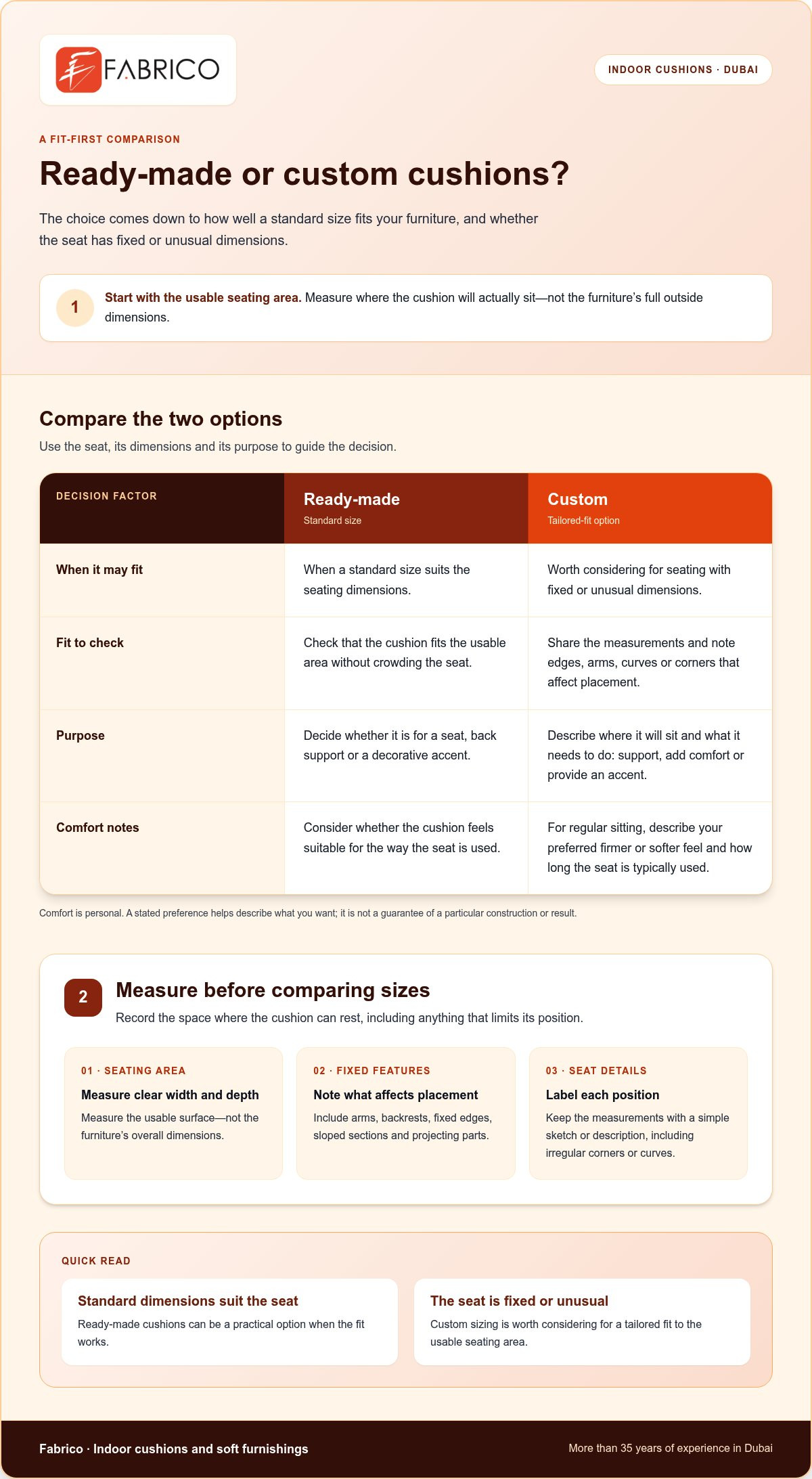
- Measure the clear seating area, not the furniture’s full outside dimensions.
- Note fixed features that limit where a cushion can sit or how it can be positioned.
- Keep measurements with a simple sketch or description of the seat.
These notes help you describe the intended fit when planning a custom cushion. They also make it easier to distinguish one seat from another when updating several pieces.
Which cushion shapes suit different kinds of seating?
Choose a shape to suit the seat’s outline and the cushion’s purpose. A seat cushion covers the sitting surface; a lumbar or back cushion supports the body behind it. The U.S. Bureau of Labor Statistics’ overview of interior designers’ role in selecting furnishings illustrates how furnishing choices can balance function and appearance.
- Sofa: A seat cushion should suit the available sitting area, while a separate back cushion can provide support or an accent.
- Dining chair: A cushion should fit within the seat boundaries and leave room for comfortable sitting at the table.
- Bench: Consider the full usable length and depth, especially if the cushion is meant to cover most of the seat.
- Majlis seating: Match the cushion shape to the layout and the way people sit, rather than choosing by appearance alone.
Comfort is personal. When planning a custom cushion for regular sitting, describe whether you prefer a firmer or softer feel and how long the seat is typically used. Treat this as a preference to communicate, not a guarantee of a particular construction or result. Decorative cushions may prioritise appearance, while everyday seat cushions should feel suitable for repeated use.
If your seating has fixed or unusual dimensions, Fabrico’s custom indoor cushions provide a tailored-fit option.
Ready-Made or Custom Indoor Cushions: Which Fits Your Needs?
The choice between ready-made and custom cushions depends on how well a standard size suits your furniture and how the seat is used. Ready-made formats can be practical when their dimensions fit the seating. Custom sizing is worth considering when a seat has fixed, unusual or individual measurements that standard options don’t accommodate comfortably.
Use this comparison as a starting point. In either case, assess the fit, intended use and appearance in the room before deciding.
| Consideration | Ready-made cushions | Custom cushions |
|---|---|---|
| Fit | Standard dimensions need to suit the seat. | Dimensions can be planned around the furniture. |
| Choice | Choose from the formats available to you. | Plan the cushion around the specific seating requirements. |
| Suitability | Useful when a standard format fits the intended purpose. | Worth considering for fixed, unusual or individually sized seats. |
When can ready-made cushions be a suitable choice?
Ready-made cushions can work well when their dimensions match the furniture’s usable seating area. They may suit a straightforward seat that doesn’t need an unusual outline or exact coverage. Before choosing, compare the stated size with your measurements, then consider whether the cushion feels right for its purpose, coordinates with the room and suits regular sitting or occasional use.
Fit matters more than a label or style category. A cushion that’s too large may crowd the seat, while one that’s too small may not provide the coverage or support you want. Choose a standard option when its dimensions, comfort and appearance meet the needs of that particular seat.
When is a custom indoor cushion worth considering?
Custom sizing is especially useful when furniture has fixed or unusual dimensions, or when a standard format leaves an awkward gap or overhang. A tailored approach can also help coordinate cushions across several seats, such as a group of chairs or majlis seating, without forcing every piece into the same standard size.
Before planning a custom cushion, gather measurements for each seat and note its intended use. If it’s for regular sitting, describe your comfort preference as well as the fit you want. This gives the planning process a practical starting point, rather than making appearance the only consideration.
Fabrico makes custom indoor cushions for seating that benefits from a tailored fit. With more than 35 years of experience in the Dubai market, Fabrico brings soft-furnishings expertise to individual pieces and coordinated updates. When comparing indoor cushions in Dubai, the useful question isn’t simply whether to choose ready-made or custom, but which option best suits the furniture and how it will be used.
Choose Indoor Cushions for Dubai Rooms and Everyday Use
A practical selection process puts function and appearance in the right order. Define the seat, consider its dimensions and purpose, then decide on colour, pattern or texture. This helps you choose indoor cushions that feel at home in Dubai rooms without taking up space needed for comfortable seating.
- Define the seat. Identify the furniture and where the cushion will go.
- Measure it. Note the usable area and any fixed features that limit its dimensions.
- Choose the cushion’s role. Decide whether it’s for regular sitting, back support or decoration.
- Coordinate its appearance. Relate colour, pattern and texture to furnishings already in the room.
The order matters. Choosing appearance before considering the seat can lead to cushions that look appealing but don’t suit the furniture or its everyday use.
How should you coordinate cushions with an existing interior?
Start with one or two colours already in the room, perhaps in the sofa, curtains, rug or nearby furnishings. Cushions can echo those tones for a composed effect or introduce a measured contrast that draws the eye without dominating the space. Let the existing interior guide the palette instead of relying on a passing trend.
Texture adds depth without requiring several competing patterns. Cushions in related colours, for example, can feel distinct through differences in surface and finish. If a patterned cushion is the focal point, simpler surrounding pieces give it room to stand out. Keep the arrangement balanced and leave the practical seating area clear and comfortable rather than filling every corner.
How should choices vary by room and use?
Each setting calls for a different balance of comfort and visual detail. Consider how often the seat is used, who uses it and whether cushions need to stay in place during everyday routines.
- Living-room sofas: Balance cushions for back support or decoration with enough open space for people to sit comfortably.
- Dining chairs: Keep the arrangement proportionate to the chair and suitable for sitting at a table.
- Bedrooms: Use cushions to add a softer decorative layer to a bed or occasional seat without crowding the space.
- Majlis seating: Consider the overall layout and how guests gather, so the cushions suit the room’s use and visual character.
For upkeep, remove dust regularly and attend to everyday marks promptly, following the care instructions for the fabric. If seating is near a bright window, limit prolonged direct sunlight where practical to help protect exposed textiles over time. Fabrico also offers water-repellent upholstery treatment for fabric protection.
For a tailored fit in a room-specific arrangement, explore Fabrico’s custom indoor cushions as part of a coordinated soft-furnishing update.
Plan Custom Indoor Cushions with Fabrico in Dubai
Custom indoor cushions are a practical option when a seat needs dimensions suited to its furniture rather than a standard format. Fabrico creates custom indoor cushions for Dubai homes, drawing on more than 35 years of experience in the local soft-furnishings market. A clear brief helps plan cushions around how your seating looks and functions in its room.
What information helps plan custom indoor cushions?
Before planning, collect details about the seat and its everyday role. Measurements, a short list and a few notes about the room can turn a general idea into a practical plan:
- Furniture type: Identify whether the cushion is for a sofa, chair, bench, majlis seating or another indoor seat.
- Usable measurements: Record the seating area’s dimensions and note fixed edges or other features that affect placement.
- Intended function: Explain whether the cushion is for regular sitting, back support or a decorative accent.
- Room and routine: Describe where the furniture sits and how often it’s used, including whether several people share the seating.
- Preferred look: Share the colour direction and how the cushions should relate to existing upholstery, curtains or other furnishings.
These details give the plan a practical foundation. Cushions for a frequently used family sofa, for example, may serve a different role from accents for an occasional chair. If several pieces are part of one update, describe them together to establish a cohesive direction while allowing for differences in fit and use.
You don’t need a complete design plan to begin. Focus on what the furniture requires, what feels comfortable for the people using it and how you want the cushions to relate to the room. This makes choosing indoor cushions for a Dubai home a considered process, grounded in the specific space rather than a generic arrangement.
Explore related custom furnishing guidance
Some seating projects connect to wider furnishing decisions. If you’re planning a fixed bench, the custom bench cushions guide offers a related perspective on planning cushions for that format. If the seating itself also needs an update, Fabrico’s upholstery services guide covers broader furniture considerations. These are optional next steps; the cushion’s fit and role remain the starting point.
With your furniture details, measurements and preferred look in hand, explore Fabrico’s custom soft-furnishing services to plan cushions suited to your home.
Take the Next Step Toward a More Comfortable Room
Choosing indoor cushions for your Dubai home is an opportunity to make everyday seating feel more personal, not simply to add another decorative layer. Begin with the seat that matters most to your routine. A thoughtful first choice can set a direction for the rest of the room while leaving space to refine the look as your needs become clearer.
Bring together the details that will guide your decision: the furniture you want to update, its measurements, how the seat is used and the look you want to create. From there, custom cushions can be part of a coordinated soft-furnishing update, with their fit and visual character grounded in your home. Let your priorities lead, and choose details that make the room feel more welcoming and distinctly yours.
Explore Fabrico’s custom indoor cushions to plan comfortable, considered seating suited to your home.
Frequently Asked Questions
How do I choose the right size indoor cushions for my sofa?
Measure the usable seat area and check how much room remains once the cushion is in place. For a sofa shared by several people, avoid cushions so wide that they reduce sitting space or press against the arms. If you’re choosing indoor cushions in Dubai for a sofa with separate seat sections, assess each section individually so the arrangement looks balanced and works for daily use.
Which indoor cushion shapes work best for majlis seating?
Choose shapes that suit the majlis layout and the way people sit. A broad seat may call for a cushion that covers its usable area, while a back cushion can provide support without taking up the full seat. For a long or segmented arrangement, consider how cushions sit beside one another and whether guests can use the seating comfortably. Let the layout guide the shape, not a decorative trend.
Can indoor cushions be made to fit bay windows or unusual furniture?
Yes. Custom cushions can be planned for seating with dimensions or outlines that don’t suit standard formats, including a bay-window seat. Measure each usable section, noting corners, changes in depth and fixed features that affect placement. A simple sketch or clear photos alongside the measurements can help communicate the shape. Fabrico makes custom indoor cushions for furniture that benefits from a tailored fit.
How do I keep indoor cushions from fading near a sunny Dubai window?
Limit prolonged direct sunlight where practical. You can adjust curtains or blinds during the brightest periods, move loose cushions away from the window when they’re not in use, or rotate them so the same surface isn’t continually exposed. Sunlight may affect textiles over time, though the result depends on the setting and material. Follow the care guidance for the cushion’s fabric.
Are indoor cushions different from outdoor cushions?
They’re intended for different settings. Indoor cushions are selected for interior seating and everyday use, while outdoor cushions are intended for outdoor spaces and exposure to the elements. Don’t assume an indoor cushion is suited to a patio or balcony. Fabrico makes both indoor and outdoor cushions, so consider where the cushion will be used before deciding on its purpose and placement.
How often should indoor cushions be cleaned?
There isn’t one schedule that suits every home. Check cushions regularly and remove dust as part of routine room care, with more frequent attention in heavily used seating areas or homes where dust accumulates quickly. For spills or marks, follow the care instructions for the specific fabric rather than applying a general cleaning method. This helps you care for cushions without risking damage from unsuitable products or techniques.
Can custom cushions coordinate with existing curtains and upholstery?
Yes. A coordinated look can draw on colours or textures already present in curtains, sofa upholstery or nearby furnishings without making every element identical. Consider the room as a whole: a cushion might echo a secondary colour in the curtains or provide a quieter contrast against the sofa. Fabrico’s soft-furnishing services include custom indoor cushions, curtains and upholstery, supporting a considered update across these elements.