
The fabric that looks toughest on a swatch may not be the right choice for a busy room. Effective fabric protection for high traffic areas starts with a tightly woven material and an abrasion rating suited to its use: 30,000 or more double rubs is a commercial-grade durability benchmark, while 50,000 or more is described as extremely durable for heavy-use environments. No rating replaces the need to consider sunlight, cleaning and everyday wear.
Frequent use, spills and Dubai’s strong sun can all affect upholstery over time, so choosing a durable fabric is only part of protecting furniture in high-traffic areas. Consider which materials are more likely to snag, fade or absorb spills, and how to care for them without causing damage.
This guide explains how to assess fabric performance, which choices may be unsuitable for heavily used seating, and how regular maintenance can help preserve its appearance. You’ll also learn when a fabric protector may be appropriate, why pre-treated materials need a different approach, and what to consider before applying a treatment.
Key Takeaways
- Build a simple care routine: remove dust gently, blot spills instead of rubbing, and follow the fabric’s cleaning instructions.
- Choose upholstery for its weave, abrasion resistance, light exposure and moisture conditions, not appearance alone.
- Be cautious with delicate or loose-weave materials in busy seating areas, where snagging, fading and liquid absorption can become concerns.
- Before applying a protector, identify whether the fabric is already treated and whether the treatment is suitable for its material.
- Learn how professional upholstery and protective treatments can help tailor a practical approach to frequently used seating.
1. What are general maintenance tips to keep fabric furniture looking good?
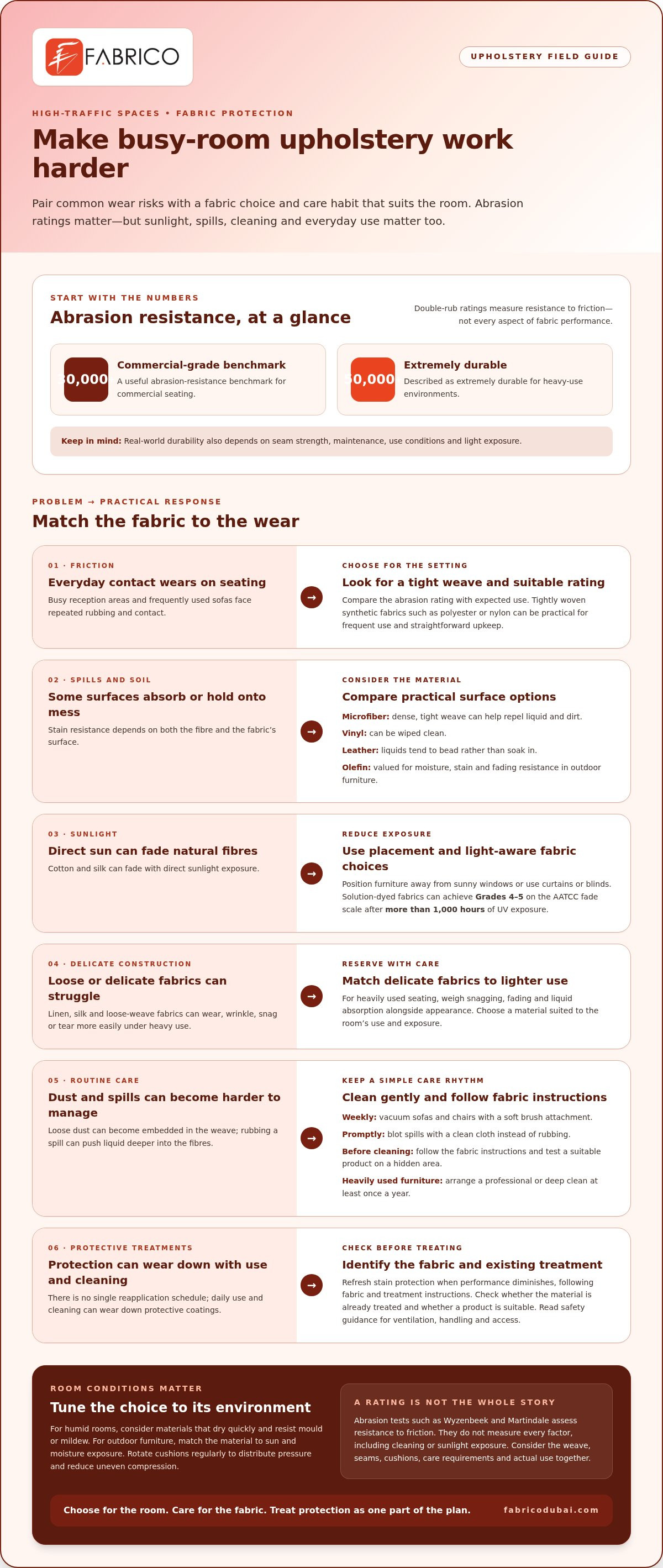
For commercial seating used throughout the day, begin with a tightly woven, stain-resistant upholstery fabric. A rating of 30,000 or more double rubs is a benchmark for commercial-grade durability. Fabrics rated at 50,000 or more double rubs are described as extremely durable for heavy-use environments. These figures measure abrasion resistance, not resistance to every spill, cleaning product, or source of sunlight. Real-world durability also depends on seam strength, maintenance, use conditions, and exposure to light.
Set a consistent cleaning routine for reception chairs, waiting areas and frequently used sofas. Vacuum fabric sofas and chairs weekly with a soft brush attachment to avoid catching threads. Remove loose dust before it becomes embedded in the weave. Blot spills promptly with a clean cloth instead of rubbing, which can drive liquid deeper into the fibres. Follow the fabric’s cleaning instructions and test any suitable cleaning product on a hidden area first.
How often should fabric protection be reapplied in busy areas? There’s no single schedule: daily use and cleaning can wear down protective coatings. Refresh stain protection when its performance diminishes, following the fabric and treatment instructions. A water-repellent treatment can help resist stains, but it doesn’t replace prompt spill care or appropriate cleaning.
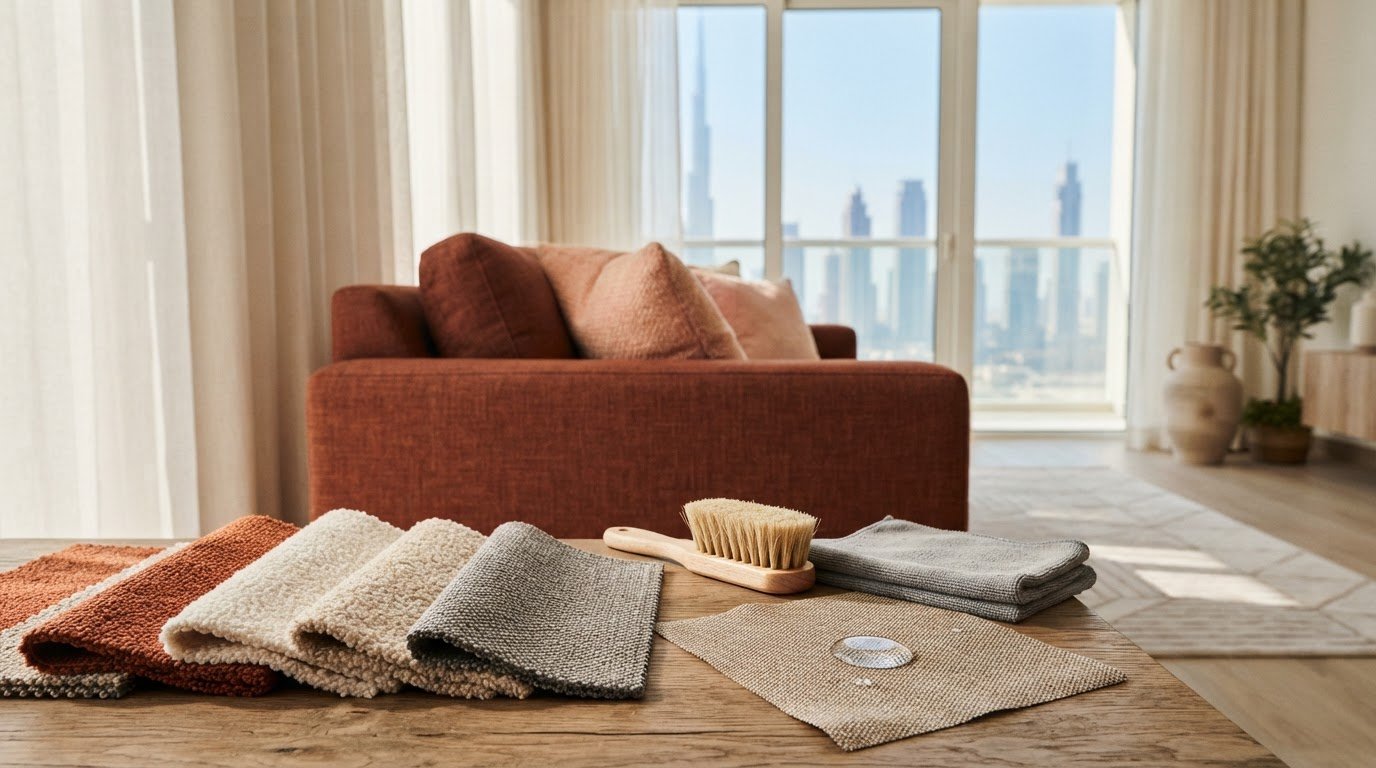
When choosing fabric, consider how the room is used before deciding on colour or texture. Tightly woven synthetic fabrics, such as polyester or nylon, can be practical for frequent use and straightforward upkeep. Darker colours and patterns can make everyday wear less noticeable. Compare the abrasion rating with the seating’s expected use, then consider whether its seams, cushions and cleaning requirements suit the setting. No single rating describes every aspect of performance.
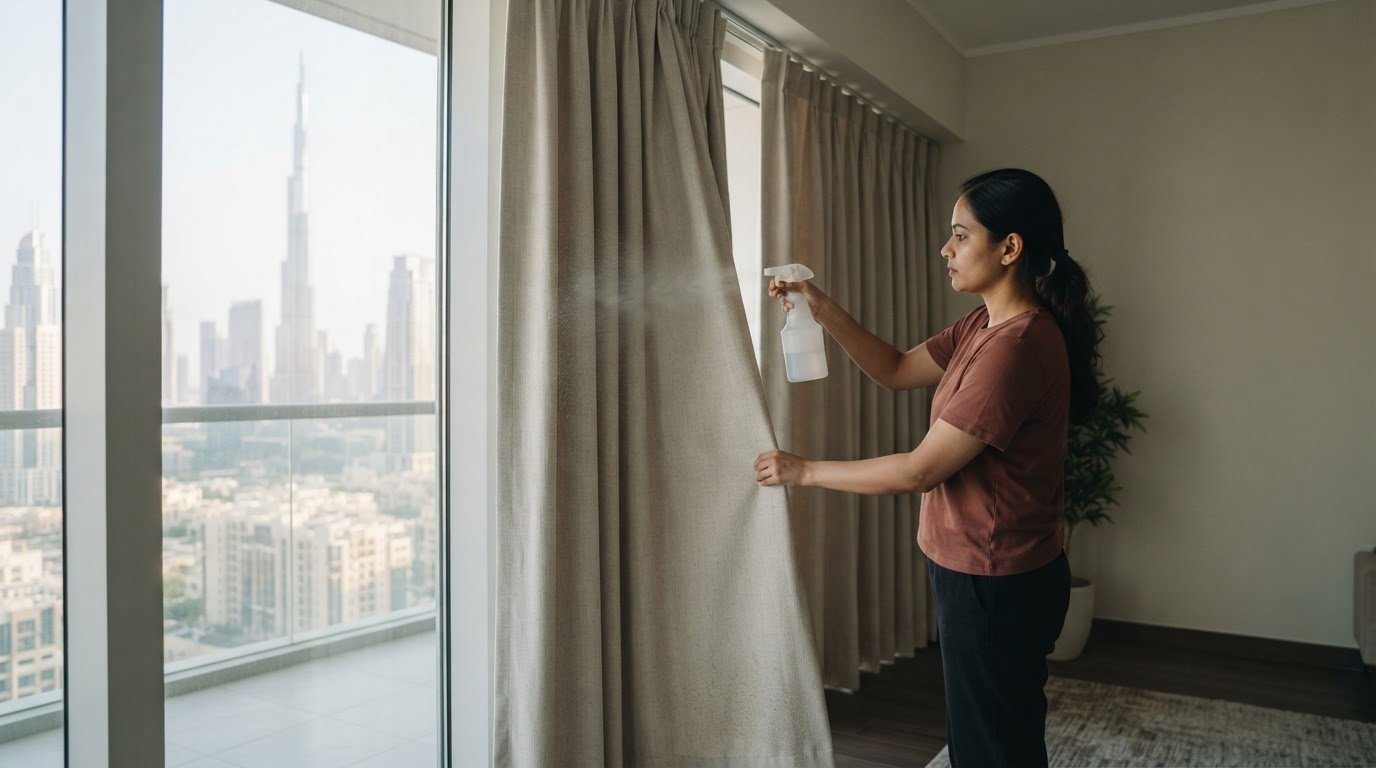
Sunlight and moisture also affect upholstery durability indoors. Direct sunlight can fade natural fibres such as cotton and silk, so position furniture away from sunny windows or use curtains or blinds. In humid rooms, choose materials that dry quickly and resist mould or mildew. Rotate cushions regularly to distribute pressure and reduce uneven compression. Turning a sofa cushion can help prevent one side from taking all the daily wear.
Residential and commercial furniture need different care routines, even when both use durable performance fabrics. A family-room sofa may face food spills, while a commercial lobby chair may experience frequent contact and repeated cleaning. Arrange a professional or deep clean at least once a year for heavily used fabric sofas and chairs. Specialist teams such as Commercial Carpet Cleaners Stockport recommend using a fabric-specific method, since an unsuitable cleaner can change the colour, cause shrinkage or damage the structure.
2. Performance fabrics for high-traffic spaces
Performance fabrics are designed for repeated contact, spills, moisture and everyday wear. Match the fabric’s intended use to the furniture’s setting: a busy indoor reception area has different demands from outdoor seating exposed to sun and moisture. Abrasion tests such as Wyzenbeek and Martindale rub fabric until wear appears. The results help assess resistance to friction, but don’t measure every factor, including cleaning or sunlight exposure.
For stain resistance, consider both the fibre and the fabric’s surface. Polyester, nylon and acrylic are synthetic fibres used in durable upholstery. Microfiber’s dense, tight weave can help repel liquid and dirt, while vinyl can be wiped clean. Leather has a different surface, where liquids tend to bead rather than soak in. For outdoor furniture, olefin is valued for resistance to moisture, stains and fading.
A fabric’s dyeing method also affects how it handles light. Solution-dyed fabrics can achieve Grades 4–5 on the AATCC fade scale after more than 1,000 hours of UV exposure. This makes them worth considering for sunlit spaces, though furniture placement and window coverings still matter. Solution dyeing also uses less water and chemicals than traditional dyeing, a useful consideration during material selection.
Are fabric protection products safe for children and pets in the UAE? Safety depends on the specific product and its instructions, so follow the label’s guidance on application, ventilation and access. Keep children and pets away during treatment, and don’t assume a surface is ready to use until the instructions say so.
How do fabric protection sprays and professional treatments compare? A spray is applied according to its label, while a professional stain and water-repellent treatment can be selected for upholstery as part of a service. Neither option replaces suitable fabric care, and treated materials still need to be cleaned according to their instructions.
What are the health and indoor-air risks of fabric protection products? They depend on the ingredients and how the treatment is applied. Read the safety information for ventilation and handling directions, and avoid spraying near people, pets or food.
PFAS have historically been used to achieve stain resistance, so don’t treat “performance fabric” as a complete description of its chemistry. Look for clear information about the fabric’s stain treatment and whether it is PFAS-free. For a treatment option suited to upholstery, explore stain and water-repellent treatment as part of your fabric-care plan.
3. Fabrics to avoid in high-traffic areas
Some upholstery materials suit occasional use but struggle on everyday seating. Linen, silk and loose-weave fabrics can wear, wrinkle, snag or tear more easily under heavy use. That makes them less suitable for chairs in busy reception areas or shared family spaces. Their appearance may appeal, but frequent contact and cleaning place different demands on fabric. Choose these materials only when their care needs and wear characteristics suit the room.
Loose weaves need particular care in high-use spaces. Gaps between threads can leave the fabric more exposed to snags and tears. For example, a bag clasp catching a sofa arm can pull at a loosely woven surface. Inspect a fabric swatch closely before choosing it for a frequently used seat. Compare its weave with a tighter option, and consider how people will enter, sit and move around the furniture.
Silk and linen also need consideration around windows. Natural fabrics such as cotton and silk can fade over time in direct sunlight. A chair beside a bright window may develop uneven colour as exposed areas receive more light. Moving furniture out of direct sun or using curtains can reduce exposure. Even a resistant fabric needs placement suited to its surroundings, as sunlight can affect its appearance and performance.
Untreated chenille can absorb liquids quickly, making it a risky choice for seating near food or drinks. Before choosing chenille for a busy room, read the manufacturer’s care and material information. Think of a café chair where spills are part of everyday use: rapid absorption can make cleaning more difficult. A protective treatment may help resist stains, but it doesn’t change the fabric’s weave or make delicate materials immune to wear.
Dye method matters, too. Piece-dyed fabrics can show 30–50% colour loss within one year under identical conditions. This does not mean every piece-dyed upholstery fabric will fade at that rate in every room. It highlights why colourfastness and expected light exposure belong in the selection process. Ask how the fabric is dyed and weigh that information against the chair’s position and cleaning routine.
For high-traffic furniture, don’t choose solely by colour, softness or a small sample’s first impression. Compare the material’s weave, care instructions, sunlight exposure and expected contact. If a design calls for delicate linen or silk, reserve it for less-used pieces rather than the busiest sofa or chair. This matches the fabric’s strengths to its role instead of relying on frequent cleaning to compensate for an unsuitable choice.
4. Applying fabric protector only to suitable fabrics
Start by identifying the upholstery fibre and any existing finish. A protector designed for untreated fabric isn’t automatically suitable for every sofa or chair. Don’t apply another upholstery protector to fabrics that are already pre-treated. An added layer may interfere with the existing finish or change how the surface feels. Read the furniture’s care instructions first, then match the treatment label to the specific fabric.
Polyester and faux leather need particular attention because each may require specialized care. Don’t assume a product intended for woven polyester also suits faux leather. Their surfaces differ, and a treatment made for absorbent fibres may not work as intended on a coated material. Check the product label for the named fabric type and application method. If the label excludes the material, choose another care approach.
How should you apply fabric protector to upholstery and carpets safely? Use a product specifically labelled for that surface and follow its application and safety directions. Keep the treatment within the labelled use, and don’t apply it to pre-treated upholstery or combine it with another product unless instructed.
For a suitable fabric, clean away soil before treatment, since surface dirt can prevent even application. Test the product on a discreet area, then inspect the colour and texture after it dries according to the label. A sofa arm is a useful test spot because it’s less visible than the centre cushion. Stop if the test changes the fabric’s appearance or feel.
Apply the protector as directed across the intended fabric rather than concentrating it on visible marks. For a carpet, follow carpet-specific instructions instead of assuming upholstery directions apply. Pay attention to seams, cushion edges and frequently touched areas, but don’t over-apply. Excess product doesn’t mean the fibres can withstand more spills or wear.
Protective coatings can wear down through daily use and cleaning. Treated cotton may also need reapplication as its coating wears. Refresh stain protection only when appropriate for the fabric and its existing finish. Check the care label again after cleaning, because an unsuitable cleaner may damage the fabric or affect its treatment. A suitable stain and water-repellent treatment can help resist stains, but it doesn’t remove the need for careful upkeep.
5. What fabric protectors work best for high-traffic areas?
The right protector suits the upholstery’s fibre, finish and daily use. A busy reception sofa faces frequent contact and spills, while a sunlit chair may need more attention to fading. Start by identifying the fabric and checking its care instructions. Then choose a treatment labelled for that material and the protection needed, such as stain or water repellency.
Stain-repellent treatments help reduce how readily spills settle into fibres, while water-repellent treatments address moisture. These functions can overlap, but neither is the same as abrasion resistance. A coating won’t change a fabric’s weave or make a delicate material withstand heavy friction. For example, a protector can’t make loose-weave linen as hard-wearing as tightly woven upholstery fabric.
Match the treatment to the upholstery rather than choosing by the word “universal” on a label. Polyester and faux leather may need specialized care, and pre-treated upholstery shouldn’t receive another protector. Adding a coating to an existing finish may be unsuitable for the surface. Before treating a sofa or chair, read the product directions for fabric compatibility, intended use and application method.
Consider how cleaning affects protection. Coatings can wear down through daily use and cleaning, so stain resistance may diminish over time. Treated cotton may also need reapplication as its protective coating wears. Reapply only when the fabric and treatment instructions allow it. Avoid setting a fixed calendar schedule without considering use and cleaning: a rarely used chair and a heavily used lobby sofa experience different wear.
Application matters as much as product selection. Treat clean upholstery so surface soil doesn’t interfere with an even finish. Test the product on a hidden area and inspect the fabric for colour or texture changes, following its directions. Don’t over-apply or layer products without instructions. After treatment, keep blotting spills promptly rather than rubbing. A protector supports good care; it doesn’t replace fabric-specific cleaning or sensible furniture placement.
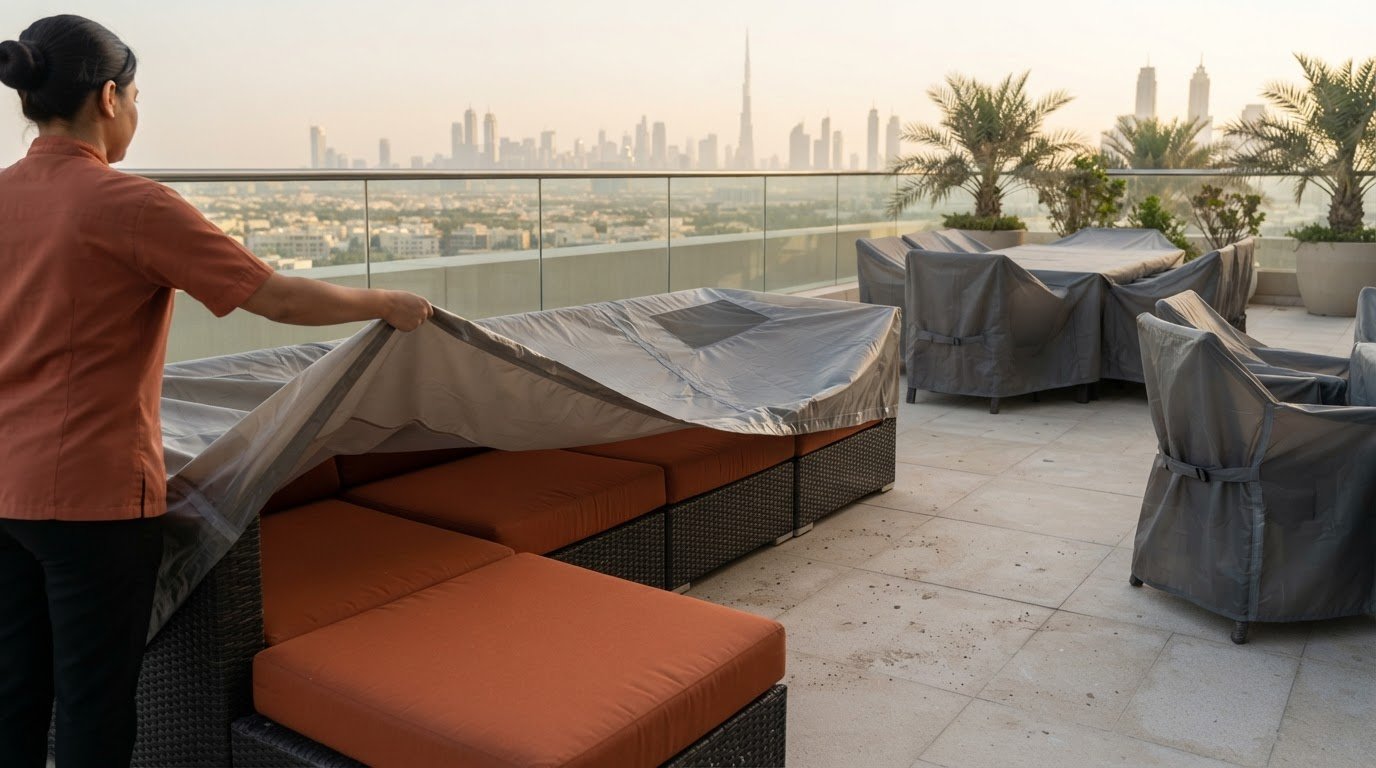
For high-traffic spaces, compare the protector’s stated purpose with the actual challenge: food spills, moisture, or frequent cleaning. In an outdoor setting, a cover provides a physical barrier when furniture isn’t in use, rather than a chemical fabric coating. Explore outdoor protection covers as an additional way to shield outdoor seating between uses.
Fabrico: Pleated American curtains
Fabrico can help bring your upholstery and window-treatment choices together, whether you’re updating a frequently used sofa or managing sunlight around indoor seating. Its Sofa and Chair Upholstery service refreshes existing furniture with fabric suited to its setting. Pleated American curtains and Roman blinds can help manage direct sunlight near upholstery, while Outdoor Protection Covers provide a practical barrier for outdoor furniture when it isn’t in use.
Turn to Fabrico when you’re planning upholstery, window treatments, or covers as part of a considered approach to caring for your space. Share what the furniture is used for and where it sits to guide the selection. You’re welcome to contact Fabrico or visit fabricodubai.com.
Plan the Next Refresh with Confidence
As you plan a room update, think beyond a single fabric choice. Consider how seating, window treatments and daily use work together in each space. A busy family sofa may call for different upholstery from a formal sitting area, while a chair’s position near a window can shape your approach to light and upkeep. Effective fabric protection for high-traffic areas starts with these details, then matches the material and care approach to the furniture’s role.
Fabrico offers Sofa and Chair Upholstery for projects that call for a considered fabric refresh, alongside Pleated American curtains and Roman blinds for window treatments. Considering these elements together can help you make cohesive, purposeful choices without losing sight of everyday care.
Take the next step when you’re ready to discuss your space and upholstery needs. Contact Fabrico about your fabric-care plans, and move forward with a clear direction for your home or commercial setting.
Frequently Asked Questions
What Makes Upholstery Fabric Durable?
Durability depends on more than a fabric’s fibre. Weave density, seam construction, sunlight exposure, cleaning methods and how often people use the furniture all affect wear. For example, a tightly woven fabric on a well-sewn reception chair may handle repeated contact better than a delicate, open weave. Abrasion ratings can help compare fabrics, but they don’t predict every source of damage or replace care suited to the material.
What are general maintenance tips to keep fabric furniture looking good?
Use the upholstery care instructions as your guide, especially before applying cleaning products. For removable cushions, rotate their positions so the same seat doesn’t take all the pressure. Keep furniture clear of hot objects, and use a tray or coaster for a warm item placed nearby. In a Dubai home with strong sunlight through the windows, consider how furniture placement affects fading, then adjust the layout or window covering.
What is stain-resistant fabric?
Stain-resistant fabric is designed or treated to make stains less likely to settle into its surface. Resistance may come from the fabric’s construction or a protective finish, so the term doesn’t describe a single material. A tightly woven synthetic fabric, for example, may be easier to maintain than a loose weave. A finish can wear with use and cleaning, so stain resistance doesn’t mean a fabric is stain-proof.
What should I do if a spill happens on my fabric furniture?
Blot the spill gently with a clean cloth rather than rubbing it into the fibres. Remove excess liquid without pressing hard, then follow the upholstery’s cleaning instructions. Don’t put a fabric cover in a washing machine to treat a spill, and avoid harsh products such as paint or nail-polish remover. If a cleaner is suitable for the fabric, test it on a hidden area first.
Which fabrics can and cannot be treated with fabric protector?
Suitability depends on the fabric and its existing finish. Don’t apply another protector to pre-treated upholstery. Polyester and faux leather may need specialized care, so use only products labelled for the specific material. Before treating an unfamiliar chair, read its care label and the protector’s directions, then test a discreet area. If the colour or texture changes, stop and don’t treat the rest.
How effective is fabric protection against stains, spills, and wear?
Fabric protection can help suitable upholstery resist stains or water, but it doesn’t prevent every mark or stop abrasion. Results depend on the fabric, treatment, use and cleaning routine. For fabric protection for high-traffic areas, match the treatment to the main concern, such as food spills on a lounge sofa. Protective coatings can wear down over time, so treated upholstery still needs appropriate care.
How to maintain high-traffic upholstery and carpets after treatment?
Follow the care directions for each surface after treatment, because upholstery and carpet may need different cleaning methods. Vacuum fabric seating gently with a soft brush attachment, and remove surface dirt before it becomes embedded. Blot fresh spills rather than scrubbing, and don’t assume a carpet product is suitable for a sofa. Repeated cleaning can wear protective coatings, so avoid unnecessary treatment and follow material-specific instructions.