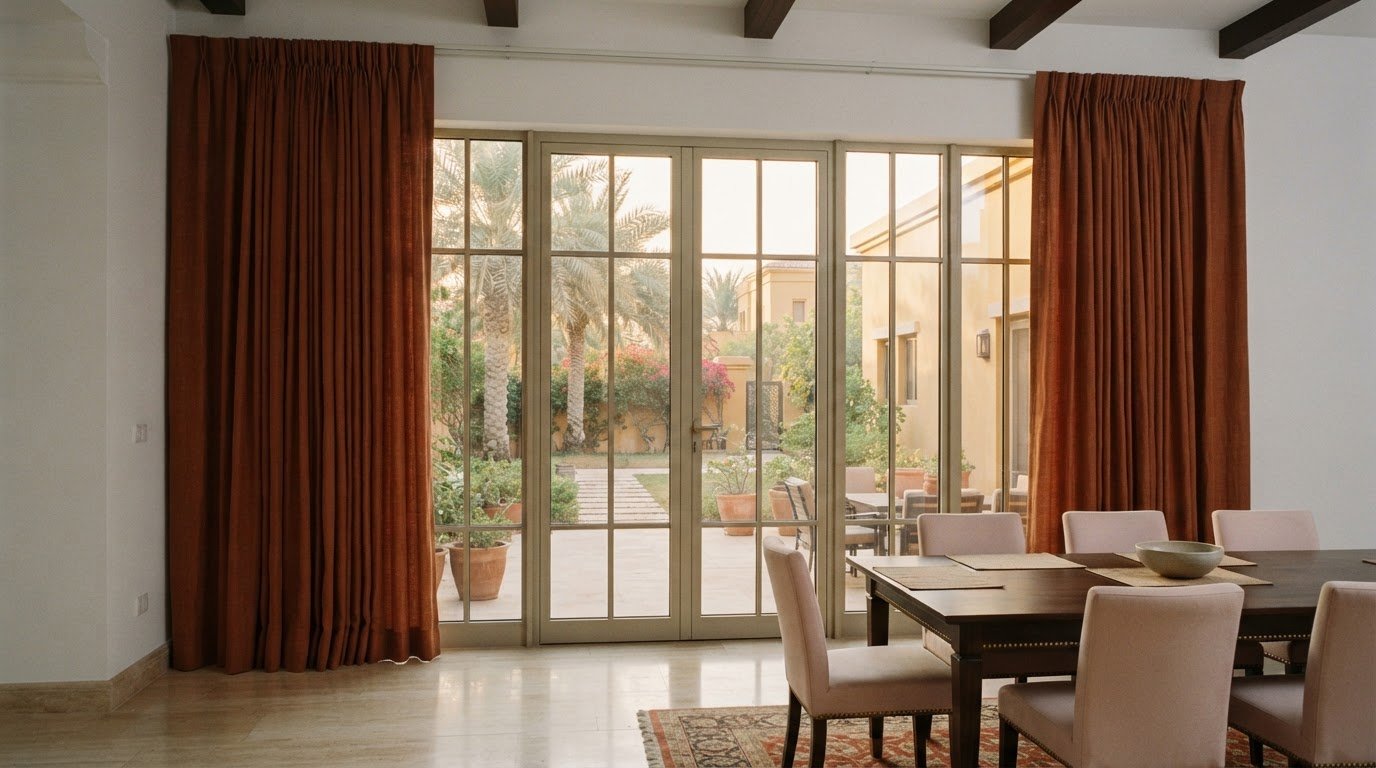

Floor-length panels create a polished look for elegant curtains in a formal dining room. Let the hem just touch the floor for a tailored finish, or allow a slight pool for a more dramatic effect. The right length also depends on nearby furniture, walkways and the window itself. Measure carefully so the finished panels fall as intended.
Choosing the curtains is about more than appearance. Fabric, colour and fullness influence how the room feels, while the window’s dimensions and the way the curtains are made shape the overall cost. This guide explains how to measure for width and length, compare styles and fabrics suited to formal spaces, and understand which choices affect cost. You’ll also see when a floor-grazing hem is practical and when a softer, pooled finish better suits the room, so you can make a considered choice for your home.
Key Takeaways
- Choose floor-length panels for a formal finish, then decide whether a clean floor-grazing hem or a slight pool better suits the room.
- Coordinate curtain colour with the room’s palette, and weigh the atmosphere and light control you want when selecting fabric and style.
- Measure from the planned rod position to the desired hem, and allow the rod to extend beyond the window frame for a balanced look.
- Understand how fabric, window dimensions, fullness and finishing affect curtain costs; the price depends on the project and is provided after a quote request.
1. What is the best length for dining room curtains?
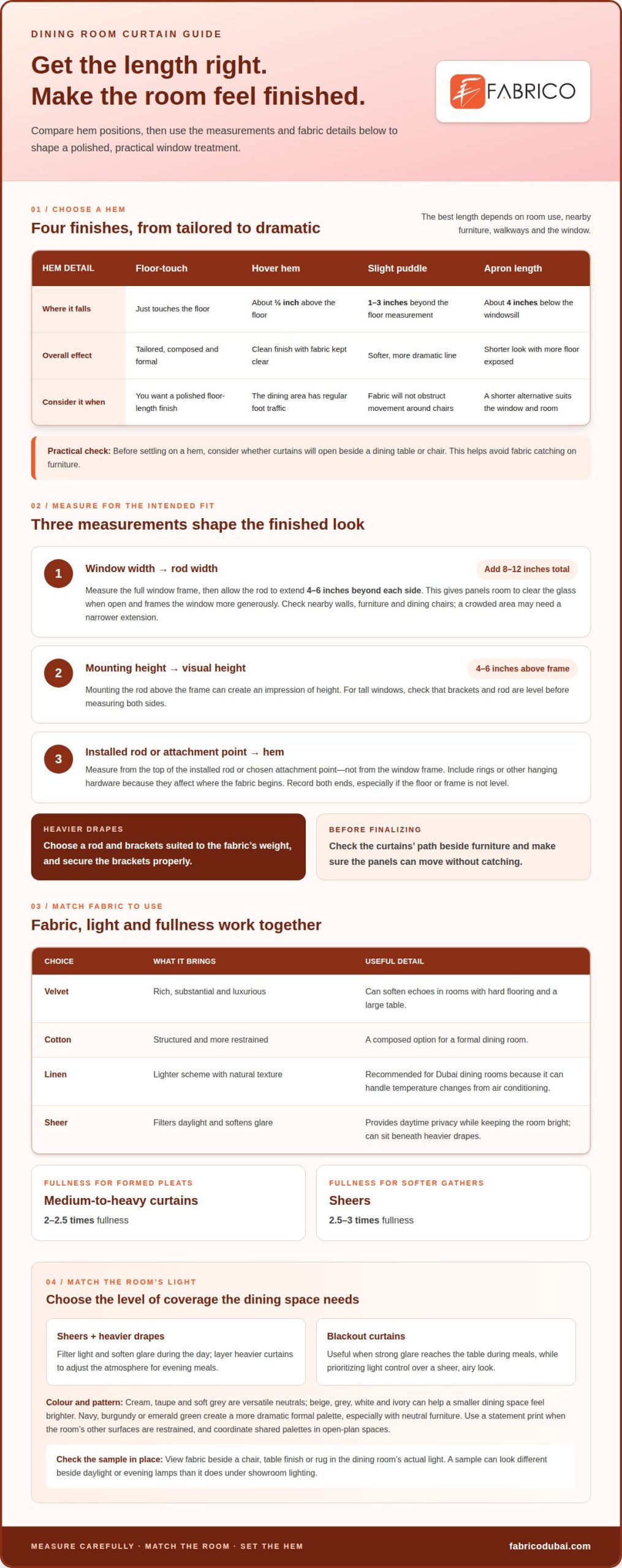
For elegant curtains for a formal dining room, choose floor-length panels for a composed, finished appearance. Let the hem just touch the floor for a tailored finish. In a busy dining area, a hem hovering about half an inch above the floor is easier to keep clear. For a more dramatic effect, add a slight 1 to 3-inch puddle, provided the fabric won’t obstruct movement around chairs.
Fabric and pleat design shape the formality as much as length. Velvet creates a rich, substantial look, while floor-length silk with tiebacks offers a classic formal treatment. Cotton gives panels a structured appearance; sheer curtains filter daylight and can sit beneath heavier drapes. Medium- to heavy-weight curtains generally need 2 to 2.5 times fullness for well-formed pleats. Sheers need 2.5 to 3 times fullness to create a softer gather.
Compare curtain fabric with your dining table, walls and furniture when choosing a colour. Cream, taupe and soft grey are versatile neutrals that can still work if you update the room later. Beige, grey, white and ivory can also help a smaller dining space feel brighter. For a more dramatic formal palette, consider navy, burgundy or emerald green, particularly with neutral furniture.
Use a statement print when the room’s other surfaces are restrained. A large-scale pattern can become a focal point, while a smaller motif can echo a detail in your dinnerware, table linens or rug. For example, choose a muted pattern that picks up a colour from the table setting rather than matching every element. In an open-plan home, coordinate dining curtains with the living room’s shared palette. Related colours connect the spaces while preserving each room’s character.
2. Curtain styles and fabrics for formal dining rooms
Velvet and cotton both suit formal dining rooms. Velvet gives panels a substantial, luxurious presence, while cotton creates a more restrained finish. Velvet can also soften echoes in rooms with hard flooring and a large table. Linen suits a lighter scheme and is recommended for Dubai dining rooms because it can handle temperature changes from air conditioning.
Match the curtain style to the room’s light and use. Sheer curtains filter daylight, soften glare and provide daytime privacy while keeping the dining space bright. Layer them under heavier drapes to adjust the atmosphere from daytime meals to evening dinners. Blackout curtains are useful when strong glare reaches the table during meals, though they prioritize light control over a sheer, airy look.
Consider how texture and finish relate to the room’s furnishings. Deep velvet in emerald, navy or burgundy can reinforce a luxurious setting, especially alongside dark wood or polished accents. Linen in cream or soft grey creates a quieter effect with natural textures. Metallic or shimmering fabric can complement a glass table, mirrored decor or metal accents. In a smaller room, simpler fabric and a tailored style keep the window treatment from overwhelming the space.
Before choosing, view the fabric beside a chair, table finish or rug in the dining room’s actual light. A sample that appears warm under showroom lighting may read cooler beside daylight or evening lamps. Then decide whether the room needs filtered light, reduced glare or a more substantial drape. For a tailored pleated finish, compare Pleated American curtain styles with the room’s formality and existing decor. This practical comparison helps connect fabric, curtain structure and furnishings without making every element identical.
3. Measuring window width, mounting height and curtain length
Start with the window frame, a tape measure and your chosen hem style. Measure the full frame width, then add 8 to 12 inches for the rod, allowing 4 to 6 inches beyond each side. This gives the panels room to clear the glass when open and frames the windows more generously. Check nearby walls, furniture and dining chairs before settling on the final rod width. A crowded dining space may need a narrower extension.
Next, mark the mounting point and measure curtain length from there to the intended hem. Mounting the rod 4 to 6 inches above the frame can create an impression of height. For tall windows, check that the brackets and rod are level before measuring both sides. A small difference between sides can make long drapes hang unevenly. Record the measurement at each end, especially if the floor or frame isn’t level.
Choose the hem position to suit the room’s use. For a clean, sophisticated finish, let floor-length curtains just touch the floor. In a high-traffic dining area, a hover hem sits about half an inch above it, keeping fabric clear of regular foot traffic. For a softer, dramatic line, add 1 to 3 inches to the floor measurement so the fabric pools slightly. Apron-length curtains instead finish about 4 inches below the windowsill, a shorter option that leaves more floor exposed.
Hardware affects the finished fit. Measure from the top of the installed rod or the chosen attachment point, not from the window frame. Include rings or other hanging hardware in your starting point, as they affect where the fabric begins. For heavier drapes, choose a rod and brackets suited to the fabric’s weight, and secure the brackets properly. Before setting the final length, consider whether the curtains will open beside a dining table or chair. This helps prevent the fabric catching on furniture and keeps the window treatment practical.
4. Dining room curtain prices
For a dining room in the UAE, the curtain specification depends on the window and the choices you make, not colour alone. A narrow window needs less fabric than a wide opening with several panels. Fabric matters too: lightweight linen and heavier velvet use different amounts of material and hang differently. Pleats affect fullness, so curtains covering the same window may need different quantities of fabric. Start by listing each window’s width and intended finished length.
Next, identify the choices that shape the specification. Fabric type and quantity determine the material required. Panel count and pleat style affect how much fabric each window takes. Lining, decorative details and hardware add further components, while the rod’s dimensions depend on the opening and desired coverage. A wide window with full pleats and lined panels, for instance, needs a different specification from a narrow window with simple, unlined panels.
Decide what the dining area needs before comparing options. If natural light matters most, a lighter fabric may suit the room; if strong glare affects meals, heavier panels may offer more light control. A casual dining space may call for a simple finish, while a formal room may benefit from a structured drape and refined details. These choices shape both the atmosphere and the amount of material needed.
Price depends on the window measurements, fabric, fullness, lining, finishing details and hardware, and is provided after a quote request. Prepare measurements for every window and note whether you prefer linen curtains, heavier panels or a particular pleat. This gives the quote a clear specification rather than an estimate based only on a photograph. To move from design choices to a tailored cost, request a curtain quote with your dining area’s measurements and preferred finish.
Fabrico: Pleated American curtains
Fabrico offers Pleated American curtains for dining rooms where a structured, tailored window treatment suits the setting. Use your measurements and preferred hem to guide decisions about fit, fabric and pleat appearance. This gives you a practical starting point for choosing made-to-measure curtains that suit the room’s dimensions and style.
Where a fabric panel might feel too prominent, Roman blinds offer a more compact alternative. Choose according to the window, available space and atmosphere you want around the dining table. Fabrico also provides Sofa and Chair Upholstery, helping you coordinate seating fabric with the room’s window treatment.
Contact Fabrico to discuss your dining-room curtains, or visit fabricodubai.com.
Shape a dining room that feels complete
Choosing elegant curtains for a formal dining room is a chance to give the space a considered character, not simply cover a window. Think about the atmosphere you want at the table: a calm setting for everyday meals, a more intimate feel for evening gatherings or a polished backdrop for special occasions. Let that intention guide your choices, from fabric texture to how the panels relate to seating and table linens.
A cohesive room doesn’t need every detail to match. A thoughtful relationship between curtain fabric, upholstery and the dining table can bring the space together while preserving its individual character. Fabrico offers curtain and upholstery options to support a coordinated look.
Explore curtain options with Fabrico as you plan a dining room that feels refined, welcoming and distinctly yours.
Frequently Asked Questions
What is the best length for dining room curtains?
Floor-length curtains are the most suitable choice for a formal dining room. For a crisp finish, have the hem just meet the floor; if chairs move close to the window, a slight hover helps keep the fabric clear. Reserve pooling for areas where fabric won’t catch underfoot or collect around chair legs. Check the floor at both ends of the window before setting the final hem.
Can I achieve a high-end “RH style” drape without adding bulky liners?
Yes. A substantial fabric with well-shaped pleats can create a full, polished appearance without a separate bulky liner. The effect depends on the material’s body, the panel’s fullness and how neatly it hangs from the rod. Consider a medium- or heavier-weight fabric, then assess how it falls in the room. This works well for a dining window where a single refined layer is preferred.
What curtain styles look elegant in a formal dining room?
Long pleated panels suit formal dining rooms because their vertical folds frame the window and give the treatment a composed finish. Velvet creates a richer, more substantial look, while floor-length silk with tiebacks adds a traditional note. For a compact dining area, Roman blinds offer a tailored alternative that takes up less visual space. Choose a style that fits the room’s proportions and the formality of its furnishings.
What colors and patterns suit an elegant dining room?
Deep navy, burgundy and emerald create a rich, formal mood, while cream, taupe and soft grey provide a quieter backdrop. For a pattern, pick up one accent from a rug, table linen or dinnerware rather than repeating several motifs. In a dim dining room, lighter shades help the window treatment feel less visually heavy; in a bright room, a deeper tone can add definition.
How should dining room curtains coordinate with furniture and decor?
Start with a fixed feature that will remain in the room, such as the dining table, flooring or a prominent rug. Choose curtains that complement its undertone, then connect the palette with a smaller detail, such as a cushion or table linen. Warm-toned curtains, for example, can sit comfortably beside a timber table without matching its exact shade. This creates cohesion while letting each material retain its character.
What curtain length and width are right for a formal dining room?
Measure length from the planned rod position to the intended hem, not from the top of the window frame. For a tailored floor finish, have the panels meet the floor; choose a slight hover where dining chairs or regular foot traffic make clearance useful. For width, measure the full window frame and allow the rod to extend beyond both sides so open panels don’t crowd the glass.